


The Strategic Merger in the Maritime Sector: Opportunities and Challenges of the Agreement between American Express Global Business Travel and CWT

The Strategic Merger in the Maritime Sector: Opportunities and Challenges of the Agreement between American Express Global Business Travel and CWT A bold move has been made by American Express Global Business Travel (GBT) with the announcement of an amendment to its merger agreement to acquire CWT, one of the leading companies in corporate travel management. This not only signifies a consolidation of forces in the realm of business travel but also marks a significant change in the way corporate maritime travel is managed and optimized. With this alliance, it is expected that both entities will merge their technologies and resources, offering more efficient and personalized solutions for corporate clients. The integration of advanced digital platforms will allow users to manage their itineraries more easily, receive real-time updates on route changes or maritime conditions, and access assistance services during their travels. Furthermore, this merger will benefit not only companies but also professionals in the merchant navy involved in the logistics of these journeys. Route and schedule optimization can result in better planning of onboard tasks, increasing both operational efficiency and crew satisfaction. Economic and Employment Boost: Opportunities for Professionals and Enthusiasts in the Sector The agreement between GBT and CWT is not just a corporate milestone; it represents an open door to new job opportunities in the maritime sector. The consolidation of these companies will likely lead to the creation of new jobs, as they will need skilled personnel to implement and manage their integrated systems. For experienced professionals in the merchant navy, this may be the ideal time to consider a transition to roles more focused on travel management and logistical planning. On the other hand, the demand for more sophisticated and personalized services in maritime business travel may also incentivize maritime investors to consider funding emerging technologies that promote sustainability and efficiency in transportation. This, in turn, would provide an economic boost to the sector, benefiting not only the companies involved but also the maritime ecosystem as a whole. Ultimately, this agreement underscores the importance of innovation in a constantly evolving sector and emphasizes the value of staying up to date with market trends. The ability to adapt to changes is crucial, and these kinds of mergers can serve as a reminder to sailors and nautical enthusiasts of the importance of continuous training and technological adaptation. Relevance Reasons: Clear Benefits for the WishToSail.com Audience For professionals in the merchant navy, the merger between GBT and CWT can translate into greater job stability and opportunities for professional growth. The incorporation of advanced technological solutions can also enhance the customer experience and increase competitiveness in the sector. For nautical enthusiasts, it is further proof that the maritime sector is alive and growing, with many opportunities to participate in new adventures and innovative projects. Conclusion: A Promising Horizon for the Maritime Sector In summary, the merger between American Express Global Business Travel and CWT is not just a novelty in the corporate world; it is indicative of the direction in which the maritime business travel industry is heading. With technological improvements and a focus on expanding and optimizing services, the sector is gearing up to offer richer and more satisfying experiences both in the workplace and recreationally. WishToSail.com encourages its readers to closely follow this evolution, explore the new opportunities that arise, and consider sending their resumes to the companies involved. The merger represents an opportunity to grow and learn, promising a future full of possibilities in the exciting world of navigation. For those interested in delving deeper into this topic, now is the time to gather information and prepare for the future of the maritime sector. The opportunities are within reach, and it’s time to set sail towards new adventures.
Innovations in the Dry Dock of the Ferry “Juan J. Sister” by Armas Trasmediterránea: A Showcase of Technical Excellence
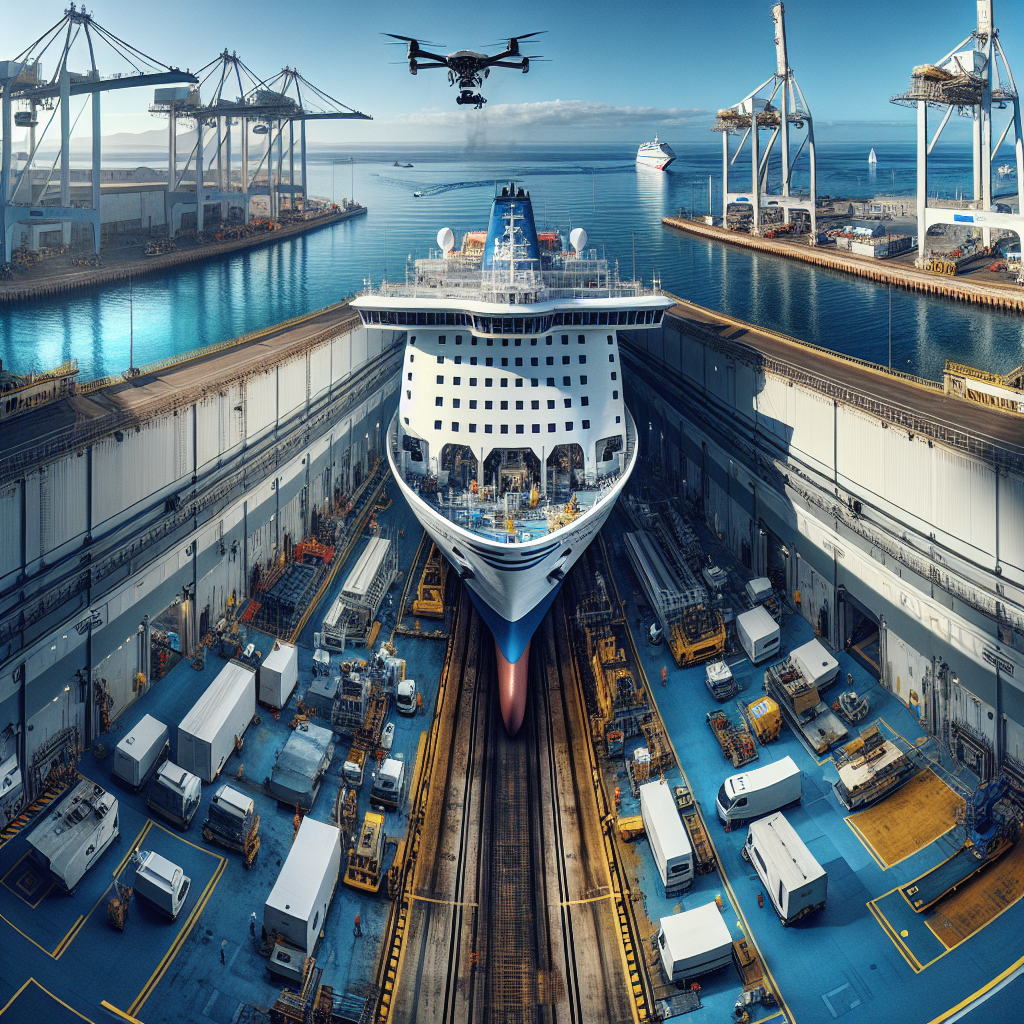
Innovations in the Dry Dock of the Ferry “Juan J. Sister” by Armas Trasmediterránea: A Showcase of Technical Excellence The ferry “Juan J. Sister” from the Armas Trasmediterránea group is currently undergoing a dry dock process at the Astican facilities in Las Palmas. This iconic vessel, measuring 151 meters in length and 26 meters in beam, has the capacity to carry up to 672 passengers and features a cargo hold of 1,290 linear meters for cargo and vehicles. With a speed of 17 knots, it stands out among the maritime transport options in the country. The dry docking of a ferry of this magnitude is not just a routine procedure. It is a technical operation requiring precision that involves a thorough review of the hull conditions, machinery, and safety systems to ensure not only optimal performance but also the safety of passengers and cargo. This task necessitates the involvement of a highly qualified team, reflecting the level of professionalism that characterizes the Spanish maritime industry. The choice of Astican as the location for this dry docking is intentional. These shipyards, renowned for their innovation and excellence in naval repair services, utilize cutting-edge technology to ensure that every maintenance detail is executed to the highest quality standards. Technological Innovation in Naval Maintenance The integration of digital diagnostic tools at Astican shipyards allows for precise evaluation of the vessel’s different parts, enhancing process efficiency and minimizing ferry downtime. Implementing augmented reality systems enables engineers and technicians to visualize the ship’s internal structures in real-time, aiding in the identification of potential issues. Usage of drones for exterior hull analysis provides detailed scanning without direct human intervention, enhancing process safety. The maritime sector is transitioning towards a digitalization and automation era. Astican’s ability to adapt to these new technologies positions the shipyards as an international benchmark, providing the “Juan J. Sister” with maintenance that sets a precedent for future projects in the industry. Employment Opportunities and Professional Development Initiatives like the dry docking process at advanced facilities such as Astican present an excellent opportunity for professionals in the maritime sector. This requires a wide range of skills, from naval engineering to project management, offering diverse job opportunities for technicians, engineers, and logistics experts looking to specialize in planning and executing naval maintenance. The maritime sector has always been a cornerstone of the economy in Las Palmas, and projects like the dry docking of the “Juan J. Sister” further solidify this tradition. Companies are constantly seeking qualified personnel to join multidisciplinary teams, bringing technical knowledge and innovation capacity. Individuals interested in advancing their careers in the nautical sector will find these opportunities ideal to submit their resumes to renowned companies like Armas Trasmediterránea and Astican, with the chance to be part of trendsetting projects in the global maritime industry. Impact and Relevance of the Project The maintenance of the “Juan J. Sister” is significant not only for the technological innovations implemented but also for its impact on maritime transport services in Spain. The ability to make these improvements without significantly affecting the ferry’s operation schedule demonstrates meticulous planning and execution, ensuring that passengers and cargo handlers continue to trust the services provided by Armas Trasmediterránea. Furthermore, the project highlights the importance of maintaining high-quality maritime infrastructure to support economic growth, both nationally and in the Canary Islands. Investments in technology and maintenance reflect a commitment to modernization, positioning Spain as a leader in sustainable and efficient maritime transport. Ultimately, this project serves as an inspiring example for enthusiasts of the sector, showcasing how the fusion of tradition and innovation can lead to significant achievements. It encourages readers to delve deeper into current trends in naval maintenance and the opportunities arising in this exciting field.
The Future of the Port of Houston: Innovations and Opportunities on the Maritime Horizon

The Future of the Port of Houston: Innovations and Opportunities on the Maritime Horizon The Port of Houston, one of the most vital gateways in the maritime trade of the United States, is gearing up for its next monthly meeting on Tuesday, 25th March 2025. This meeting, held by the Port Authority Port Commission, will take place in a hybrid format, offering attendees the opportunity to participate both in person and virtually through the WebEx platform. Despite seeming like a routine meeting, this monthly gathering is a reflection of the dynamic environment in which the maritime sector operates. The topics to be discussed reveal the central role that this port plays in the regional and global economy. From technological innovations to new trade routes, the agenda promises to be a compilation of the trends that will shape the immediate future of the nautical industry. For maritime professionals, sailors, and nautical enthusiasts, participating in or following these events represents a unique opportunity to stay up to date with the transformations that could redefine maritime trade. This is where the foundations for new developments are built and where the trends that will influence the coming years are delineated. Technological Advances and their Impact on Port Efficiency One of the main areas of focus during the meeting will be the implementation of advanced technologies aimed at improving the operational efficiency of the port. These innovations not only promise to optimize daily operations but also open up a range of opportunities for the sector. By integrating technologies such as the Internet of Things (IoT), artificial intelligence (AI), and advanced automation, ports can better manage the growing volumes of goods and significantly improve safety and efficiency. For investors in the maritime sector, the adoption of these technologies represents a fertile ground for new investments. With the port becoming an increasingly intelligent node, the possibilities to optimize supply chains and reduce costs are enormous. Additionally, these technological improvements are key to attracting more shipping lines looking for efficient ports to maximize their global operations. New Maritime Routes: Global Expansion and Job Opportunities In addition to technological innovations, the meeting will address the expansion of new maritime routes. With the continuous growth of international trade, identifying and developing new routes becomes a priority to maintain the port’s competitiveness. Diversifying routes not only increases the global connectivity of the port but also mitigates the risks associated with dependencies on specific routes. These initiatives also represent a significant opportunity for professionals in the sector. New routes require skilled personnel to manage operations, logistics, and security, creating a growing demand for qualified professionals. In this sense, the Port of Houston presents itself as a conducive environment for professional development, inviting those interested to be part of this exciting journey. Furthermore, for companies looking to expand their operations, new routes offer the possibility to access emerging markets and diversify their portfolios. For sailors and nautical enthusiasts, these expansions reflect an increasingly interconnected world and an invitation to explore new maritime frontiers. A Call to Innovation and Entrepreneurship The Port of Houston, with its commitment to innovation and sustainable growth, establishes itself as a role model for other ports around the world. This focus on the future is especially relevant in a global context where environmental sustainability and operational efficiency are fundamental pillars. The decisions made in these meetings and the strategies implemented are expected to serve as inspiration and a catalyst for other ports seeking to improve their operations and reduce their carbon footprint. In this sense, innovation is not only technological but also strategic, seeking a balance between economic development and environmental responsibility. For those interested in joining this mission, the opportunities are abundant. From developing new technologies to implementing sustainable practices, the port is a fertile ground for entrepreneurship and collaboration. This call to action resonates particularly among young professionals looking to make their mark in an industry in constant evolution. Conclusion: The Port of Houston as a Beacon of Maritime Progress In summary, the Port Commission meeting of the Port of Houston is not simply an administrative event but a reflection of a dynamic core of innovation and growth. With a focus on technology, new routes, and sustainability, the port aligns itself with the needs and trends of the modern world, offering numerous opportunities for professionals, investors, and nautical enthusiasts. For the WishToSail.com community, these developments represent an invitation to actively participate in a sector that is not only changing but also defining the future of global trade. Whether it’s improving knowledge, exploring new routes, or investing in emerging technologies, the possibilities are limitless for those willing to navigate these promising waters.