


The Challenge of Short-Distance Maritime Transport: The Duality between the Atlantic and Mediterranean Facets

The Challenge of Short-Distance Maritime Transport: The Duality between the Atlantic and Mediterranean Facets The recent report from the Statistical Observatory of Short-Distance Maritime Transport (TMCD), published by SPC Spain, highlights a 3.7% decrease in international ro-ro maritime transport, excluding vehicle cargo. This translates to a movement of 25.5 million tons in 2024. This decline marks the second consecutive year of negative figures after the significant post-pandemic recovery in 2021 and 2022. Analysis by Regions: The Atlantic facade experienced a growth of 17.8%, mainly driven by increasing exchanges with Belgium, the United Kingdom, France, and Ireland. On the other hand, the Mediterranean facade suffered a 6.7% setback, largely due to the reduced traffic with Morocco, which decreased by 11% compared to 2023 records. These results underline the need to understand the specific dynamics and challenges facing both facades and how they could impact the different sectors involved, from the shipping industry to maritime investors interested in these routes. Motorways of the Sea: A Comparative Analysis In terms of Motorways of the Sea, the offering on the Atlantic facade has expanded, adding an additional service to reach a total of four services. This expansion has resulted in a 30.3% increase in total linear meters capacity available. This upward trend suggests a concrete opportunity to further drive maritime trade in this region. Conversely, the Mediterranean facade has maintained its existing six services but has seen an 18.5% reduction in capacity. This contraction highlights a potential area for improvement, especially considering the stability of its routes to Italy and Morocco. These variations invite professionals to reconsider their investment and operational strategies on both facades. These motorways not only represent a logistical development but also offer job opportunities for industry professionals, as increased demand could lead to the creation of new positions within operating companies. Interested individuals can consider submitting their resumes to these entities to join this growing sector. TMCD as an Alternative to Road Transport: Efficiency and Sustainability The alternative TMCD to road transport showed an increase in demand of 3.6%, reaching 14.0 million tons in 2024. While the Atlantic facade experienced a significant increase of 17.8%, the Mediterranean maintained a fairly stable demand volume, with a slight decrease of 0.8%. The TMCD offering on the Atlantic facade grew by 12.1%, reaching 3 million linear meters. In contrast, capacity on the Mediterranean facade decreased by 10.2%, from 7.2 to 6.4 million linear meters. This reduction may prompt sector players to seek more efficient ways to optimize existing capacity and promote sustainability. The increase in occupancy to 63.2% reflects a more efficient use of available resources, enabling less dependency on road transport, which is excellent news for investors seeking more sustainable and economically viable options in the maritime sector. Implications for the Sector and the Future of TMCD For maritime sector professionals, the data reflected in the TMCD report offer various avenues for analysis. The growth on the Atlantic facade versus the decline in the Mediterranean highlights the need for differentiated strategies for each region. Additionally, the increase in demand for alternative TMCD to road transport suggests a clear trend towards more sustainable transport solutions, which can represent an opportunity for companies looking to position themselves as leaders in innovation and operational efficiency. Finally, the variety of services and capacity of Motorways of the Sea not only influence logistics and trade but also have an impact on employment within the sector. The expansion and optimization of these maritime routes could translate into new job and investment opportunities for those willing to adapt to the changing market needs. Conclusion: The Relevance of the Report for Various Segments The TMCD report is especially relevant to different segments of the WishToSail.com audience for three main reasons. Firstly, for maritime professionals, the trends detailed in the report can help anticipate changes in routes and efficiently plan operations. For maritime investors, information on the increased capacity on the Atlantic facade provides insights into where the best investment return opportunities may arise. Finally, nautical enthusiasts may find the Motorways of the Sea expansions exciting, as they not only enhance logistics but also drive connectivity and accessibility to new routes. In a frame of continuous transformation, knowledge and adaptability will be vital to fully grasp the opportunities that TMCD can offer. The key is to stay informed and leverage available data to make strategic decisions that strengthen the maritime sector as a whole.
The New Best Practices Guide for Maritime Safety: A Proactive Response to the Increase in Ship Attacks

The New Best Practices Guide for Maritime Safety: A Proactive Response to the Increase in Ship Attacks The international maritime community is on high alert following a significant increase in attacks on merchant ships in recent years. According to reports from prominent industry organizations such as the International Maritime Council and the International Chamber of Shipping, security incidents have grown significantly, especially in high-risk areas such as the Black Sea and the Red Sea. These crucial waters for global trade have witnessed over a hundred armed attacks in 2024 alone, resulting in the tragic loss of lives of four seafarers. The recent relaunch of the Best Management Practices for Maritime Security (BMP MS) guide comes at a critical time. At the end of March, the Gulf of Guinea was once again the scene of pirate activity, with the hijacking of ten crew members of the tanker Bitu River and another two seafarers in an assault in Port-au-Prince, Haiti. These incidents underscore the importance of having renewed strategies for the protection of crews and the maintenance of maritime trade. Stephen Askins, a partner at a UK maritime law firm, has highlighted the increasing sophistication of kidnappings in the Gulf of Guinea, pointing out the Nigerian pirate business model as a constant headache for shipowners and insurers. The maritime industry needs effective and coordinated responses to these persistent threats. The BMP MS Guide: An Innovative Maritime Safety Compendium The updated BMP MS guide offers a series of technical and operational recommendations aimed at enhancing the security of ships sailing in areas of significant risk. It provides detailed guidance on how to respond to attack situations, focusing on preventive strategies to reduce the vulnerability of vessels to hijackings and other hostile acts at sea. Topics covered include naval mines, anti-ship missiles, and the importance of proper preparation of the ship’s citadel—a protected area where the crew can take refuge in case of danger. David Loosley, Secretary-General of BIMCO, has emphasized that while it is not possible to predict how threats will evolve in the future, being equipped with best practices is essential to minimize risks and save lives. Collaboration and information sharing among maritime organizations are crucial to increasing safety at sea. The guide not only focuses on physical security but also on aspects such as crew training and welfare. Psychological and physical preparedness to face crisis situations Communication protocols for critical incidents Ensuring that crews have access to effective and timely assistance. The relevance for Maritime Professionals and Enthusiasts of the Maritime Sector For merchant navy professionals, the BMP MS guide represents an indispensable resource in planning safe routes and making operational decisions. Captains and officers must familiarize themselves with these practices to strengthen their ships’ defenses in an increasingly threatening environment. From the perspective of maritime investors, security measures can directly impact the profitability of commercial operations. An improvement in security practices can reduce costs related to insurance premiums and operational losses due to attacks. Adopting these recommendations can also mitigate reputational risks, increasing the confidence of business partners and insurers. For nautical enthusiasts, this guide offers a crucial insight into the challenges facing global maritime transportation. Understanding the current dynamics of maritime security is not only informative but also highlights the complexity and importance of safe operations on the high seas. Future Opportunities and Challenges The development and adoption of new technologies represent an opportunity to further increase maritime security. Innovations such as surveillance drones, satellite tracking systems, and advanced simulation programs for training can play a crucial role in early threat detection and effective incident response. However, these technological advances must be accompanied by strong international cooperation. Safety at sea is a global challenge that requires a collaborative approach at both governmental and private sector levels. The implementation of the BMP MS guide is just a first step in the right direction. In summary, the relaunch of the BMP MS guide emphasizes the importance of robust and up-to-date maritime security. The protection of crews and global trade depends on the maritime community’s ability to adapt and respond proactively to emerging threats. It is a call to action for all those involved in the world of navigation, from professionals to investors, to ensure that the ocean remains a safe and reliable route for trade and exploration.
Revolutionizing Threat Detection in the Cruise Sector: Smiths Detection
Revolutionizing Threat Detection in the Cruise Sector: Smiths Detection In a world where globalization is on the rise, ensuring security in the cruise sector has become a paramount concern. With thousands of people boarding daily and substantial amounts of cargo being transported on each voyage, maintaining a safe environment is crucial for the maritime industry’s success. In this context, Smiths Detection, a leading company in threat detection technologies, has announced its partnership with major cruise lines, supplying their advanced X-ray inspection system SDX 6040. The SDX 6040 system promises to revolutionize the scanning process at embarkation ports. With its advanced technology, it provides exceptional image quality that is vital for identifying weapons, explosives, drugs, and other prohibited items. This collaboration not only signifies a technological advancement in detection but also reinforces the cruise lines’ commitment to the safety of their passengers and crew. The introduction of the SDX 6040 from Smiths Detection offers numerous advantages. Firstly, its ability to provide high-resolution images allows operators to accurately identify suspicious objects, minimizing false positives and enhancing the effectiveness of security checks. This is particularly relevant in the context of cruises, where the volume of passengers and luggage can be overwhelming. High-resolution imaging for accurate identification of suspicious items Compact and modular design for easy integration into existing infrastructures Efficient scanning process for a smoother passenger experience Moreover, its compact and modular design facilitates integration into existing infrastructures, minimizing operational disruptions during installation. This is a crucial aspect for cruise lines looking to implement enhancements without affecting their operational schedules. The speed and accuracy of the system contribute to a smoother experience for passengers, a key differentiation factor in such a competitive market as cruises. Investing in advanced detection technology can lead to significant long-term savings. By reducing wait times and improving customer satisfaction, cruise lines can increase passenger loyalty and, consequently, their revenue. Additionally, the ability to avoid potential security incidents protects both passengers and the brand. Opportunities in the Maritime Sector The deployment of the SDX 6040 system also presents new job opportunities in the maritime sector. Advanced technology requires trained operators, opening the door to the creation of new specialized jobs in this field. Merchant navy and maritime security professionals can benefit from acquiring valued skills in the current job market. Moreover, cruise lines adopting this technology will be seeking professionals with experience in security and detection technologies, offering sailors and sector professionals an excellent opportunity to update their professional profile and explore new career paths. For those interested in being part of this technological transformation, submitting resumes to the mentioned companies is encouraged. Job opportunities in this field are booming, and the demand for maritime security experts is more prevalent than ever. Relevance for Investors and Nautical Enthusiasts For maritime investors, the adoption of technologies like the SDX 6040 represents a strategic investment that can positively impact the value of cruise line stocks. Safety improvements not only reduce risks but also increase consumer confidence, translating into higher ticket sales and potentially greater profitability. On the other hand, nautical enthusiasts also benefit from a safer and more efficient environment. By reducing wait times and enhancing the onboard experience, these technological advancements make sailing even more enjoyable. Advanced detection technology offers additional peace of mind, allowing sailors to enjoy the journey without worries. In conclusion, the collaboration between Smiths Detection and cruise lines signifies a significant milestone in maritime security. From improving boarding processes to creating employment opportunities, the benefits of this technology are vast and varied. With security at the forefront of discussions, investing in advanced detection technology is a decision that both professionals and sector enthusiasts should carefully consider.
The Future of Maritime Innovation: Algoma Central Corporation Leading the Way
The Future of Maritime Innovation: Algoma Central Corporation Leading the Way Technological advancements in the maritime sector are essential to maintaining competitiveness and sustainability. Algoma Central Corporation, one of the most influential companies in maritime transportation, is showcasing its commitment to technological advancement. On the 2nd of May 2025, the company will hold its Annual General Meeting in Toronto, promising to unveil new technological strategies they plan to implement. The digitalization and automation are two key areas where Algoma Central is heavily investing. The implementation of digital management systems for maritime traffic has the potential to optimize routes, reduce fuel consumption, and minimize environmental impact. These improvements not only enhance operational efficiency but also offer substantial benefits for the environment, a factor that more investors are considering crucial for their decisions. Moreover, Algoma Central is exploring the use of renewable energies in its operations, a move aligned with global sustainability goals that could also open the door to new market niches and investment opportunities. Professionals in the sector should see these innovations as an opportunity to specialize and excel in an evolving market. Investment in renewable energies and sustainable practices can lead to economic benefits and environmental responsibility. Technological advancements like digitalization and automation are essential for the future of maritime transportation. Algoma Central Corporation’s innovative strategies are setting new standards in the industry. Job Opportunities on the Horizon in the Maritime Sector With every technological advancement, new job opportunities emerge. Algoma Central Corporation is no exception to this rule. The adoption of advanced technologies often requires skilled and specialized personnel, meaning that maritime professionals can greatly benefit from these innovations. The 2025 event will not only bring together investors and entrepreneurs but will also be an excellent networking opportunity for those interested in joining a company committed to innovation. Algoma is constantly seeking human talent capable of adapting to new technologies and supporting its mission to lead in efficiency and sustainability. The demand for professionals skilled in renewable energies, data management, and automation is expected to increase significantly. Readers with experience in these areas are invited to submit their resumes to Algoma as they could be part of a transformation that impacts not only the company but the future of maritime transportation as a whole. Global Impact and Relevance in the Maritime Sector The impact of Algoma Central’s innovations extends beyond the confines of the company. The global maritime industry is constantly evolving, and changes implemented by leading companies like Algoma have a ripple effect throughout the sector. Sustainable practices and operational improvements can set new standards that other players will quickly adopt. More efficient maritime routes not only benefit individual companies but also have the potential to improve global trade, reduce transportation costs, and ensure a lower environmental impact. These advances are crucial at a time when environmental awareness and sustainability are gaining prominence in all industries. Supporting companies like Algoma Central Corporation that lead by example in sustainable practices can be both strategically and ethically sound. Combining economic benefits with environmental responsibility is increasingly attractive in a world facing significant climate challenges. Conclusion: A Call to Action The Algoma Central Corporation Annual General Meeting scheduled for May 2025 is more than just a corporate event. It represents a future full of potential and opportunities for professionals, investors, and nautical enthusiasts. Participating in these events offers a unique perspective on how a maritime company can address current challenges while ensuring its future relevance. For industry professionals, these innovations and job opportunities are an invitation to specialize and thrive in a rapidly evolving market. The prospect of contributing to an initiative that balances technological advancement with sustainability is a motivating prospect that promises long-term rewards. Therefore, those interested in the future of maritime transportation should seriously consider Algoma’s influence in the sector, not only as a source of investment and employment but also as a role model in the industry. Active participation and continuous study of these transformations will be key for any professional wishing to stay at the forefront of maritime progress.
The IMO Revolutionizes Emission Reports with New Standardized Fields

The IMO Revolutionizes Emission Reports with New Standardized Fields The maritime sector is undergoing a significant transformation following the introduction of over 140 new standardized fields for emission reports by the International Maritime Organization (IMO). This advancement, a result of the 49th meeting of the IMO Facilitation Committee (FAL 49), promises to simplify and enhance the accuracy of environmental reports necessary to comply with current and future global regulations. A Collaborative and Visionary Project The development of these new standards has been the result of a joint effort over twelve months, with the participation of leading classification societies, members of the Smart Maritime Council like Lloyd’s Register, ABS, Bureau Veritas, ClassNK, and DNV, as well as the International Association of Classification Societies (IACS) and Energy LEAP, among others. This collaboration aims to standardize the reported data to facilitate its interpretation and use. Rob O’Dwyer, council president, highlighted that “these standards represent an opportunity to improve the quality and efficiency in the exchange of operational data required for mandatory reports.” A crucial step for an industry that increasingly seeks efficiency and sustainability in its global operations. According to Jeppe Skovbakke Juhl, chief naval engineer at BIMCO, standardization is key to achieving the goal of net zero emissions by 2050. Juhl emphasizes that this effort not only facilitates emission reporting but also increases confidence in the reported data, a vital aspect for shipping companies and regulators. Impact on Global Emission Standards The new fields not only meet the requirements of the International Maritime Organization’s Data Collection System (DCS) but also align reports with the European Union’s Monitoring, Reporting, and Verification (MRV) system and standards such as the Carbon Intensity Indicator (CII) and FuelEU Maritime. These established standards are now a powerful tool for shipping companies to manage their emissions more effectively. The implementation of these standardized fields greatly simplifies the process of reporting emissions. Shipping companies can now submit more consistent reports that will be internationally comparable, thereby facilitating international cooperation against climate change. Participation in this initiative offers maritime companies the opportunity to stand out as leaders in environmental sustainability, a factor that more and more investors value when considering their investments in the sector. Opportunities for Professionals and Companies This shift in regulatory landscape represents a significant job and professional development opportunity for maritime sector professionals. Shipping companies and operators can optimize their data collection processes thanks to the new standards, and those who are already prepared to adapt to these changes have a clear competitive advantage. A new field is generated for data experts and environmental consulting, who will play a vital role in the effective implementation of these standards within organizations. These job opportunities reinforce the importance of staying up to date with sector regulations and technological developments. Companies that invest in training their staff on these new regulations and the use of emerging technologies will be better positioned to lead the change towards a more sustainable and efficient sector. Benefits for the Maritime Sector The update of the IMO Compendium not only benefits the maritime industry in terms of regulation and compliance but also opens up new possibilities to improve operational efficiency. With more precise and standardized data, shipping companies can optimize their routes, reduce fuel consumption, and minimize emissions, resulting in significant long-term economic savings. The proactive approach to standardizing emission reports strengthens the global position of the maritime industry as a leader in sustainability and environmental responsibility. This joint effort of various organizations is a testament to the sector’s commitment to effectively address climate challenges. Finally, the standardization and transparency of emission data will foster a higher level of trust among various stakeholders, including governments, investors, and the general public, thereby consolidating the maritime sector’s reputation as a key player in the transition to a low-carbon economy. Conclusion: A Step Towards a Sustainable Future The introduction of these new standardized fields in the IMO Compendium is a significant step towards a more sustainable future in the maritime sector. By standardizing emission reports, it not only facilitates regulatory compliance but also promotes a culture of transparency and environmental responsibility. This advancement, led by the IMO and supported by leading classification societies, is an example of how collaboration among key players can bring about changes that benefit the industry as a whole. It is essential for professionals and companies in the sector to continue to inform themselves and adapt to these changes to maximize their benefits and opportunities. In a world where sustainability has become a priority, the maritime sector is taking a step forward. Professionals and companies that promptly adopt these new standards will not only position themselves as leaders in their field but will also actively contribute to a greener world. An invitation to continue sailing towards the future with optimism and determination.
Alejandro Pérez García-Durán: A Bronze Medal that Inspires the Nautical World at the J70 European Championship
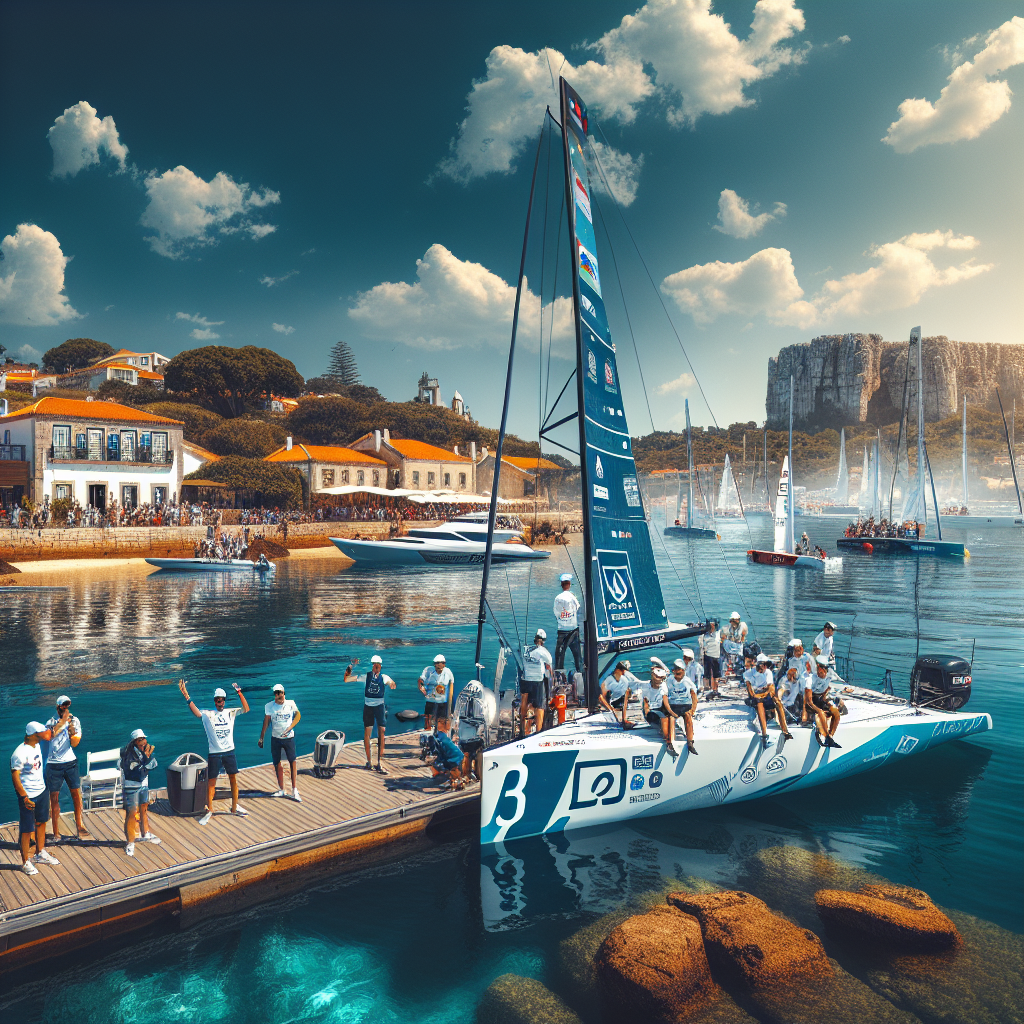
Alejandro Pérez García-Durán: A Bronze Medal that Inspires the Nautical World at the J70 European Championship Shining in the European Competition, the recent J70 European Championship, held at the prestigious Naval Club of Cascais, Portugal, marked a significant milestone for sailor Alejandro Pérez García-Durán. As part of the team from the Royal Yacht Club of Tenerife (RYCT), this outstanding athlete showcased his skills by securing third place in a competition filled with talent and competitiveness. Alejandro Pérez García-Durán Real Club Náutico de Tenerife Ángel Blázquez Romero Club Nàutic Vilanova Nahuel Rodríguez Pérez Real Club Náutico Gran Canaria Manolo Rey-Baltar Abascal Royal Maritime Club of Abra Claudia Carpintero Borrajo Real Club Marítimo de Santander Bodega Can Marles Accompanied by a diverse and talented team, composed of Ángel Blázquez Romero from the Club Nàutic Vilanova, Nahuel Rodríguez Pérez from RCNGC, Manolo Rey-Baltar Abascal from RCM del Abra, and Claudia Carpintero Borrajo from RC Marítimo de Santander, Pérez García-Durán excelled aboard the ‘Bodega Can Marles’ boat. His performance not only reflected the quality of the team but also the increasing prominence of Spanish sailors on the international stage. The success of Alejandro extended beyond personal and team pride. The bronze medal symbolizes an important driver for local nautical clubs, highlighting the importance of meticulous preparation and collaboration in the sport of sailing. Through his performance, Alejandro brings renewed motivation to aspiring individuals in the nautical world, strengthening the position of RYCT on the European sports map. The Path to Success: Strategy and Collaboration Achieving a podium finish in a demanding competition like the J70 European Championship is no simple feat. It requires a perfect combination of strategy, technical skill, and teamwork, elements that the team led by Pérez García-Durán managed to integrate seamlessly. The choice of team members and meticulous planning were key to facing the challenges presented by the racecourse in Cascais. Strategy Technical Skill Teamwork Team Dynamics Communication Trust One of the distinctive aspects of this team was its diversity in terms of experience and backgrounds. Each member brought a unique perspective and specialized skills, building a team dynamic that allowed them to quickly adapt to the changing sea conditions. This collaborative approach highlighted the importance of communication and mutual trust in the success of regattas. For sailors and professionals in the sector, this success story underscores the importance of effective interpersonal relationships and team management in competitive sailing. Technological Innovations and the Future of Competitive Sailing Beyond human skills, the role of technological innovations in competitive sailing is becoming increasingly crucial. The J70 class is a clear example of how improvements in design and technology can significantly influence performance. From the hull’s aerodynamics to advances in composite materials, every detail matters to gain a competitive edge. Technological Innovations Design Improvements Advanced Navigation Technology Lightweight yet Resilient Materials Speed and Maneuverability Crew Safety Alejandro Pérez García-Durán’s team leveraged these innovations to optimize their performance. The implementation of advanced navigation technology and the use of lightweight but sturdy materials in the ‘Bodega Can Marles’ were fundamental to their success. These innovations not only enhance the speed and maneuverability of the boat but also the crew’s safety, essential aspects in high-level competitions. For maritime investors and nautical enthusiasts, the ongoing technological development in the industry represents both an opportunity and a challenge. Investing in new technologies and training capable crews to maximize their benefits can make a difference in future competitions, reaffirming the importance of staying up-to-date with industry trends. Impact and Opportunities in the Nautical Sector The success of Pérez García-Durán and his team not only has a positive impact on the competitive sphere but also on the overall development of the nautical industry. Achievements like these can open doors to new job and investment opportunities in the sector. With each success, the visibility of sailing as a sport increases, attracting more sponsors and fans. Additionally, the notoriety achieved by teams like Pérez García-Durán’s can inspire a new generation of sailors to consider careers in the merchant navy or nautical competition. For nautical clubs, this is the time to nurture and support local talent, ensuring that future generations continue to shine on the international stage. In conclusion, Alejandro’s bronze at the J70 European Championship not only celebrates a personal victory but also symbolizes a step forward for the entire sector. For professional sailors, investors, and enthusiasts, this achievement is a reminder of the vast possibilities offered by the nautical world and an invitation to actively participate in its evolution. Relevance of the Achievement for the WishToSail.com Audience For professionals in the merchant navy, the lessons learned from Pérez García-Durán’s success are applicable both in team management and in the implementation of new technologies on board. These aspects are critical to improving operational efficiency and safety in everyday maritime activities. Team Management Technological Implementation Operational Efficiency Safety Measures For maritime investors, the focus on technological innovations in the J70 class provides a clear vision of where industry trends are heading. Investing in cutting-edge technology and promising teams can be highly profitable as the sector continues to grow. Lastly, for nautical enthusiasts, Alejandro’s story is a source of inspiration to continue exploring and enjoying the possibilities offered by the sea. His success emphasizes the importance of perseverance, continuous learning, and collaboration, fundamental values in both recreational and competitive sailing. A Promising Future The future of Alejandro Pérez García-Durán and his team looks bright. With this European bronze, they have laid a solid foundation on which to build future national and international successes. Their focus on innovation and teamwork provides them with a significant advantage in upcoming competitions.