


Robin van Elderen: A New Leadership to Transform the European Maritime Fuel Landscape

Robin van Elderen: A New Leadership to Transform the European Maritime Fuel Landscape As of August 2025, Robin van Elderen, a seasoned expert in the global bunkering sector, will assume the role of Regional Manager for Europe at Unicore Fuel. This appointment reflects a bold strategy by Bunker Holding Group to recalibrate and evolve the maritime fuel supply chain. Van Elderen, known for his ability to anticipate market changes, will guide Unicore Fuel in times of rapid regulatory and environmental advancements. In his new role, Van Elderen will also maintain his position as CEO of KPI OceanConnect, merging two key commercial entities of the group under a single future-oriented leadership vision. This dual responsibility suggests a strategic realignment aimed at consolidating Bunker Holding’s leadership in the marine fuels sector. This move is a fundamental part of the group’s long-term transformation agenda, known as the “Fit for Future” strategy, which aims to redefine the extraction, delivery, and evolution of marine energy. Van Elderen’s entry is a crucial step in this direction, positioning Unicore Fuel to lead the energy transition in a growing environment of challenges and opportunities. The Crucial Role of Europe in the Marine Fuels Market Europe stands as a key strategic point in the global marine fuel economy, providing not only a significant commercial hub but also leading regulation in the industry. With ports like Rotterdam, Gibraltar, and Marseille, the continent is at the center of global trade flows. European Emission Control Areas (ECAs), along with the imminent implementation of the FuelEU Maritime program in 2025 and the IMO decarbonization frameworks, are reshaping the landscape of regulatory compliance. The European bunkering market is no longer solely defined by volume but by its ability to set standards in fuel innovation, emissions responsibility, and energy diversification. The strategic and operational advancements that Van Elderen will lead aim to position Europe at the forefront of maritime sustainability, setting a new standard in sector innovation. Van Elderen’s deep operational and strategic experience makes him the ideal candidate to guide Unicore Fuel through this changing environment. His responsibilities span from Northern Europe to the Western Mediterranean, leading teams in Denmark, the Netherlands, Monaco, and Greece with the goal of expanding the supply reach and enhancing customer engagement. Technological Innovations and Job Opportunities In his new role, Van Elderen will oversee a newly formed global supply organization that consolidates technical consultancy, ESG leadership, and regional supply under a single command. This integrated platform seeks to accelerate transregional collaboration and create more agile supply ecosystems, improving the group’s ability to respond to global energy market fluctuations. Maritime sector professionals will find significant opportunities to broaden their career horizons in Unicore Fuel’s initiatives. The company is expanding its teams, providing an excellent opportunity for interested individuals to submit their resumes to group companies, contributing to a more sustainable future in the industry. Through these measures, Unicore Fuel remains at the forefront of delivering flexible marine energy solutions, complying with regulations, and focusing on an increasingly sustainability-oriented future. Robin van Elderen: Established Strategist in the Bunkering Sector With over 25 years of experience in the sector, Van Elderen is recognized as one of the most strategic voices in European bunkering. His career includes leadership positions at Sing Fuels, Trefoil Trading, and Argos Bunkering BV, where he was widely acknowledged for advancing supply strategies and optimizing supply chains. Holding a degree in Maritime Management and based in Rotterdam, Van Elderen combines a deep market knowledge with a collaborative leadership ethos. His appointment reinforces Unicore’s commitment to investing in visionary talent capable of navigating a complex environment while delivering measurable value to clients and partners. In conclusion, the appointment of Robin van Elderen as the leader of Unicore Fuel in Europe not only marks a significant turn for the company but also sets a new benchmark in the marine fuel industry. For maritime sector professionals, this news not only provides new opportunities but also promises a more sustainable and diversified future in the energy sector.
The Arrival of the First Methanol Tanker in Singapore: A Step Towards Maritime Decarbonisation
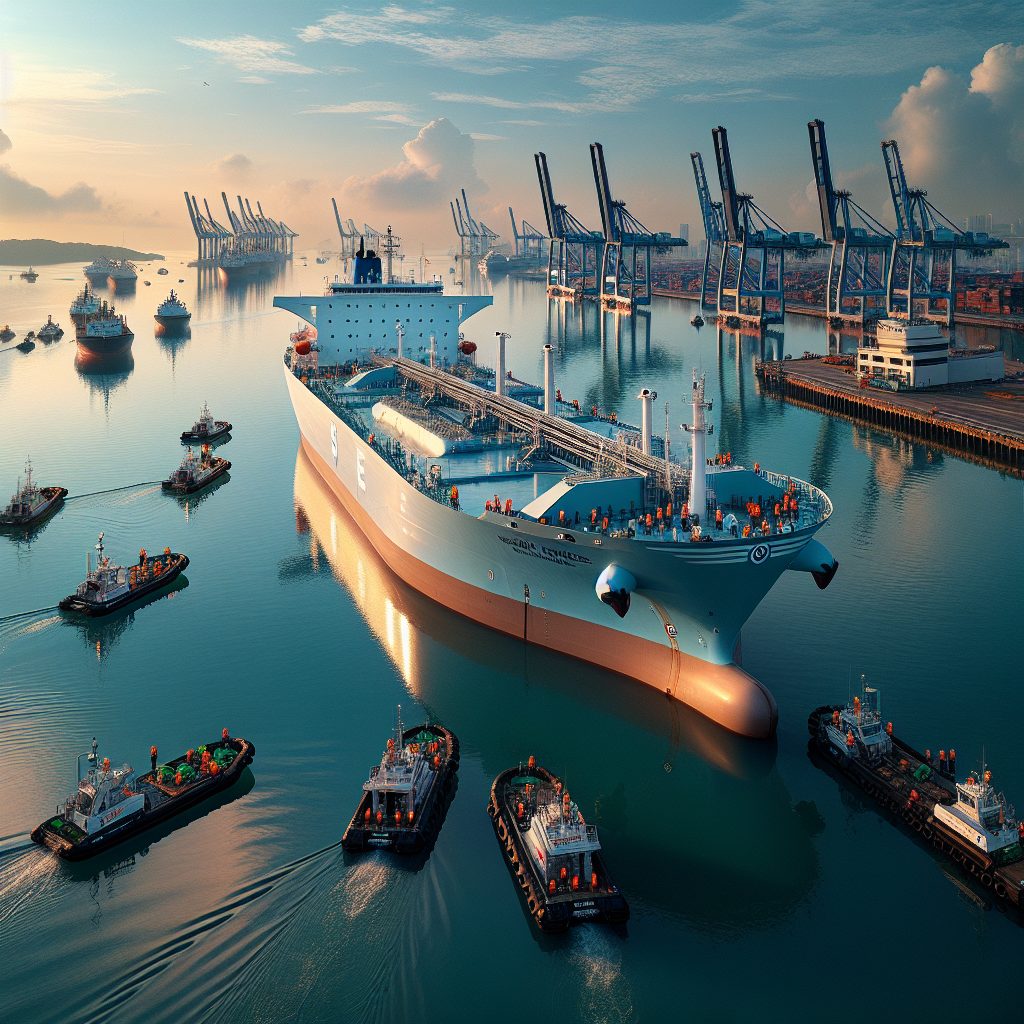
The Arrival of the First Methanol Tanker in Singapore: A Step Towards Maritime Decarbonisation Technology Innovation and Environmental Commitment In a significant move towards decarbonising maritime transport, Golden Island Pte Ltd, renowned for its sustainable marine fuel solutions, has docked its tanker Golden Antares in Singapore. This vessel, specially designed for methanol, marks the beginning of a new era of green fuels in this strategic region. The Golden Antares, a chemical tanker weighing 7,999 deadweight tonnes (DWT) certified by the EU’s ISCC, arrived with a full load of green methanol from Tianjin, China. This alternative fuel, compliant with the strictest regulations, presents itself as a viable solution to meet the carbon reduction goals of the International Maritime Organization (IMO). Further innovation is evident in the methanol loading process. The vessel is equipped with an advanced mass flow metering (MFM) system, a critical requirement under Singapore’s new guidelines for methanol bunkering, the TR129. This system ensures precise and transparent transactions, essential for the growth of this sector in the region. The Mature Supply Chain Towards a Low-Carbon Alternative The journey of the Golden Antares commenced on July 23, 2025, when it loaded 5,000 metric tonnes of certified green methanol at the Vopak storage terminal in Tianjin, China. The supply was handled by The Hong Kong and China Gas Company Limited (Towngas) and coordinated by Mitsubishi Corporation, ensuring a smooth and efficient delivery. This operation demonstrates the growing maturity of the green methanol supply chain in Asia. Towngas is a pioneer on the continent in the production of certified green methanol, while Mitsubishi continues to expand as a key player in low-carbon marine fuels. This development is a tangible demonstration of Asian companies’ commitment to sustainability and decarbonisation. The involvement of multiple stakeholders in this supply chain is vital for its long-term viability and sustainability. Testing and Compliance with the TR129 Standard Upon arrival in Singapore, the Golden Antares immediately began port procedures and certification tests for its mass flow metering system. This process is crucial not only to ensure the safety and efficiency of bunkering operations but also to lay the groundwork for future regulations on low-carbon fuels. The implementation of TR129, launched in March 2025 by the Maritime and Port Authority of Singapore, sets the safety, handling, and operational requirements for methanol bunkering. Golden Island’s compliance with these standards positions the company at the forefront of methanol use in the region. Golden Island has taken all necessary precautions to comply with these stringent regulations, including the installation of fixed gas detectors and thermal cameras aboard the Golden Antares. These advanced systems ensure that operations are not only safe but also sustainable in the long run. Training and Education for an Evolving Industry The success of a transition to cleaner fuels depends not only on technology but also on people. Recognising this, Golden Island has invested in training its personnel. The entire team aboard the Golden Antares has completed basic and advanced training in methanol handling as a fuel, offered by the Singapore Maritime Academy. This training effort is part of the Singapore Maritime Authority’s 2024 initiative to develop a workforce prepared for the future. Training ranges from basic methanol handling to advanced safety and operational techniques, ensuring that personnel are fully prepared for the challenges of using alternative fuels. Investing in training benefits not only individual employees but also enhances the overall viability of the low-carbon fuel industry. A well-trained workforce is essential to ensure that bunkering operations are safe and efficient, thereby increasing confidence in these new technologies. Methanol: The Fuel of the Future for Sustainable Navigation Golden Island recognised as early as 2023 the importance of methanol as a viable and sustainable maritime fuel. The physical properties of methanol, as well as its potential to reduce greenhouse gas emissions, make it an attractive option for companies committed to environmental sustainability. Methanol is liquid at ambient temperature and pressure, making it easier to handle compared to gaseous fuels. Furthermore, its biodegradability and renewable production reinforce its profile as a practical pathway to decarbonisation. Golden Island aims to build a robust ecosystem of green methanol in Singapore to support global trade and maritime transition. The choice of methanol by Golden Island is not coincidental. Its ease of handling, coupled with its decarbonisation potential, make it an ideal transitional solution. In a world that increasingly demands sustainability, methanol emerges as an option that can drive significant changes in the maritime industry. Job Opportunities and the Future of the Maritime Industry The arrival of the Golden Antares not only represents technological advancement but also opens up new opportunities in the maritime sector. With the increasing demand for sustainable solutions, companies in Singapore and beyond are seeking trained personnel who can operate in this new frontier of marine fuels. Merchant navy professionals and nautical enthusiasts looking to join this wave of innovation may consider submitting their resumes to companies like Golden Island, Towngas, or Mitsubishi Corporation. The industry is evolving, and with it, the demand for skilled individuals.
The Revolutionary Platform of Graphic Calculation and Post-Quantum Cryptography: A Crucial Advance for Maritime Security

The Revolutionary Platform of Graphic Calculation and Post-Quantum Cryptography: A Crucial Advance for Maritime Security Innovation in the Maritime Sector: A New Era of Security and Efficiency In an increasingly interconnected world, security has become a priority for all sectors, including the maritime industry. The recent collaboration between OPTIA, a specialist in high-performance graphic calculation platforms, and Patero, a pioneer in post-quantum cryptography, represents an unprecedented advancement in the protection of critical information. By integrating Patero’s CryptoQoR™ encryption suite into OPTIA’s NVIDIA-based GPU systems, the first PQC-enabled GPU server has been launched, opening up new possibilities for defense and commercial applications of critical missions. This development is particularly relevant for the merchant navy and the nautical industry, where the need to protect sensitive data spans from navigation routes to cargo transport. The application of this technological solution enhances maritime cybersecurity, a vital aspect to prevent attacks that could compromise operations or manipulate essential information. For professionals in the sector, this innovation not only improves security but also optimizes the performance of onboard computer platforms. These improvements enable faster and more efficient processing of large volumes of data, essential for real-time decision-making, from the bridge to logistical operations in ports. Understanding Post-Quantum Cryptography: A Shield Against Future Threats Post-quantum cryptography is an emerging field that focuses on developing security systems that can withstand the advanced computing capabilities of future quantum computers. These devices, currently in development, promise to far exceed the capabilities of traditional computers, posing a significant threat to current encryption methods. Patero has led this field with its CryptoQoR™ suite, which provides a robust approach to protecting confidential information against potential quantum attacks. Integrating this technology into OPTIA’s systems not only ensures the longevity of data security but also provides a framework for its application in critical scenarios where information protection is paramount. For investors in the maritime sector, early adoption of this technology can be advantageous as it represents an opportunity to lead in security and reliability, factors that will be increasingly demanded as quantum technology evolves. Practical Applications in the Maritime Industry: Security and Efficiency in Synergy The advancement of OPTIA and Patero offers multiple practical applications for the maritime industry. Firstly, it allows for greater integration and security in onboard communication systems, ensuring that data transmissions between the vessel and the port, as well as between the ship’s own systems, are interception-proof and manipulation-proof. Furthermore, this technology could facilitate the implementation of advanced autonomous navigation systems, which require secure and efficient processing of data from multiple sensors. The ability to process large amounts of information quickly also improves logistical management, allowing operators to monitor and adjust operations in real-time, optimizing resource use and reducing costs. Finally, for recreational boaters and nautical enthusiasts, the improved security of onboard systems not only offers peace of mind but also sets a new standard for smart vessel technology, which could benefit from enhanced security in digital connections and services. Job Opportunities and the Future of the Sector The implementation of advanced technologies like post-quantum cryptography represents not only a technological milestone but also a job opportunity for professionals in the maritime sector. Companies are actively seeking talents who can integrate, manage, and maintain these new technologies, opening doors for engineers, cybersecurity specialists, and computer systems technicians. By adopting these innovations, companies are at the forefront of the sector, and with the continuous threat of cyberattacks, the demand for trained individuals in these areas will increase significantly. Professionals interested in being part of this technological revolution have the opportunity to submit their resumes to leading companies that are adopting these solutions. The future of the maritime sector promises to be marked by a balance between tradition and technological innovation. The adoption of advanced tools not only modernizes daily operations but also lays the foundation for a safer, more efficient, and sustainable maritime environment. Why This News is Relevant to Our Readers Firstly, this innovation is relevant to merchant navy professionals for its ability to significantly improve cybersecurity. In an environment where data is a valuable asset, having a system that can withstand quantum attacks is essential to ensure the integrity of operations. Secondly, the relevance for maritime investors lies in the opportunity to invest in technologies that will shape the future of the sector. This partnership between OPTIA and Patero is a clear example of how innovation can transform into a sustainable competitive advantage. Lastly, for nautical enthusiasts, this advancement promises a safer and more efficient navigation experience, setting new expectations for technologies that could be incorporated into recreational vessels. This news demonstrates how advanced technologies originally developed for military applications can find a place in the civilian sector, benefiting a wide range of users. Exploring the Horizon of Maritime Security The collaboration between OPTIA and Patero marks a new chapter in the evolution of maritime technology. With information security becoming a global concern, it is imperative that the maritime sector adopts advanced solutions that not only protect data but also drive operational efficiency. Post-quantum cryptography is one of these solutions, promising a future where security in maritime operations is guaranteed against the most advanced threats. This is only the beginning.
Innovation in Maritime Transport: Optimizing the Shipment of Dangerous Goods with DGIS

Innovation in Maritime Transport: Optimizing the Shipment of Dangerous Goods with DGIS The transportation of dangerous goods is a crucial and often challenging element within maritime logistics. In this context, the recent update of the DGIS software, developed by DGeo, represents a significant advancement for the sector. The new version of this tool promises to optimize regulatory compliance regarding the transportation of dangerous goods, a process that is vital to ensure safety in the supply chain. Technology applied to maritime transport is constantly evolving, and the DGIS software is no exception. With its latest improvements, it offers companies the ability to manage and ship dangerous goods more efficiently, while also reducing operational costs. These types of innovations not only benefit companies from an economic perspective but also enhance safety practices, minimizing potential risks associated with handling these materials. Benefit 1: Improved Regulatory Compliance Benefit 2: Cost Reduction Benefit 3: Enhanced Safety Practices For maritime industry professionals, the implementation of software like DGIS can be a decisive factor in improving daily operations. By facilitating compliance with safety regulations and optimizing various administrative processes, these tools become indispensable allies for any company handling dangerous goods as part of their routine. Impact on Supply Chain Efficiency Efficiency in the supply chain is a key objective for any organization looking to maintain competitiveness in the global market. The new features of the DGIS software allow for more precise and efficient management of information related to dangerous goods, significantly improving logistical planning and execution. One of the most notable aspects of the update is its ability to integrate and automate data management, reducing the margin of human error and speeding up document processing. This results in reduced delivery times and increased customer satisfaction, fundamental aspects for any company seeking to differentiate itself in such a competitive market. Benefit 1: Precision in Information Management Benefit 2: Automation of Data Processes Benefit 3: Improved Customer Satisfaction Furthermore, the improved efficiency of the software ensures optimal use of resources, both human and material. For maritime investors, this means a faster and more sustainable return on investment, while for sailors and merchant navy professionals, it simplifies complex operational processes, allowing them to focus on tasks that truly require their expertise and knowledge. Technology and Regulatory Compliance: A Necessary Synergy Compliance with international regulations is a constant challenge in maritime transport, especially concerning dangerous goods. The implementation of systems that ensure regulatory compliance, such as DGIS, is essential not only to avoid sanctions but also to guarantee the safety of maritime operations. The recent updates to the DGIS software focus precisely on this aspect, providing specific tools that guide operators in complying with the most current regulations. This not only protects companies from possible legal sanctions but also ensures that safety practices are aligned with the strictest international standards. Benefit 1: Legal Protection Benefit 2: Aligned with International Standards Benefit 3: Improved Safety Practices For professional sailors and maritime companies, having a robust technological solution allows them to operate with greater confidence and security, ensuring that all operations meet international requirements and reducing the risk associated with handling dangerous goods. This results in a stronger and more reliable brand image, which can open up new business opportunities. Practical Benefits and Job Opportunities The updates to the DGIS software not only bring improvements in efficiency and safety but also generate new job opportunities. The demand for trained personnel to handle these technological tools is increasing, opening up a range of possibilities for professionals in the sector willing to specialize in this area. These types of technologies also foster a more dynamic work environment focused on innovation. Companies that invest in advanced systems like DGIS are better positioned to attract qualified and committed talent, willing to contribute to the ongoing evolution of the maritime sector. For readers of WishToSail.com, these technological innovations represent an opportunity to update their knowledge and skills, improving their professional profile and increasing their employability in an increasingly competitive market. Conclusion: Towards a Safer and More Efficient Maritime Future The future of maritime transport is shaping up as a field full of possibilities, thanks to innovations like those offered by the DGIS software. The continuous improvement of technological tools dedicated to the management of dangerous goods not only enhances operational efficiency but also reinforces the overall safety of maritime operations. The relevance of these updates cannot be underestimated, as they directly impact every area of the maritime sector: from investors, who see an increase in the value of their assets, to professional sailors, who experience an improvement in working conditions. Nautical enthusiasts can also appreciate these advances, which contribute to a safer and more regulated nautical environment. In summary, the update of the DGIS software is a clear example of how technological innovations can positively transform the maritime sector, offering new opportunities and ensuring a safer and more efficient environment for all involved. For these reasons, readers are invited to explore more about this topic and consider how these technological solutions can be integrated into their own operations or professional careers.
The Revolution of B2B Payments in the Maritime Industry with Thredd’s Mastercard Wholesale Program

The Revolution of B2B Payments in the Maritime Industry with Thredd’s Mastercard Wholesale Program In the dynamic world of the maritime sector, innovations go beyond just new ship designs or maritime routes. Thredd, a next-generation global issuing processor, has taken a significant step forward by becoming the first to offer its travel agency clients real-time payment control through flexible product codes, thanks to the Mastercard Wholesale Program (MWP). This initiative, initially designed to optimize business-to-business (B2B) payments in the travel agency sector, has a direct impact on the maritime industry. Thredd’s ability to provide visibility and instant adaptation in transactions allows companies in the sector to better respond to supplier needs based on geography, product type, and transaction volume. For maritime professionals and maritime travel agencies, this solution represents an opportunity to streamline their payment processes, reduce administrative costs, and strengthen their relationships with suppliers. By improving transparency in payments, companies can better manage their cash flow and enhance their business strategies. Employment and Financial Opportunities The implementation of this technology not only optimizes financial processes but also opens up new job opportunities. Companies looking to adopt these innovations will need qualified personnel who can manage and implement these advanced technological solutions. This means there is a growing demand for financial technology experts within the maritime sector. For maritime investors, Thredd’s advancement presents an opportunity to invest in disruptive technologies that are redefining how modern nautical companies operate. With increased financial efficiency, these companies are better positioned to grow and expand in a competitive market. Additionally, new financial solutions like these encourage professionals in the sector to enhance their knowledge and skills to adapt to an increasingly digitized and technologically advanced work environment. Therefore, interested individuals are encouraged to submit their resumes to companies that are adopting these technologies to stay at the forefront of the industry. Practical Utility in Everyday Life For sailors and nautical enthusiasts, this news also provides practical value. The ability to control and forecast expenses accurately allows for better planning of voyages and operations with greater financial certainty. This information, combined with the ability to quickly respond to market demands, can make the difference between the success and failure of any maritime operation. Another relevant aspect is how these solutions can simplify business transactions. Freight, service hiring, and supply payments can be managed more efficiently, reducing disputes and errors in transactions. In a sector where time is crucial, this advantage can be critical. Finally, these innovations reinforce the need to always stay updated with the latest trends and technological tools. The maritime sector, like others, is evolving rapidly, and those who do not adapt could be left behind. Why This Innovation Matters In conclusion, Thredd’s initiative is a clear example of how technological innovations are redefining the maritime sector. For maritime professionals, this solution offers an opportunity to optimize operations and improve financial efficiency. For investors, it provides a new horizon of technological investment that promises significant transformations in the market. Likewise, for nautical enthusiasts and sailors, these new tools provide unprecedented control over navigation finances, allowing them to enjoy their passion with fewer financial worries and more focus on the maritime experience. These advancements underscore the importance of continuous innovation in the maritime sector, highlighting the need for constant adaptation and learning to make the most of the opportunities these technologies offer.
Revolutionizing the Maritime Sector with Mastercard Wholesale Technology
Revolutionizing the Maritime Sector with Mastercard Wholesale Technology In the fast-paced world of maritime trade and nautical activities, where efficiency and precision are paramount, technological innovations play a crucial role. Thredd, a next-generation global processor and issuer, has recently made a significant breakthrough by becoming the first to offer clients the ability to manage payments in real-time through flexible product codes, thanks to the innovative Mastercard Wholesale program. This new feature enables Thredd users to optimize their financial operations by better adapting to the specific needs of suppliers based on geography, product type, and volume. Not only does this capability improve transaction efficiency, but it also provides an adaptive solution that can quickly adjust to the changing conditions of the maritime market. Improved Payment Management Real-time Transactions Flexible Product Codes For maritime professionals and industry investors, this technology offers unprecedented financial control. With the new product codes, companies can streamline their payment operations more accurately and efficiently, leading to a significant reduction in errors and losses, crucial factors in large-scale maritime operations. Impact on Maritime Routes and New Job Opportunities The introduction of these advanced payment systems not only enhances operational efficiency but also transforms the way maritime routes are managed. With improved transaction control, companies can optimize their itineraries, ensuring that payments are made in a timely and precise manner, vital for keeping the logistics chain running smoothly. Furthermore, these innovations open up new job opportunities in the maritime sector. Leading companies that adopt these technologies may be seeking new talents to manage and operate these systems, inviting industry professionals to explore these opportunities and consider submitting their resumes to such companies. Optimized Routes Improved Job Prospects Positive Environmental Impact The efficiency improvements in routes can also translate into better working practices and a positive impact on sustainability. By optimizing routes based on accurate financial data, vessels can reduce unnecessary fuel consumption, thereby decreasing their environmental footprint, an increasingly important aspect in today’s maritime industry. Relevance for Investors and Mariners From the perspective of maritime investors, the ability to manage real-time payments provides greater transparency and control over investments. This creates a safer environment for financial decision-making, allowing investments to be monitored and adjusted in real-time to maximize profits. For recreational sailors, life on the water becomes much simpler with these advancements. The ability to make instant and secure payments from anywhere in the world offers a smoother and worry-free sailing experience. Whether paying for mooring fees, fuel, or local services, the convenience and security offered by this system are invaluable. Transparency for Investors Enhanced Sailing Experience Convenience and Security Whether one is an investor looking to maximize return on investment, a maritime professional seeking new job opportunities, or a sailor wanting to simplify transactions at sea, adopting Thredd’s technology represents a significant evolution in the sector. The Importance of Financial Control in the Nautical Sector Efficient financial control management in such a vast and complex industry as maritime cannot be underestimated. Real-time payment management allows sector companies to anticipate market fluctuations and react accordingly, a crucial aspect for maintaining global competitiveness. The use of flexible product codes not only optimizes financial transactions but also provides an adaptable framework that can be customized to meet the specific needs of different maritime corporations. This level of customization is essential for addressing the sector’s unique and changing challenges. Anticipating Market Fluctuations Customizable Solutions Enhanced Customer Service The positive impact of these innovations extends beyond simple financial efficiency. It also means better service for end customers, as internal company operations are carried out more smoothly and efficiently, allowing them to focus on enhancing the overall customer experience. The Future of the Nautical Sector In conclusion, the ability to manage payments in real-time through advanced systems like Thredd, in collaboration with Mastercard Wholesale, is setting a new standard in the nautical industry. These innovations not only offer practical solutions to the sector’s contemporary challenges but also lay the groundwork for a more efficient and sustainable future. For maritime professionals, sailors, and investors, understanding and adopting these emerging technologies is essential to remain relevant and competitive in a constantly changing world. The opportunities are there to be seized, and this is the ideal time to embark on this new era of nautical exploration, where possibilities are endless and the horizon is promising.