


Advances in Liquefied Natural Gas: Gas-Up and Cool-Down Operation on a Large Scale at Skagen Anchorage

Advances in Liquefied Natural Gas: Gas-Up and Cool-Down Operation on a Large Scale at Skagen Anchorage The use of Liquefied Natural Gas (LNG) has emerged as a crucial solution for reducing emissions in the maritime sector. Not only does its use offer a cleaner alternative to traditional fossil fuels, but it also supports compliance with stricter environmental regulations globally. The recent gas-up and cool-down operation carried out by Titan Clean Fuels at the Skagen anchorage in Denmark marks a significant milestone in this context. Titan Clean Fuels has proven to be a key player in the industry, providing essential LNG services to large-scale carriers. This operation, conducted on the ‘Gannet’ vessel of Høegh Autoliners, highlights Titan’s ability to handle complex technical operations in one of the most critical maritime corridors in Northern Europe. The growing demand for LNG, along with its derivative BioLNG, reflects the need for specialized gas-up and cool-down operations to maintain the structural integrity of gas-powered vessels. These operations not only minimize vessel downtime but also ensure that the vessels are ready to sail immediately after refueling. Technical Importance of Gas-Up and Cool-Down Operations The operations of gas-up and cool-down are essential for preparing vessels that use LNG as fuel. This process is especially critical before receiving the initial fuel load or after periods of inactivity, such as dry dock maintenance phases. These operations are fundamental to prevent thermal shock in cryogenic tanks. Another crucial aspect is ensuring the purity of the fuel. During the process, internal contaminants such as water or carbon dioxide are removed, which, if not treated, could freeze and severely damage the vessel’s fuel delivery system. Collaborative Success in a Strategic Location The Skagen anchorage, located in Denmark, has become a hub for bunkering and maritime services in Europe, making it the chosen location for this ambitious operation. The collaboration of Titan Clean Fuels with entities such as DET Deutsche Energy Terminal GmbH, Gasfin, and OSM SHIP MANAGEMENT PTE LTD, among others, was essential in coordinating the complex logistics required for these large-scale services. International cooperation in operations of this magnitude is a testament to Titan’s operational expertise and its network of industrial collaborators. These partnerships are essential for the success of complex logistical operations in European maritime hubs. Getting to Know Titan Clean Fuels As part of the Molgas Energy Group, Titan Clean Fuels has positioned itself as a prominent independent provider of LNG and BioLNG for the maritime and industrial sectors globally. Their commitment to sustainability and innovation is evident in their offering of high-quality fuel solutions that are both reliable and environmentally friendly. As a certified physical bunkering supplier, Titan provides comprehensive LNG and BioLNG bunkering services, ensuring safe, efficient, and cost-effective fuel deliveries worldwide. The company prides itself on supporting its customers in achieving their environmental goals, reducing carbon emissions, and reaching long-term sustainability targets. Merchant marine professionals, maritime investors, and nautical enthusiasts will find in Titan a valuable partner committed to transitioning towards cleaner and more sustainable energies, a crucial step towards a more environmentally friendly future in the maritime sector. Conclusion: Job and Investment Opportunities The operation carried out by Titan not only represents a technical and environmental advancement but also opens up new job and investment opportunities. The increasing demand for LNG as marine fuel and the associated complex logistical operations offer a fertile ground for professional development in the maritime sector. We invite those interested in joining the forefront of sustainable maritime transport to consider sending their resumes to innovative companies like Titan Clean Fuels. Likewise, visionary investors will find in this sector a fertile ground to support the development of clean and sustainable technologies. Undoubtedly, the LNG sector is poised to play a crucial role in the future of global maritime transport, a future where collaboration and innovation will continue to be the most powerful drivers of change. For those seeking to be part of this transformation, the time to act is now.
The Transformation of Spanish Ports: Challenges and Opportunities for the Future of Maritime Transport

The Transformation of Spanish Ports: Challenges and Opportunities for the Future of Maritime Transport In the realm of international maritime transport, Spain emerges as a key player, with its ports handling significant volumes of goods and passengers. According to the latest data from Ports of the State, between January and October 2025, Spanish general interest ports handled a total of 451.9 million tonnes (Mt) of goods, representing a slight decrease of 0.8% compared to the same period the previous year. This decline is largely attributed to the decrease in solid bulk traffic. However, this landscape is not uniform, and different segments have shown varied behaviours that deserve a detailed analysis. The Scenario of Solid and Liquid Bulk The 4.5% decrease in solid bulk traffic to 67.7 Mt is significant and is mainly attributed to a lower movement of cereals, soybeans, and other agri-food products. This decline could reflect the volatility of these markets and underscores the need for adaptability in port operations to mitigate the effects of such fluctuations. However, not all segments within solid bulk experienced declines, as the traffic of non-metallic minerals, iron ore, and iron scrap recorded increases, indicating that certain industrial sectors may be in recovery or expansion. On the other hand, liquid bulk remained virtually stable, with a slight increase of 0.2% reaching 150.0 Mt. This marginal growth was driven by the increase in the handling of natural gas, gasoline, and chemicals, offsetting the reductions in crude oil and fuel oil. This balance in the liquid bulk sector is essential to ensure the country’s energy supply and long-term stability. The decrease in solid bulk traffic is mainly due to lower movement of cereals and soybeans. The increase in non-metallic minerals and iron ore traffic suggests certain industrial sectors may be expanding. The stability in liquid bulk traffic is crucial for the country’s energy supply. General Cargo and Container Traffic General cargo, which reached 234.2 Mt, showed a slight decrease of 0.2% compared to 2024. However, the conventional cargo within this group experienced a 3.8% increase, driven by growth in chemicals, animal feed, and select foods. This suggests that, despite global uncertainties, certain sectors like chemicals and food are experiencing a rebound, which could be good news for exporters and importers in these areas. Container traffic, on the other hand, experienced a 2.0% decrease, possibly reflecting tensions in supply chains or a redistribution of global trade routes. This phenomenon demands greater efficiency and flexibility from logistics operators to adapt to new market conditions and meet their customers’ expectations. The increase in conventional cargo within general cargo indicates growth in certain sectors like chemicals and food. The decrease in container traffic highlights the need for logistics operators to optimize routes and port operations. Passenger Movement and External Traffic The cumulative passenger movement on regular lines reached 25.1 million by October, representing a 1.5% increase compared to the same period the previous year. This increase, albeit modest, could reflect a recovery in the tourism and passenger transport sector after the global challenges of recent years. External freight traffic stood at 234.6 Mt, 1.4% less than in 2024, with imports reaching 162.7 Mt, a slight decrease of 0.5%. Within this context, liquid bulk showed a slight increase, which could indicate an adaptation to international demand fluctuations. However, exports decreased to 71.9 Mt, with significant declines in both liquid and solid bulk. This underscores the importance of boosting the competitiveness of Spanish products in international markets and diversifying exports to minimize the impact of fluctuations in specific markets. The increase in passenger movement suggests a potential growth in maritime tourism. Diversifying exports is crucial to minimize the impact of market fluctuations on Spanish products. Opportunities and Challenges for the Future The analysis of this data presents multiple opportunities for maritime sector professionals. Firstly, diversification and adaptation to changing demand patterns for goods are essential to maintain the competitiveness of Spanish ports. Operators could explore new partnerships and strategies to optimize routes and operation times. Secondly, technological innovation in energy efficiency and logistical operations is key to addressing sustainability and competitiveness challenges. Implementing cutting-edge technology in port management and operations can reduce costs and increase efficiency. Finally, promoting the development of specialized infrastructure and services, particularly in handling chemicals and agricultural products, can open up new job and business opportunities. Professionals and companies in the sector are encouraged to capitalize on these trends by sending their resumes and proposals to industry leaders. Diversification and adaptation to changing demand patterns are essential for port competitiveness. Technological innovation is crucial to addressing sustainability and competitiveness challenges. Developing specialized infrastructure can create new job and business opportunities. Relevance for the Specialized Audience For maritime professionals, understanding the dynamics of port traffic is crucial to improving the planning and execution of their operations. In addition, maritime investors may find opportunities in these trends to finance new initiatives and projects that enhance port infrastructure. For nautical enthusiasts, the increase in passenger traffic and expansion in certain cargo segments may indicate potential growth in maritime tourism and related recreational activities. In conclusion, the changes observed in Spanish ports not only pose challenges but also offer a vast array of opportunities for those willing to adapt and innovate.
The Influence of the Chinese Market on Maritime Transport: An Analysis of the Rise in Iron Ore Imports

The Influence of the Chinese Market on Maritime Transport: An Analysis of the Rise in Iron Ore Imports The Current Context of the Bulk Cargo Market Chinese imports of iron ore have seen a significant year-on-year increase of 7% since late June, according to a recent report by BIMCO. This upturn has been a relief for the bulk cargo market, leading to a 5% increase in the Baltic Capesize Index, strengthening transportation demand in terms of tonne-miles. However, this growth has not been without its inherent challenges: domestic steel demand in China has been weaker than expected, leading to an increase in port stocks of iron ore, reaching levels unseen in the last eight months. The driving force behind this surge in imports seems to be a confluence of economic factors. The expectation of increased public spending and an anticipated improvement in manufacturing activity, according to the Caixin Purchasing Managers’ Index (PMI), is fueling iron ore purchases. At the same time, international prices for this resource, which were weak between April and July, have started to recover. Nevertheless, steel production fell by 3% in the third quarter compared to the same period the previous year. This coincides with the continued crisis in the real estate sector, which continues to erode domestic demand as construction remains sluggish. In this context, the outlook for steel is less than ideal, but the scenario for iron ore imports could be somewhat different. The Strategic Role of China in the Global Market China stands as the largest importer of iron ore in the world, absorbing approximately 74% of global imports. Of these, 63% originate from Australia and 22% from Brazil. This massive flow is mostly transported in capesize vessels, representing around 57% of global transportation demand in terms of tonne-miles in this segment. Given this level of concentration, any fluctuation in Chinese demand has an immediate impact on freight rates and capesize fleet utilization. Prospects for steel demand in China remain moderate. The World Steel Association forecasts a 1% contraction for 2026, reflecting the decline in demand in manufacturing and infrastructure. However, there is light at the end of the tunnel: the real estate crisis is expected to bottom out soon. From an export perspective, Chinese steel is finding new markets that could mitigate some of the decline in domestic demand. Despite this, trade barriers in various regions could hinder this potential development, limiting China’s ability to offset its weakened domestic market. Innovations and Future Opportunities in Maritime Transport Despite a less favorable outlook for steel production, iron ore imports could evolve more positively. The expansion of global mining capacity is intensifying price competition, which could favor imported ore over lower-quality Chinese supplies. The entry of new mining projects, such as Simandou in Guinea, is projected to increase average sailing distances, thus stimulating tonne-miles for capesize vessels. This would not only open up new strategic maritime routes but could also represent an opportunity for maritime professionals and investors interested in these promising developments. With increased competition and route expansion, companies in the sector need more qualified personnel than ever before. Maritime professionals can find in this dynamic of the Chinese market an opportunity to expand their horizons, whether through new routes or through technological optimization of their transportation processes. Relevance and Consequences for the Maritime Sector It provides a direct boost to the bulk cargo market, benefiting maritime investors who have bet on the capesize segment. It offers a window of new job opportunities, given the requirement for a larger fleet and crew to meet this demand. It underscores the importance of technological innovation and adaptation in a highly competitive landscape. In summary, while the prospects for Chinese steel demand may seem concerning, the underlying forces in iron ore imports offer a promising counterbalance. The expansion of mining capacities and new routes contribute to an environment of opportunities worth closely monitoring for any maritime industry professional. This analysis of the Chinese situation and its global impact on maritime trade highlights the need to always be alert to market fluctuations. Changes, although seemingly local, can have global repercussions. For those interested in this sector, the key will be to adapt and anticipate the constant changes in an interconnected world.
The Green Power Revolution: E-Methanol for Baleària’s Ferry
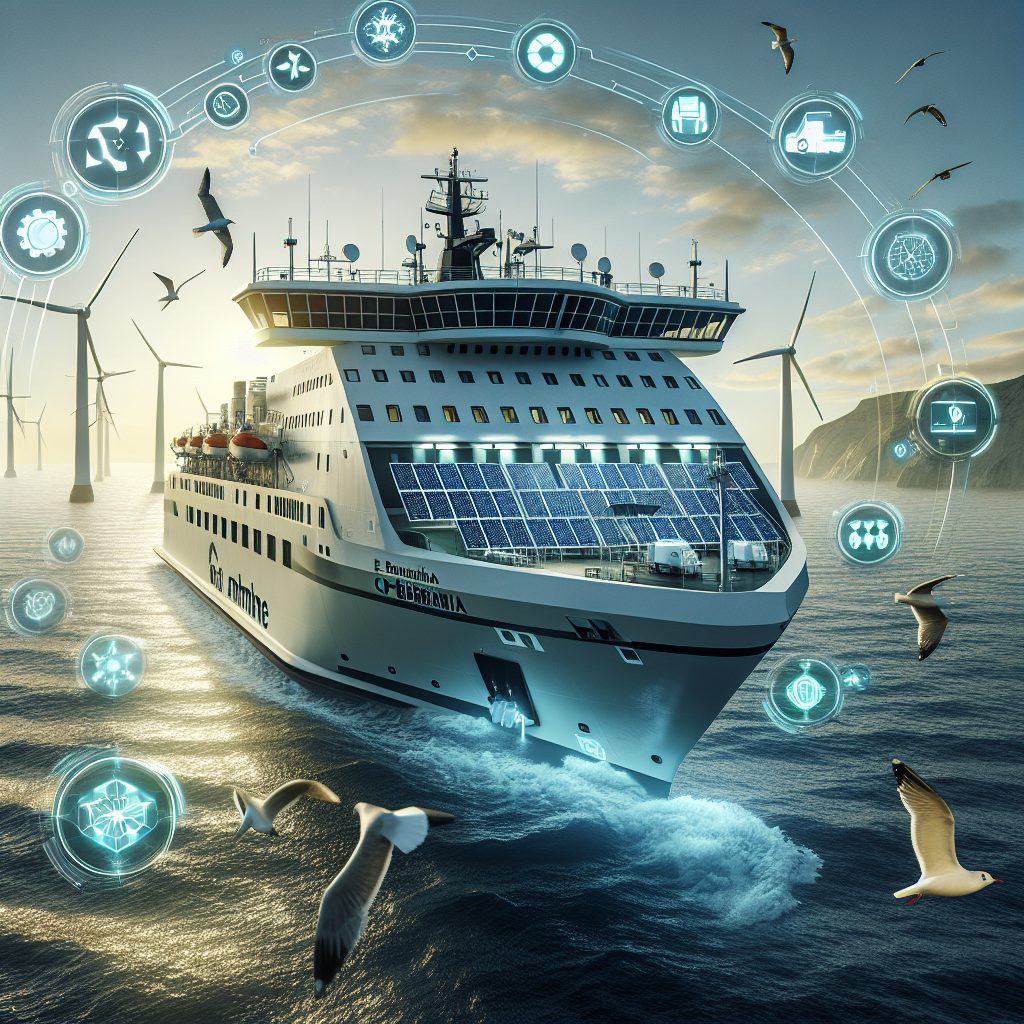
The Green Power Revolution: E-Methanol for Baleària’s Ferry The maritime sector is advancing rapidly, offering sustainable and efficient solutions that are revolutionizing commercial and recreational navigation. A recent example of this trend is the e-Nomad system developed by the Catalan company Methanol Reformer, which is being installed on Baleària’s Cap de Barbaria ferry. This innovative technology not only promotes sustainable development but also opens doors to new job and business opportunities in the maritime sector. Transforming Methanol into Hydrogen The core of this initiative is the e-Nomad system, a power generation container that uses e-methanol to produce hydrogen, which is then converted into electricity through a fuel cell. This two-stage process of reforming and conversion allows ships to operate more efficiently and ecologically. The use of e-methanol, stored in liquid form under ambient conditions, overcomes the logistical challenges of storing gaseous hydrogen on board. The reforming technology of methanol involves the production of high-purity hydrogen from stored e-methanol, enabling the introduction of this hydrogen into a fuel cell that generates auxiliary electricity. This reduces the reliance on traditional diesel generators, leading to fuel consumption reduction and emissions decrease, contributing to the decarbonization of maritime transport. According to Javier Torres, CEO of Methanol Reformer, “This initiative demonstrates how technological innovation can transform maritime mobility, increase energy efficiency, and accelerate the decarbonization of short-distance transport.” This statement not only emphasizes the environmental impact but also highlights the transformative potential of the technology at hand. Modular Design and Technical Validation The e-Nomad system has not only undergone technical validation but has also successfully passed the Factory Acceptance Test (FAT) at Methanol Reformer’s facilities. This ensures that it is ready for immediate implementation on the Cap de Barbaria, marking a milestone in the integration of clean technologies in the maritime sector. The modular and compact design of the system allows for integration into both existing ships and new constructions, facilitating rapid deployment and scalability for application across a fleet of short-distance vessels. This modular approach is crucial for the swift adoption of sustainable technologies worldwide, offering a versatile solution adaptable to diverse and evolving markets. The versatility of the e-Nomad system is particularly relevant to industry professionals, providing an adaptable solution for various markets. Investors and technology developers can view this innovation as a replicable and profitable model. Fuel Cell Integration and Energy Efficiency The fuel cell’s role in this system extends beyond electricity generation. The produced energy supports onboard battery charging, reducing the need for conventional diesel generator operation. This not only decreases overall fuel consumption but also significantly reduces emissions both in port and during navigation. The technology relies on tested components, such as the hydrogen generator L18, manufactured under license from the US-based company Element 1®, ensuring high standards of reliability and safety. This efficient integration of sustainable technology in the maritime domain is further evidence of hydrogen’s potential as a marine fuel, offering navigators and vessel operators an opportunity to optimize operations and reduce long-term costs. Cap de Barbaria: An Operational Laboratory Baleària’s decision to implement this technology on the Cap de Barbaria is not coincidental. This ferry serves as an operational laboratory where the capabilities of renewable hydrogen generation are validated under real conditions. As the first ferry operator in Europe to test this integration, Baleària positions itself as a pioneer in clean technology adoption. The Cap de Barbaria serves as a platform for validating renewable hydrogen, optimizing energy management, and verifying decarbonization routes in sensitive environments like the Mediterranean. This innovative approach provides real data on the safety and performance of onboard hydrogen generation, allowing for continuous improvement in sustainable maritime practices. Javier Cervera, Corporate Director of Institutional Relations and Energy Transition at Baleària, states, “This compact system allows us to have an experimental lab of green hydrogen on a small scale in a real operational environment… We continue to be pioneers, testing today the technologies that will make emission-free navigation possible tomorrow.” About Baleària and Methanol Reformer Baleària, Spain’s leading maritime transport group, operates extensive national and international routes. Recognized for its commitment to sustainability, Baleària is strongly dedicated to eco-efficient mobility, leading the way in using cleaner energy sources to advance the decarbonization of its passenger and cargo transport operations. On the other hand, Methanol Reformer, a Catalan company specializing in sustainable energy solutions, focuses on developing and commercializing autonomous modular technologies for hydrogen and electricity generation from renewable methanol. Their solutions target the industrial and transport sectors to accelerate energy transition. In conclusion, the implementation of the e-Nomad system on the Cap de Barbaria ferry represents not only a significant technological advancement but also provides a glimpse into the future of sustainable maritime transport. This technology has the potential to reshape the industry and offers numerous opportunities for those looking to pursue a career in this exciting and ever-evolving sector.
Advancing Maritime Education: Aboa Mare’s Simulator for the Hybrid Ferry Aurora Botnia

Advancing Maritime Education: Aboa Mare’s Simulator for the Hybrid Ferry Aurora Botnia In a world where sustainability is key, Aboa Mare, a renowned maritime education and training center in Turku, Finland, has taken a step forward by completing a ship simulator model for the hybrid ferry Aurora Botnia of Wasaline. This project, carried out in collaboration since the autumn of 2024, aims to offer a realistic training experience through a digital twin designed for specialized instruction, focusing on the unique propulsion system of the vessel. The Aboa Mare simulator represents a milestone in the educational transformation of the maritime sector, allowing crews to experience and master cutting-edge technology without operational risks. During the tests conducted on November 18, 2025, Senior Captain Johannes Sjöholm from Wasaline verified the accuracy of the simulator model in replicating the complex maneuvering characteristics and behaviors of the Aurora Botnia. Aboa Mare’s advancement not only benefits merchant navy professionals but also provides maritime investors and nautical enthusiasts with a clear vision of how technological innovations can transform maritime training and optimize energy efficiency. Mastery of Complex Dual Fuel and Battery Modes The Aurora Botnia stands out as one of the most sustainable ferries globally, operating almost carbon-neutral on the Vaasa (Finland) – Umeå (Sweden) route. This hybrid ferry uses dual-fuel engines running on biogas and LNG, along with an extensive battery system. The simulator developed by Aboa Mare faithfully reproduces the operational modes of the ferry, allowing training in different energy scenarios. The simulator enables officers to practice in three main modes: pure gas/diesel mode, pure battery mode, and hybrid mode, enhancing their ability to manage energy optimally and meet emission reduction targets. This training is essential to achieve the IMO’s carbon intensity indicators. Not only does this training prepare crews for a more ecological future, but it also highlights how the implementation of hybrid systems in the maritime industry could revolutionize the sector. Key Role in Energy Efficiency The main benefit of this innovative tool is enabling the Aurora Botnia crew to maximize energy efficiency. By training in a simulated environment, officers can practice techniques such as “peak-shaving” to manage transient load peaks and emission-free port maneuvers, using only battery power. Eco-driving training is also available, simulating the impact of different propulsion blends on fuel consumption and emissions on the actual Vaasa to Umeå route. Studies show that simulator training can result in real fuel savings of up to 13%. For professional seafarers, this level of detailed training not only reinforces their technical skills but also ensures they can meet increasingly stringent environmental standards. Strengthening Digitalization and Maritime Training The development of this simulator is a significant step towards digitalization in maritime training. By creating an advanced digital twin, Aboa Mare and Wasaline are setting a new standard for realistic and cost-effective training in the industry, allowing safe and complex maneuvers without risk to the vessel or the need for actual fuel. The model is not only realistic but also cost-effective, enabling the performance of high-risk emergency exercises and optimal navigation practices. This approach strengthens Aboa Mare’s position as a global leader in advanced maritime education by integrating sustainable training models into its curriculum. For maritime investors, these innovations not only represent an improvement in daily operations but also an opportunity to invest in technology that promises to change the future of navigation. About Wasaline Wasaline is known for operating the world’s northernmost international ferry route between Vaasa, Finland, and Umeå, Sweden. This company is a pioneer in the Baltic Sea in offering zero carbon footprint transportation thanks to its hybrid ferry Aurora Botnia, which uses biogas and batteries, reflecting a firm commitment to environmental sustainability. About Aboa Mare Situated in Turku, Finland, Aboa Mare is a prominent center for maritime education. It offers specialized degree programs and continuous education in IGF and Polar codes, bridge resource management (BRM) and engine room resource management (ERM), and sustainability. With advanced maritime simulators, Aboa Mare is actively involved in high-quality R&D projects, leveraging its simulation expertise. In conclusion, the development of the simulator for the Aurora Botnia represents not only a significant advancement for Aboa Mare and Wasaline but also an opportunity for professionals, investors, and maritime sector enthusiasts to engage with cutting-edge technology that paves the way towards a more sustainable and efficient future. This article highlights how Aboa Mare has advanced maritime training through its innovative simulator, providing an essential educational tool that facilitates the transition to more sustainable and efficient navigation practices. It also underscores the opportunities that this technology offers in terms of investment and professional development.
The Future of Maritime Industry: Helix Energy Solutions Leading the Way

The Future of Maritime Industry: Helix Energy Solutions Leading the Way Helix Energy Solutions: Perspectives and Opportunities in the International Maritime Sector Innovation and Leadership at Key Events Helix Energy Solutions Group, Inc., a prominent entity in the maritime energy sector, has announced its participation in two highly relevant events on the international stage: the Daniel Energy Partners Executive Series in New York and the Twentieth Annual Energy Conference of Capital One Securities in New Orleans. These occasions mark an excellent opportunity for investors and professionals in the sector to delve into the company’s technological innovations and emerging strategies. The presence of Helix Energy Solutions at these events not only represents its commitment to technological advancement but also its relentless pursuit of opportunities that maximize operational efficiency in the maritime industry. The events will take place in strategic locations: the Nasdaq MarketSite in New York and the Omni Royal Orleans Hotel in New Orleans, two global epicentres of business and innovation. Additionally, the company has confirmed that any investor presentations during these events will be made available publicly, allowing transparent access to information. This openness is crucial in fostering a environment of trust and collaboration among investors, professionals, and enthusiasts in the maritime sector. Cutting-Edge Maritime Technology: A Detailed Focus In a world where technology is advancing at rapid pace, Helix Energy Solutions is positioned as a leader in the adoption and development of marine technological solutions. The implementation of advanced technologies in its operations not only enhances safety but also optimizes mission resources and productivity. Innovation is a fundamental pillar for Helix, which has excelled in incorporating underwater robotic systems and more sustainable extraction platforms. These improvements not only reduce environmental impact but also enable the company to offer more efficient services to its clients worldwide. For professionals in the sector, being familiar with the emerging technologies that Helix presents at these events can provide a significant competitive advantage. With the growing demand for cleaner energy sources and safe ocean exploration, staying up to date with these innovations provides merchant mariners and technicians with an elevated perspective in their fields of work. Employment and Investment Opportunities Helix Energy Solutions’ participation in these events also opens up a range of job opportunities for those interested in joining the maritime industry. With the constant development of new routes and vessels, opportunities for qualified professionals are multiplying. Helix seeks to attract talent that can contribute to the sustainable and technologically advanced growth of the company. On the other hand, investors have an unparalleled opportunity to better understand Helix’s future strategies and evaluate its growth potential. The transparency in presentations and active participation in renowned events reinforce Helix’s position as an attractive investment option within the energy sector. By encouraging these types of interactions, Helix not only consolidates its presence in the market but also encourages professionals to submit their resumes and consider being part of a team committed to the planet’s energy future. The Relevance of the Maritime Sector in the 21st Century Today, the maritime sector is an essential component of the global economy. From the transportation of goods to the exploration of natural resources, the importance of the maritime industry continues to grow. In this context, innovations and active participation in industrial events by companies such as Helix are vital for the sustained advancement of the sector. For merchant navy professionals, staying informed about new routes and technologies is crucial for their professional development. Additionally, for investors, understanding trends and technological advances from leading companies offers a strategic advantage when making informed decisions. Exploration and Future: A Commitment from Helix Energy Solutions Helix Energy Solutions continues to demonstrate its commitment to innovation and growth within the maritime sector. By participating in high-profile events, it not only reaffirms its leadership but also invites professionals and investors to be part of a promising future in the industry. The events in New York and New Orleans represent just a part of the wide spectrum of opportunities that Helix offers to those interested in advanced maritime technology. These forums facilitate the exchange of ideas, learning, and inspiration necessary to address the challenges of the 21st century. In conclusion, Helix’s interest in opening its doors to the public and investors is a clear demonstration of how the maritime sector can continue to be a driver of global innovation and development.