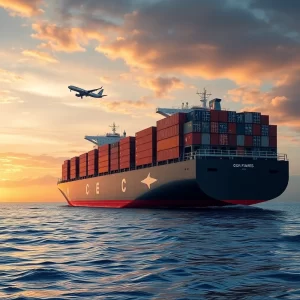
The Green Maritime Transport Corridor Between Barcelona and Shanghai
In a strategic move that promises to transform the global maritime sector, the ports of Barcelona and Shanghai have signed a bilateral agreement to develop a green maritime transport corridor. This collaboration not only underscores the commitment of both ports to decarbonization but also highlights their role as pioneers in port innovation. The agreement, formalized in August 2025, was sealed during the official visit of Salvador Illa, the President of the Generalitat de Catalunya, to the Port of Shanghai. The protocol, signed by José Alberto Carbonell, President of the Port of Barcelona, and Song Xiaodong, President of the Shanghai International Port Group (SIPG), establishes a roadmap for collaboration in key areas. These include digitization, standardization, and decarbonization, with a special focus on green bunkering infrastructure and zero-emission port operations.
This partnership is not arbitrary. It responds to an urgent need to adapt to decarbonization strategies driven by the International Maritime Organization (IMO) and the growing environmental challenges facing the global maritime industry. The development of a green maritime transport corridor aims to facilitate the use of low and zero-emission vessels operating between Shanghai and Barcelona. This corridor will implement ecological bunkering services, promoting fuels like green methanol, ammonia, and bio-LNG. Additionally, the agreement will work on regulatory standards and technical capacity for the supply of alternative fuels, emphasizing both infrastructure improvement and a commitment to technological innovation and energy efficiency.
- Green bunkering infrastructure development
- Use of low and zero-emission vessels
- Promotion of ecological bunkering services
The exchange of data and intelligent systems between the ports will drive digital innovation, enabling operational standardization to enhance emission transparency and logistical operations efficiency. Initiatives like these not only benefit the sector but also strengthen commercial ties between Europe and Asia.
Port Innovation and Cruise Services: A Partnership Beyond Container Transport
The collaboration extends to the cruise segment, aiming to explore passenger logistics, emission control for cruise ships, and onshore infrastructure solutions. The revival of the cruise tourism from China opens new opportunities for passenger services between East and West. Such partnerships are essential to revitalize a sector severely impacted by the pandemic and to establish more sustainable standards in the cruise industry.
Commercial Synergies: Strengthening Maritime Links Between Barcelona and China
The agreement builds upon a solid and longstanding commercial relationship between Spain and China. Around 50% of the total imports at the Port of Barcelona come from China, including electronics, machinery, textiles, and consumer goods. On the other hand, 10% of its exports, comprising pharmaceuticals, agri-food products, wine, and automotive components, are destined for Chinese ports. This commercial interconnection makes collaboration not only logical but also strategic for both ports and their respective economies.
Boosting the Cruise Sector and Smart Port Technologies
The agreement also aims to promote strategic collaboration in the cruise segment, with Shanghai and Barcelona leading as key destinations in cruise tourism infrastructure. This is particularly relevant in the context of the travel market reactivation from China. Both ports will share best practices in developing smart ports, focusing on port cybersecurity, cargo flow automation, and emission analysis. Moreover, the application of artificial intelligence in port management will be explored to enhance operational efficiency and reduce the carbon footprint.
Looking Towards the Future: From Ports to Platforms for Global Sustainability
This agreement between the Port of Barcelona and SIPG represents not only operational cooperation but also a strategic alignment in how leading ports envision the future of maritime transport. In an era of increasing climate responsibility and digital transformation, transcontinental partnerships like this are essential to accelerate the transition to net-zero maritime transport.
For professionals interested in joining this green maritime revolution, submitting resumes to the mentioned companies may be a great opportunity. Experts in sustainability, digitalization, and port management will likely be needed to carry out these ambitious initiatives.