The Evolution of Maritime Security in a Changing World
In an increasingly complex global context, the maritime industry finds itself at a crossroads. With various international crises and persistent threats such as piracy, stability in maritime transport has become a monumental challenge. This article explores how maritime security is being redefined to protect global navigation against contemporary disruptions.
From Regional Focus to Threat-Based Strategy
Traditionally, maritime security was understood from a regional perspective, focusing efforts on specific areas known for their danger. However, the evolution towards a threat-based strategy is revolutionizing this approach. The new Best Management Practices (BMP) for Maritime Security no longer concentrate solely on geographic critical points but offer a universal framework for threat assessment and risk management. This renewed approach empowers shipping companies to implement a culture of proactive and consistent security across all their operations. Security is no longer just an item on a checklist but a strategic shift in mindset.
- Improved security strategies empower shipping companies.
- Enhanced focus on threat assessment and risk management.
- Opportunities for new security products and services.
Personalized Security: One Size Does Not Fit All
In the current landscape of sophisticated and varied threats, security measures that work in one region may be ineffective in another. This underscores the importance of specific threat and risk assessments for each voyage. The International Chamber of Shipping’s Maritime Security Guide reflects this understanding, addressing a wide range of risks from traditional piracy to cyber threats and stray munitions. For professional mariners, this personalized approach to security is crucial, allowing the adoption of measures tailored to the particular circumstances of each journey, reducing risks and increasing operational efficiency and safety.
- Customized security measures for each voyage.
- Reducing risks and increasing operational efficiency.
- Importance of personalized security for investors.
Crisis in the Red Sea: Operational Disruption and Industry Resilience
The crisis in the Red Sea is one of the most impactful events that has reshaped the recent landscape. With 60% of trade redirected around the Cape of Good Hope, logistical challenges were immense. However, thanks to the industry’s agile and resilient response, a significant spike in global prices was avoided. Despite the reduction in potential targets due to the diversion, attacks continued, tragically affecting seafarers. Nevertheless, enhanced cooperation and situational awareness have brought significant benefits. This case is an example of how the industry’s adaptability can mitigate even the most severe disruptions.
- Significant impact of the crisis in the Red Sea.
- Industry’s agile and resilient response.
- Importance of preparation and operational flexibility.
Conflict in Ukraine: Innovation Amidst Conflict
With the outbreak of war in Ukraine, trade in the northwest Black Sea came to a standstill. However, initiatives like the Black Sea Grain Initiative and a humanitarian corridor helped maritime activity recover to levels close to those before the conflict. This rapid recovery is a testament to the industry’s adaptability and strategic coordination. For maritime investors, such innovation amidst adversity is a promising sign of recovery potential and profitability. The situation in Ukraine underscores the importance of diplomacy and operational innovation in modern navigation, offering key lessons for crisis management.
- Rapid recovery of maritime activity in the Black Sea.
- Importance of innovation in conflict zones.
- Lessons for crisis management and operational flexibility.
Piracy in Southeast Asia: A Persistent and Evolving Threat
Piracy remains a concern in the Malacca and Singapore Straits, where sea robberies persist. However, the implementation of control measures by regional authorities, especially in Indonesia, has drastically reduced criminal operations. This progress illustrates the power of regional cooperation and enforcement in combating piracy. For industry professionals, it is an example of the positive impact that international collaboration can have on maritime security. Additionally, for investors, the reduction of piracy due to effective collaboration can lead to lower operational costs and increased investment security.
- Reduction in sea robberies through regional cooperation.
- Positive impact of international collaboration on maritime security.
- Benefits for investors in terms of reduced risks and costs.
Emerging Threats on the Horizon
Looking to the future, the maritime sector must address three major emerging security threats: regional conflicts and unexploded ordnance, cybersecurity vulnerabilities, and drug trafficking along with legal risks. These complex threats require technical solutions and legal protections for shipowners, operators, and seafarers. For mariners, staying abreast of the latest technologies and security measures is crucial to protect themselves in an increasingly risky environment. For investors, these threats serve as a wake-up call on the importance of evaluating not only economic and market conditions but also security-related risks when making investment decisions.
- Major emerging security threats in the maritime sector.
- Importance of technical solutions and legal protections.
- Significance of evaluating security risks for investors.
The Power of Cooperation
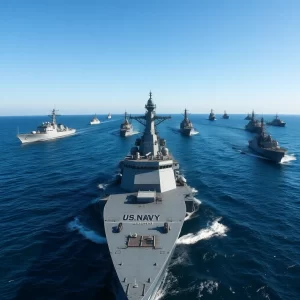
History demonstrates that international cooperation is key to success in maritime security. Joint efforts, as seen with EUNAVFOR Atalanta, Combined Maritime Forces, and NATO, have set the standard for coordinated security responses. Policy and strategy must align to ensure that crisis responses are swift and tailored to the unique demands of the maritime sector. For merchant navy professionals, this cooperation is not only beneficial but essential to maintaining a safe working environment. International cooperation also offers