Innovative 5G Connectivity from the Stratosphere: How Airspan and Space Compass are Transforming Maritime Surveillance
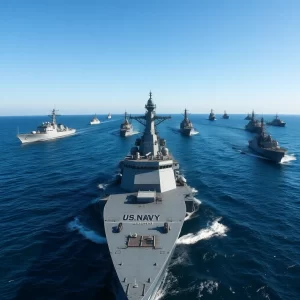
In our increasingly interconnected world, technological innovation continues to revolutionise traditional sectors, including the maritime industry. The announcement by Airspan Networks Holdings LLC regarding the implementation of a 5G Air-to-Ground (ATG) communication system for Space Compass’s High-Altitude Platform Station (HAPS) marks a significant advance in Maritime Domain Awareness (MDA) technology. This initiative not only promises to enhance operational efficiency but also aims to redefine safety and communication standards within the nautical sector.
Historically, the maritime industry has relied on more traditional communication systems such as AIS (Automatic Identification System) and radar for marine traffic surveillance and management. However, these systems have their limitations, especially in remote areas or under adverse weather conditions. The introduction of 5G from the stratosphere promises to overcome these limitations, offering a new dimension of connectivity and control.
Detailed Analysis: 5G Air-to-Ground for HAPS
The 5G ATG communication system for HAPS, developed by Airspan, is designed to provide a secure, real-time data link between high-altitude platforms and ground operators. Operating at altitudes of 16 to 18 kilometres, these platforms can cover vast oceanic areas, overcoming line-of-sight limitations that affect traditional ground stations. The use of 5G frequencies enables high-speed data transfers, crucial for the transmission of mission-critical information.
Moreover, HAPS technology not only facilitates faster and more reliable communications but is also more resilient to adverse weather conditions. High-altitude platforms can operate continuously, providing vital data for maritime navigation and search and rescue operations. This advancement not only enhances safety at sea but also offers potential applications such as environmental monitoring and maritime traffic management.
Impact on the Merchant Navy and the Nautical Sector
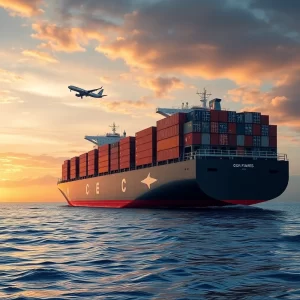
The implementation of this technology represents a paradigm shift for professionals in the merchant navy and the nautical sector in general. The ability to receive real-time data and communicate effectively over long distances optimises decision-making and improves the safety of operations at sea. Ship captains and crews will be able to access up-to-date information on weather conditions, marine traffic, and potential threats, allowing them to proactively adjust their routes and operations.
Furthermore, this technology has the potential to boost operational efficiency by reducing response times in emergency situations and improving coordination among different maritime sector stakeholders. 5G connectivity from the stratosphere could even revolutionise maritime logistics, enabling more precise tracking of vessels and more efficient resource management.
Challenges and Future Prospects for the Sector
Despite the enthusiasm this technology generates, it also poses several challenges. Integrating 5G systems into existing infrastructure will require significant investments and could face resistance from traditional sectors reluctant to change. Additionally, cybersecurity will be a critical aspect to consider, as greater connectivity also implies a higher risk of cyber threats.
Looking to the future, it is expected that 5G technology and HAPS platforms will expand beyond the maritime domain, with potential applications in aviation, environmental monitoring, and emergency communications. International cooperation will be essential to establish global standards that facilitate the interoperability and security of these advanced networks.
Key Concepts
5G Air-to-Ground (ATG): Technology that enables high-speed communication between high-altitude platforms and ground stations, facilitating real-time data transfer.
High-Altitude Platform Station (HAPS): Platforms operating in the stratosphere to provide communication and surveillance services, extending reach beyond traditional terrestrial capabilities.
Maritime Domain Awareness (MDA): An initiative to enhance understanding and response to situations in the maritime environment, using advanced technology to monitor and manage activities at sea.
The entry Innovative 5G Connectivity from the Stratosphere: How Airspan and Space Compass are Transforming Maritime Surveillance was first published on WishToSail.com.