


The recent announcement of a landmark trade agreement between the United States and India marks a pivotal moment in international economic relations. President Donald Trump has unveiled a significant reduction in tariffs on Indian imports, decreasing them from a steep 50% to a more manageable 18%. This development is intricately tied to India’s commitment to cease its purchases of Russian oil, thus heralding a new era in US-India economic ties.
Context and Background
This agreement emerges amidst a backdrop of shifting global economic alliances, influenced heavily by the current geopolitical tensions between the United States and Russia. Historically, India has been a substantial purchaser of Russian oil. However, international sanctions and diplomatic pressures have encouraged a strategic pivot. Reducing tariffs serves as a crucial incentive for India, aiming to diversify its energy sources and fortify its economic relationship with the United States.
Previously, trade relations between the two nations have been fraught with challenges, often characterised by protectionist policies on both sides. However, this agreement may well catalyse closer economic cooperation and mutual benefit.
In-depth Technical Analysis
Impact on Maritime Supply Chains
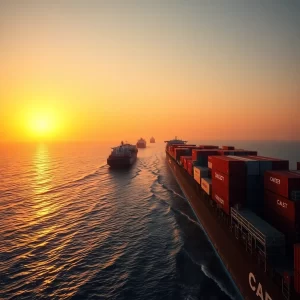
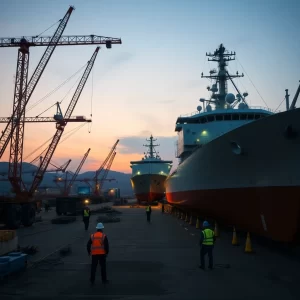
The reduction in tariffs is poised to have a substantial impact on port logistics and maritime transport. Cargo operators and shipowners can anticipate an increase in trade volume between the US and India, likely leading to a greater demand for container ships. Ports in both nations will need to upgrade their infrastructure to accommodate the uptick in goods traffic.
From a logistics perspective, the tariff reduction will streamline the flow of goods, cutting down on clearance times and associated costs, potentially sparking greater investment in port infrastructure.
Economic Implications for the Energy Sector
India’s decision to halt its Russian oil purchases carries significant implications for the global energy market. India will need to explore alternate sources to meet its energy needs, potentially benefiting US oil exporters. Depending on how India replaces its supply, there could also be fluctuations in global oil prices.
Implications for Industry Professionals
Logistics and port operation professionals will need to adapt to potentially higher trade volumes. Port operators must enhance operational efficiency and may need to invest in technology to handle increased merchandise flow. Energy sector professionals should stay alert to business opportunities stemming from India’s shift in energy sourcing.
Impact on the Labour Market
The expansion of trade between the US and India could boost demand for professionals in logistics and maritime transport, particularly in roles related to supply chain management and port process optimisation. Additionally, India’s energy supply shift may create new opportunities for engineers and technicians specialising in renewable and alternative energies.
Geopolitical and Macroenvironmental Layer
In the macroeconomic context, this deal aligns with the trends of energy source diversification and reducing dependency on fossil fuels from politically unstable regions. Moreover, it strengthens the US’s position as a key strategic partner for India at a time when geopolitical tensions are reshaping global alliances.
Outlook
In the short term, an increase in bilateral trade and an expansion in economic relations between the US and India are expected. Critical factors to consider include both countries’ capacity to adapt to new trade dynamics and the impact on global energy prices. Nonetheless, this agreement could be a significant step towards more sustainable and mutually beneficial economic cooperation.
This news is based on “Trump Reduces Tariffs on Indian Imports Amid Strategic Shift from Russian Oil” by FAN Transport Insights, accessible at original link.
Disclaimer: This article is an independent editorial analysis based on public information and technical knowledge of the maritime sector. It does not replace consultation with qualified professionals nor constitute specific technical, legal, regulatory, or professional advice.
The entry originally appeared on WishToSail.com.
Editorial Note: This article has been adapted from Spanish to British English
for the WishToSail.com audience. Original source: QuieroNavegar.app