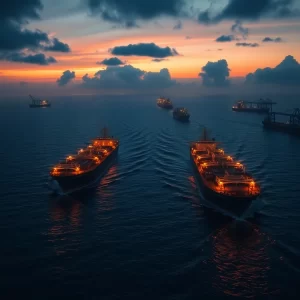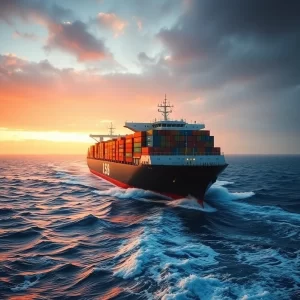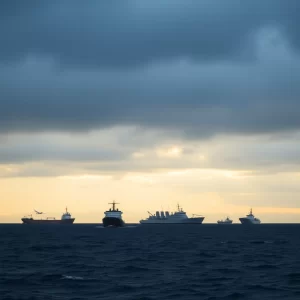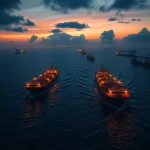

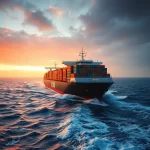


- Two Indian state-owned LPG (Liquefied Petroleum Gas) tankers completed safe transit through the Strait of Hormuz on 14 March.
- The shipment provides urgent relief for India’s acute cooking fuel shortage, exacerbated by Gulf conflicts.
- The strait handles approximately 30% of global seaborne LPG trade, highlighting its strategic vulnerability.
On 14 March, India’s Ministry of External Affairs spokesperson confirmed that two state-owned LPG tankers had secured safe passage through the Strait of Hormuz. This logistical and diplomatic move aims to alleviate a severe shortage of cooking fuel in the country, caused by supply disruptions from ongoing Persian Gulf conflicts.
CONTEXT AND BACKGROUND
India ranks among the world’s largest importers of LPG (Liquefied Petroleum Gas, a mixture of propane and butane used for cooking and heating). It relies heavily on maritime shipments from the Persian Gulf, which transit the Strait of Hormuz. This choke point is a critical energy corridor, only 21 miles wide at its narrowest section.
Historically, geopolitical tensions in the region, such as vessel attacks or armed conflicts, have spiked insurance premiums and forced costly reroutes. The current war in the Persian Gulf has created significant disruption, threatening regular supplies to importing nations like India.
IN-DEPTH TECHNICAL ANALYSIS
The vessels involved are LPG tankers, classified as gas carriers designed to transport liquefied petroleum gas under pressure and/or at low temperatures. These ships require highly trained crews and specialised systems to handle hazardous cargoes, making their successful transit a matter of both safety and diplomacy.
The ‘safe transit’ implies coordination with regional actors and possibly protective measures, such as diplomatic guarantees or enhanced monitoring. Operationally, this reduces immediate risks of attacks or detentions, allowing cargo to reach port smoothly.
For India’s supply chain, the arrival of these two tankers offers temporary mitigation but not a long-term solution. LPG is vital for domestic and industrial use, and prolonged disruption could lead to rationing, price hikes, and social unrest given millions of households depend on it.
CONCRETE OPERATIONAL IMPLICATIONS
This event underscores the need for robust contingency plans among tanker owners and operators in the Persian Gulf. War risk insurance premiums for the area are likely to remain elevated, increasing total operational costs.
Operationally, it may boost demand for smaller or more agile vessels capable of faster voyages with lower risk profiles. There is also growing interest in diversifying supply sources, though logistics from regions like the US or Africa involve longer and costlier freights.
IMPACT ON THE LABOUR MARKET
The situation could raise demand for officers and crew with specific certifications for gas carriers, such as those required by the IGF Code (International Code of Safety for Ships using Gases or other Low-flashpoint Fuels). Maritime security and risk management specialists for conflict zones may see increased relevance.
For port logistics professionals in India, timely arrival of these shipments requires precise coordination for immediate unloading and distribution to avoid bottlenecks in already congested terminals.
MACRO CONTEXT
Geopolitically, the negotiated safe transit highlights the role of bilateral and multilateral diplomacy in stabilising critical trade routes. Normatively, the International Maritime Organization (IMO) has protocols for navigation in risk areas, but enforcement depends on coastal states and naval powers present.
The trend towards greater instability in the Persian Gulf could accelerate investments in land-based infrastructure, such as pipelines, or alternative energy technologies to reduce dependence on seaborne LPG imports.
OUTLOOK
Short-term, more similar shipments under ad-hoc agreements are expected, keeping India’s supply in a precarious balance. If the conflict intensifies, mass rerouting via the Cape of Good Hope could become widespread, adding weeks to transit times and exponentially raising costs.
For investors, the LPG shipping sector presents both risks and opportunities. Owners with modern, flexible fleets might benefit from higher freight rates, while persistent uncertainty could dampen new vessel orders until the geopolitical landscape clarifies.
FAQ
- What is LPG and why is it so important for India? LPG (Liquefied Petroleum Gas) is a mixture of gases like propane and butane, used mainly for cooking and heating. India is a major consumer, with millions of households reliant on cylinders, and imports a significant portion of its demand, making maritime supply critical.
- Why is the Strait of Hormuz so vulnerable? It is a narrow and shallow maritime passage, the sole sea access for oil and gas producers from the Persian Gulf. Its geography makes it susceptible to blockades, attacks, or incidents that can swiftly disrupt traffic, affecting global energy markets.
- What does ‘safe transit’ mean in this context? It implies that relevant authorities, possibly through diplomatic channels, have guaranteed the vessels will not be interfered with during their passage through the conflict zone. This may be based on temporary agreements or provision of route and security information.
- How does this affect LPG shipping costs? Risks in Hormuz increase war risk insurance premiums and may necessitate additional security services. These extra costs are passed on to freight rates, ultimately raising the price of LPG for end consumers in importing countries like India.
Editorial Note: This article has been professionally adapted from Spanish to British English
for the WishToSail.com international maritime audience. Original article published at
QuieroNavegar.app.