

- Four World War II shipwrecks discovered at depths between 3.4 and 3.8 kilometres in the Sea of Japan.
- Key find includes USS Bonefish, a Gato-class submarine lost in 1945, honouring 243 sailors.
- Advanced technologies like autonomous underwater vehicles (AUV) and synthetic aperture sonar (SAS) enabled high-resolution documentation.
In January 2026, the Lost 52 Project announced the discovery of four World War II wrecks in the Sea of Japan. Led by Tim Taylor of Tiburon Subsea, this late 2025 expedition used cutting-edge underwater robotics to locate and document these deep-sea sites, advancing maritime archaeology and commemorating historical losses.
Context and Background
The Lost 52 Project began in 2010 to find all 52 American submarines lost during WWII patrols. To date, it has located nine submarines, with USS Bonefish as a recent major discovery from 1945.
These wrecks, including Sumner-class destroyers like USS Drexler, represent significant human casualties. Their position over 3 kilometres deep has driven innovation in deep-sea exploration techniques.
In-Depth Technical Analysis
The expedition used multibeam echosounders (MBES), which emit multiple sound beams to create 3D seabed maps. This allowed extensive coverage of the Sea of Japan with high resolution.
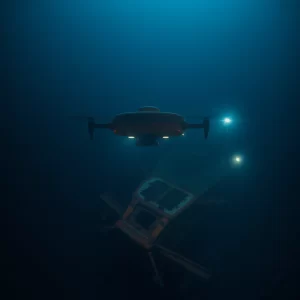
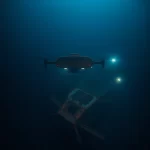
Autonomous underwater vehicles (AUV) executed pre-programmed grids, reducing human intervention at extreme depths. Synthetic aperture sonar (SAS) provided ultra-high-resolution acoustic images, crucial for identifying wreck shapes in poor visibility.
For detailed inspection, remotely operated vehicles (ROV) with HD cameras captured data, integrated into 4D reconstructions. This technology fusion creates comprehensive archaeological records beyond conventional methods.
Concrete Operational Implications
For underwater archaeology, this sets new standards for non-invasive documentation. 4D photogrammetry enables precise virtual recreations for museums and education without disturbing sites.
Operationally, it lowers risks by eliminating diver needs at abyssal depths. Future projects can optimise costs with AUV for initial mapping and ROV for validation, boosting efficiency in maritime explorations.
Impact on the Labour Market
These discoveries increase demand for underwater robotics engineers and AUV/ROV operators, specialising in autonomous systems and precision navigation. Sectors like defence and offshore energy seek similar profiles.
Opportunities also arise for marine archaeologists skilled in acoustic data processing. Training in oceanography or naval engineering gains relevance, offering careers in research and underwater conservation.
Macro Context
Geopolitically, these findings foster international cooperation in historical preservation, involving wrecks from multiple nations. Global regulations, such as UNESCO’s, protect underwater sites, encouraging non-invasive methods.
Trends towards deep-sea exploration with AI are reinforced, with applications in maritime security and environmental monitoring. Tiburon Subsea’s technology has dual-use potential, valuable in defence and commercial sectors like submarine telecommunications.
Outlook
The Lost 52 Project will continue searching for remaining submarines, possibly expanding to other war theatres. This could advance mapping of underwater resources, such as minerals or archaeological sites, opening investment niches in oceanographic technology.
Long-term, data fusion techniques might standardise for port inspections or critical infrastructure checks, though commercial applications require risk and feasibility assessments by stakeholders.
FAQ
What is the Lost 52 Project? It is an archaeological initiative dedicated to locating and documenting the 52 American submarines lost during WWII, using advanced underwater technology to preserve historical legacy.
What technology was used in these discoveries? The expedition employed multibeam echosounders (MBES) for mapping, autonomous underwater vehicles (AUV) for autonomous operations, synthetic aperture sonar (SAS) for high-resolution imaging, and ROV with HD cameras for visual inspection, integrated into 4D systems.
Why is the USS Bonefish discovery significant? USS Bonefish was a Gato-class submarine with a notable war record, including seven patrols and multiple awards. Its discovery at 3.4 km depth closes a historical chapter and demonstrates technical capabilities in abyssal exploration.
How does this impact the maritime sector? It advances underwater exploration technologies, with implications for archaeology, maritime security, and professional training. Opportunities emerge in robotics and data processing, though professionals must adapt to more automated tools.
Editorial Note: This article has been professionally adapted from Spanish to British English
for the WishToSail.com international maritime audience. Original article published at
QuieroNavegar.app.