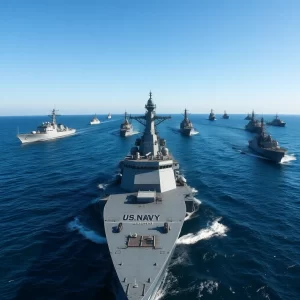
- The Desert Storm operation in January 1991 catalysed a major overhaul of China’s People’s Liberation Army Navy (PLAN).
- A conflict involving Iran could disrupt 20% of global oil shipments passing through the critical Strait of Hormuz.
- Operational disruptions may lead to 15-30% longer transit times and maritime insurance premium increases of up to 50%.
In January 1991, the US-led Desert Storm operation served as a wake-up call for China’s military, revealing deficiencies in precision warfare and air dominance. This historical event prompted extensive reforms in the People’s Liberation Army (PLA), particularly its naval branch. Today, escalating tensions with Iran raise critical questions about maritime security, as the Strait of Hormuz handles a fifth of the world’s oil traffic. How have past lessons influenced current naval strategies, and what does this mean for global shipping?
CONTEXT AND BACKGROUND
Operation Desert Storm showcased advanced capabilities like precision strikes that China lacked in 1991. This prompted the PLA to initiate a sweeping modernisation effort, focusing on its navy, the PLAN, to enhance power projection. Historically, Persian Gulf conflicts, such as the Iran-Iraq War in the 1980s, have driven global naval doctrine changes. These events underline how regional tensions can reshape maritime operations worldwide.
IN-DEPTH TECHNICAL ANALYSIS
First, the PLAN’s post-1991 evolution included acquiring aircraft carriers, submarines, and anti-ship missile systems. This reflects an anti-access/area denial (A2/AD) strategy, which uses missiles, mines, and electronic systems to deny enemy forces access to key maritime zones like the South China Sea.
Second, a potential Iran conflict could see similar A2/AD tactics in the Strait of Hormuz, a chokepoint for 20% of global oil. Iran has developed naval mines, coastal missiles, and asymmetric warfare tactics that threaten navigational freedom.
Third, lessons from Desert Storm on intelligence, surveillance, and reconnaissance (ISR) integration are now applied in maritime operations. China deploys drones and satellites to monitor commercial routes, enhancing situational awareness.
CONCRETE OPERATIONAL IMPLICATIONS
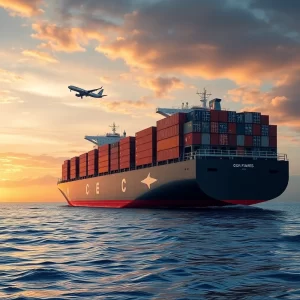
Operationally, this could force tankers and container ships to divert routes, increasing transit times by 15-30% in blockade scenarios. Maritime insurance premiums might spike by up to 50%, similar to hikes during the Gulf War.
Commercial vessels may need enhanced security protocols, such as naval escorts or defence systems against asymmetric threats. Ports in Oman or the UAE could experience increased traffic from alternative routes.
IMPACT ON THE LABOUR MARKET
There will likely be higher demand for maritime security specialists, including naval liaison officers, intelligence analysts, and A2/AD system operators. Captains and crews will require training in crisis management and conflict-zone navigation, aligning with regulations like the International Ship and Port Facility Security (ISPS) Code.
MACRO CONTEXT
Geopolitically, Persian Gulf tensions intersect with global frameworks such as the United Nations Convention on the Law of the Sea (UNCLOS), which upholds freedom of navigation. Trends toward hybrid wars, blending cyber-attacks and irregular operations, complicate international maritime responses.
OUTLOOK
Future scenarios include escalation affecting bunker prices and global supply chains, or multilateral cooperation for joint patrols. Investment in early-detection technologies and unmanned vessels could accelerate, offering opportunities for shipowners and naval engineers.
FAQ
What is A2/AD in a maritime context?
A2/AD refers to anti-access/area denial strategies that employ missiles, mines, and electronic systems to prevent enemy forces from operating in crucial maritime areas, such as the Strait of Hormuz or South China Sea.
How did Desert Storm specifically affect the Chinese navy?
Desert Storm spurred China to modernise its PLAN, focusing on power projection capabilities, including building its first aircraft carrier, the Liaoning, and developing advanced missile systems on destroyers like the Type 055.
What risks does maritime traffic face in the Strait of Hormuz?
Risks include blockades with naval mines, anti-ship missile attacks, and fast-boat assaults, which could disrupt oil flow, raising logistical costs and insurance premiums for global shipping companies.
Are there historical precedents for conflicts altering maritime routes?
Yes, during the Iran-Iraq War (1980-1988), attacks on tankers in the Persian Gulf led to massive route diversions and the implementation of naval convoys, similar to potential disruptions today.
Editorial Note: This article has been professionally adapted from Spanish to British English
for the WishToSail.com international maritime audience. Original article published at
QuieroNavegar.app.