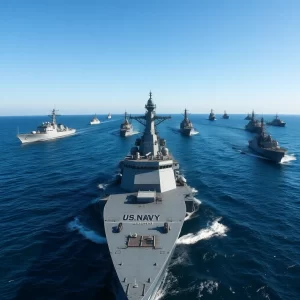
- 34 vessels transited the Hormuz Strait following a US-imposed maritime blockade, as reported by authorities.
- This strategic chokepoint handles approximately 20% of global maritime oil traffic, making disruptions critical.
- Operational risks include potential insurance premium hikes of up to 30% and detours adding up to 15 days via alternative routes like the Cape of Good Hope.
In a recent announcement, US officials confirmed that 34 ships have navigated the Hormuz Strait despite a newly enforced maritime blockade. This key waterway, vital for international oil shipments, now faces significant operational uncertainty due to ambiguous blockade terms, threatening commercial safety and traffic flow in the region.
CONTEXT AND BACKGROUND
The Hormuz Strait is a narrow maritime passage located between Oman and Iran, with its narrowest point spanning only 21 nautical miles. According to the International Energy Agency, it facilitates around 20% of the world’s seaborne oil transport, cementing its role as a global economic artery.
Historically, geopolitical tensions, such as those between the US and Iran, have led to occasional disruptions. For instance, in 2019, attacks on tanker vessels in the area caused insurance premiums to surge and forced logistical reroutes, setting a precedent for current risks.
IN-DEPTH TECHNICAL ANALYSIS
A maritime blockade typically involves restrictions on free vessel transit, often enforced by military presence for inspections or prohibitions. In this case, the declaration suggests selective measures, but the lack of clear operational details hampers shipping companies’ planning efforts.
The ambiguity over which vessels are exempt or subject to the blockade can lead to misinterpretations by ship captains. This increases the likelihood of incidents, as crews may face conflicting orders or communication delays with maritime authorities, exacerbating safety concerns.
CONCRETE OPERATIONAL IMPLICATIONS
Operationally, shipping firms must prepare for possible route diversions, which extend voyage times and raise fuel costs. For example, rerouting via the Cape of Good Hope can add up to 15 days to journeys from the Persian Gulf, significantly impacting schedules and expenses.
Additionally, maritime insurance premiums, particularly for crude oil tankers, could rise substantially. In similar past scenarios, increases of up to 30% have been observed, directly affecting the profit margins of shipowners and operators in the sector.
IMPACT ON THE LABOUR MARKET
For seafarers, this situation heightens occupational hazards, necessitating additional training in safety protocols and crisis management. Officers and captains must be proficient in conflict zone navigation procedures, aligned with standards like the ISPS Code (International Ship and Port Facility Security Code).
This could boost demand for specialised courses, benefiting maritime training centres. However, it might also deter junior personnel from accepting assignments on high-risk routes, potentially affecting labour availability and crewing stability in the industry.
MACRO CONTEXT
Geopolitically, ongoing US-Iran tensions remain pivotal, with implications under the United Nations Convention on the Law of the Sea (UNCLOS), which governs innocent passage through international straits. Any escalation could lead to further sanctions or interventions by the International Maritime Organization (IMO).
Globally, trends such as energy route diversification, including increased use of liquefied natural gas (LNG) transported via other corridors, might accelerate if instability persists, reshaping maritime logistics and supply chains.
OUTLOOK
In the short term, shipping companies are likely to implement more rigorous risk assessments, leveraging satellite tracking technologies to monitor military movements. This could advantage logistics firms offering maritime intelligence solutions and real-time data services.
If confusion persists, a temporary reduction in Hormuz Strait traffic is possible, influencing oil prices and freight rates. Investors should track indices like the Baltic Dry Index to anticipate fluctuations in shipping costs and market dynamics.
FAQ
What is the Hormuz Strait and why is it significant for maritime traffic?
The Hormuz Strait is a narrow sea passage between Oman and Iran, crucial because it carries about 20% of global seaborne oil, connecting the Persian Gulf to international oceans. Disruptions here can severely impact energy supply chains.
How does a maritime blockade affect ship operations practically?
A maritime blockade can compel vessels to take alternative routes, adding up to 15 days to voyages and increasing operational costs. It also requires captains to follow specific security protocols, such as communications with naval forces and possible inspections, slowing down operations.
What security measures should crews take in blockade zones?
Crews should adhere to the ISPS Code, which includes enhanced surveillance, regular reports to authorities, and emergency response training. Using Automatic Identification Systems (AIS) for transparent navigation is also recommended to improve safety and compliance.
Editorial Note: This article has been professionally adapted from Spanish to British English
for the WishToSail.com international maritime audience. Original article published at
QuieroNavegar.app.