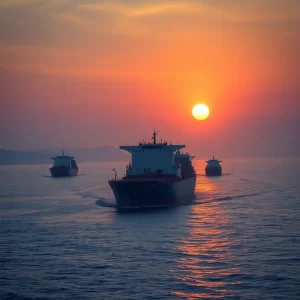
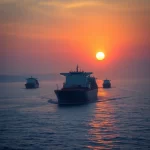


- GNV Phoenix, ex-Moby Fantasy, joins as the 29th vessel in GNV’s fleet after a refit.
- Four new ro-pax ferries are scheduled for 2026, each requiring 80-120 STCW-certified crew members.
- Spain and Italy dominate 65% of Europe’s ferry market, valued at €8-10 billion annually.
GNV (Grandi Navi Veloci), a key Mediterranean ferry operator owned by MSC Group, has added the GNV Phoenix to its fleet and plans to introduce four new ro-pax vessels by 2026. This expansion is part of a strategic growth push that is boosting demand for qualified maritime professionals on routes linking Southern Europe and North Africa. The move underscores the sector’s resilience and the increasing need for skilled crew in short-sea shipping.
Context and Background
GNV ranks as the second-largest ferry operator in the Mediterranean, trailing only Grimaldi Lines. With a network of 33 routes connecting Italy, Spain, France, Morocco, Algeria, Tunisia, Malta, and Albania, its fleet is crucial for regional transport. Fully owned by MSC Group, which reported record revenues in 2025, the company is investing heavily to diversify and strengthen its passenger and roll-on/roll-off cargo division.
The Mediterranean ferry market, estimated at €8-10 billion per year, is heavily concentrated in Spain and Italy. Together, these countries handle about two-thirds of European ferry traffic. This high route density and persistent demand for cross-border connectivity justify GNV’s aggressive fleet modernisation and expansion strategy.
In-Depth Technical Analysis
The GNV Phoenix is a ro-pax vessel (roll-on/roll-off passenger ship) measuring 214 metres in length overall (LOA) with a gross tonnage (GT) of 35,736. Built in 2002, it previously operated as Moby Fantasy for Moby Lines, also under MSC ownership. Its inclusion is not a mere replacement but part of a broader plan that involves deploying four new ro-pax ferries by late 2026.
The first of these, GNV Polaris, is already in service. Others, such as GNV Orion and GNV Virgo, will follow. These newbuilds feature advanced environmental technology, including exhaust gas cleaning systems (EGCS) and selective catalytic reduction (SCR) units to meet the International Maritime Organization’s (IMO) stringent Tier III standards for nitrogen oxide (NOx) emissions. Many are dual-fuel or LNG-ready, designed to use liquefied natural gas (LNG), which necessitates specific training for engine room personnel.
Concrete Operational Implications
The arrival of GNV Phoenix, which requires refurbishment before operational deployment, alongside the new ferries, has direct and quantifiable impacts. Each large-capacity ro-pax, like those ordered by GNV, needs a full complement of 80 to 120 crew members, depending on hotel category and onboard services.
This expansion creates a domino effect across the existing fleet. Experienced officers and crew may be promoted or transferred to the new vessels, opening vacancies on older ships that must be filled. Consequently, a multi-level hiring cycle is activated, enhancing operational efficiency and fleet renewal.
Impact on the Labour Market
For maritime professionals, this growth translates into concrete opportunities. GNV, and by extension the broader Spanish and Italian ferry sectors, will need to fill positions across all departments:
- Deck: Captains (requiring STCW Management Level certification), bridge officers (STCW Operational Level), and ratings.
- Engine: Chief engineers, engineering officers, and naval electricians, all with STCW credentials. Dual-fuel technology and gas cleaning systems create specific demand for profiles with specialised training.
- Hotel Services: Pursers, stewards, waiters, kitchen and entertainment staff. While these roles don’t require STCW for hotel functions, personnel handling safety duties, such as deckhands, must have basic safety training.
Key corridors like Spain-Italy, Spain-Morocco, and Italy-Sicily/Sardinia will see heightened demand. For Spanish officers, this offers an attractive career path in a stable sector with rotational contracts and the chance to serve on state-of-the-art vessels.
Macro Context
MSC/GNV’s investment reflects strong confidence in the resilience of European short-sea shipping. Amid pressure to decarbonise transport, modern, efficient ferries present a competitive alternative to planes or cars on many routes. The focus on greener ships also responds to tightening environmental regulations in Mediterranean ports.
Globally, trends towards sustainable shipping and stricter IMO rules are driving operators to adopt cleaner technologies. This aligns with broader industry shifts, where environmental compliance is becoming a key operational priority.
Outlook
In the medium term, this wave of newbuilds and acquisitions is expected to solidify GNV as a leading player, intensifying competition with Grimaldi and other operators like Balearia or Trasmediterránea in Spain. For professionals, this dynamism means enhanced job mobility and stability. The need for crew with updated STCW training and, increasingly, expertise in new technologies and alternative fuels, is set to rise significantly.
FAQ
- q: What certification is needed to work as an officer on a GNV ferry? a: All deck and engine department positions require official STCW (Standards of Training, Certification and Watchkeeping) certification. For Captain or Chief Engineer, Management Level is needed; for roles like Second or Third Officer, Operational Level suffices.
- q: Do GNV’s new ferries use LNG? a: Many new vessels, such as GNV Polaris, are dual-fuel or LNG-ready, meaning they can operate on liquefied natural gas or traditional fuel. This technology demands specific training for engine crews.
- q: What key routes does GNV operate from Spain? a: GNV runs major routes from Spanish ports like Barcelona and Valencia to destinations in Italy (e.g., Genoa, Civitavecchia), Tunisia, Algeria, and Morocco, plus internal Italian routes and connections to Albania and Malta.
- q: Does GNV’s expansion only affect sea-based jobs? a: No. While most demand is for onboard crew, fleet growth also creates land-based employment in company offices (e.g., operations, traffic, crewing), port agencies, and auxiliary firms for supplies, maintenance, and technical services.
Editorial Note: This article has been professionally adapted from Spanish to British English
for the WishToSail.com international maritime audience. Original article published at
QuieroNavegar.app.