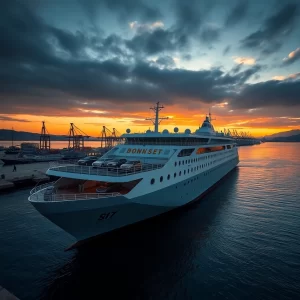

- Las Palmas Port achieves 100% occupancy with 11 offshore vessels simultaneously.
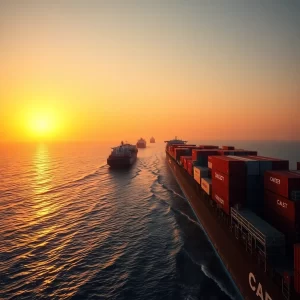
- The fleet includes the Castorone, a 330-meter pipe-laying vessel with over 500 crew.
- Some vessels remain for up to two months, requiring intensive technical services.
Puerto de Las Palmas in the Canary Islands has recently operated at full capacity by hosting 11 offshore vessels at once. This includes the massive Castorone, a 330-meter pipe-laying ship operated by Saipem. The event highlights the port’s critical role as a logistical hub for international energy projects, driven by its strategic Atlantic location.
Context and Background
The Canary Islands’ geographical position is a key asset for maritime operations. Situated at a crossroads between Europe, Africa, and the Americas, Las Palmas Port serves as a natural support base for projects in regions like the Gulf of Guinea, Northwest Africa, and the Eastern Mediterranean. Over decades, the port has developed a technically proficient maritime community capable of managing complex offshore activities.
This expertise attracts major industry players such as Saipem, Noble Corporation, and Transocean. These companies regularly use the facilities for technical calls, major maintenance, and fleet preparation before deployment to remote work zones. The presence of experienced offshore agents, like Hamilton and Cía., further strengthens this ecosystem.
In-Depth Technical Analysis
The arrival of the Castorone is a significant case. With a length of 330 meters, this vessel is among the world’s most advanced submarine pipe-laying platforms. It operates with a Class 3 Dynamic Positioning (DP) system, which uses computerised thrusters to maintain precise location without anchoring, essential for ultra-deepwater work.
Its five-day technical call in Las Palmas, en route from Rio de Janeiro to the Black Sea, demonstrates trust in local workshops for critical repairs under tight schedules. Managing a crew of over 500 people simultaneously is another logistical challenge the port routinely handles.
Extended stays of drilling vessels like the Noble Voyager and Noble Valiant, lasting approximately two months, indicate deeper scheduled maintenance cycles. These operations involve inspections of drilling equipment, safety systems, and technical upgrades requiring a wide range of specialists.
Concrete Operational Implications
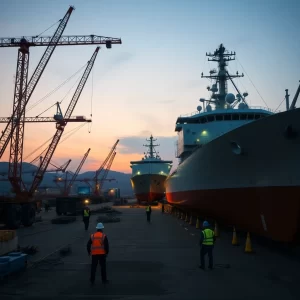
Full occupancy with such vessels directly impacts port operations. Berth coordination, especially in dedicated offshore areas like Reina Sofía, must be meticulous to accommodate large ships with diverse needs.
Demand for specialised services surges, including mechanical and structural repair workshops, heavy crane services, shore power supply, and special waste management. Provisioning for large crews and long stays requires robust supply chains for food, spare parts, and technical consumables.
Impact on the Labour Market
This activity creates high-skilled job opportunities for maritime professionals. Demand focuses on offshore maintenance technicians, project and integrity engineers, Dynamic Positioning (DP) specialists, and logistical support staff.
To access these roles, updated certifications such as STCW (Standards of Training, Certification and Watchkeeping for Seafarers) and specific offshore safety courses like BOSIET (Basic Offshore Safety Induction and Emergency Training) are often essential.
Macro Context
The concentration of vessels aligns with the global energy market revival. Rising oil and gas prices have reactivated offshore exploration and production projects, particularly in the Black Sea and West Africa. Las Palmas positions itself as an ideal support base for these campaigns.
Moreover, the energy transition benefits the port. Offshore wind farm development requires similar specialised vessels, and the experience gained in serving the oil and gas fleet is transferable to the marine renewables sector.
Outlook
The strategic direction, as indicated by port authorities, involves maintaining and enhancing competitive advantage. This requires investing in port infrastructure to handle larger vessels and greener energy needs, such as quay electrification.
Fostering continuous training for the port community to adapt to new offshore technologies and optimising administrative procedures to expedite high-value technical calls are also key challenges. Las Palmas competes on technical and logistical added value, making its specialisation strategy increasingly relevant in an efficiency-driven world.
FAQ
- What is a pipe-laying vessel like the Castorone? It is a specialised ship that installs pipelines on the seabed to transport oil, gas, or potentially hydrogen. It uses the S-lay method, where pipes are welded onboard and laid over the stern in an “S” shape to the bottom.
- Why do offshore vessels choose Las Palmas for two-month maintenance periods? Due to its strategic location, availability of specialised workshops and technicians, favourable year-round climate for outdoor work, and a port community with deep experience in managing complex logistical needs.
- What does it mean for a vessel to have a DP (Dynamic Positioning) system? A DP system is a computerised setup that uses thrusters and sensors like GPS and gyrocompasses to automatically maintain the vessel’s position and heading without anchoring, crucial for precision operations in deep waters.
- What immediate job opportunities does this activity create? It generates demand for maintenance technicians, specialised welders, crane operators, naval engineers, large-scale cleaning and catering service providers, and administrative staff to manage scale logistics and crews.
Editorial Note: This article has been professionally adapted from Spanish to British English
for the WishToSail.com international maritime audience. Original article published at
QuieroNavegar.app.