
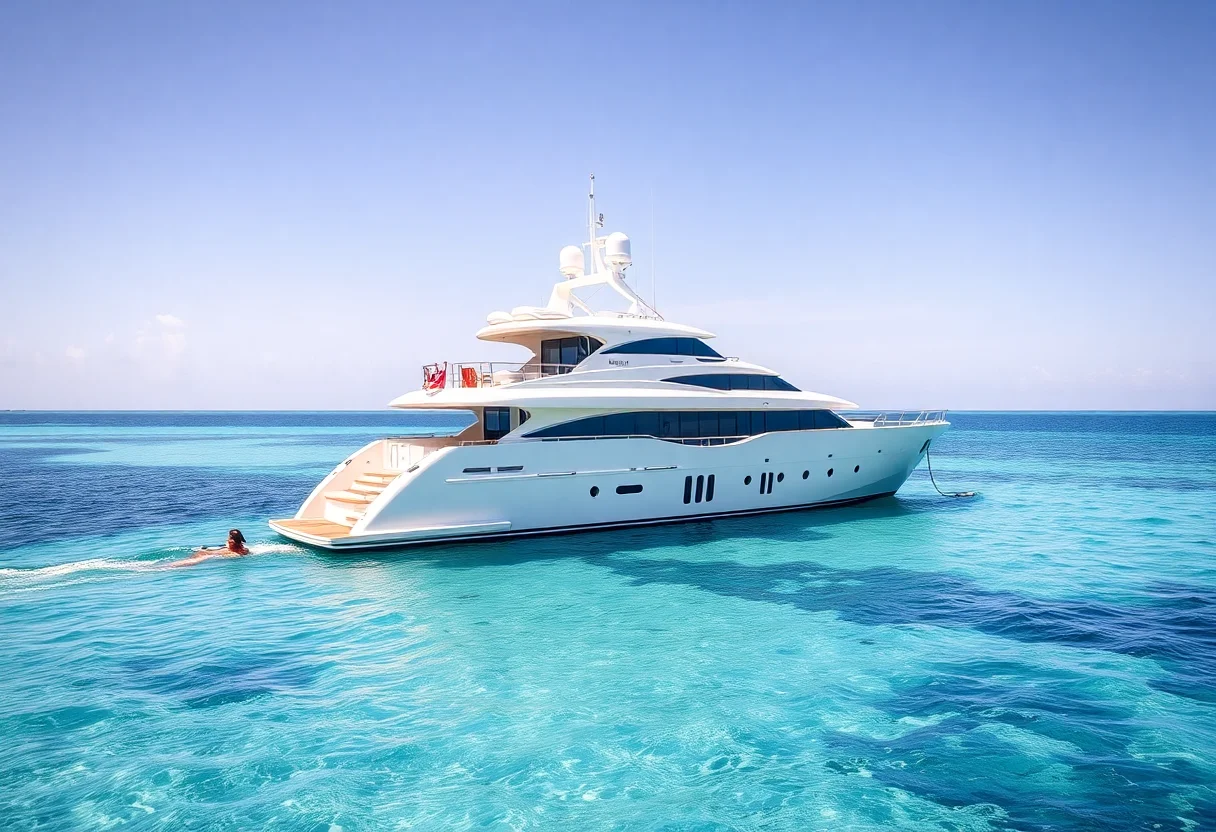
Working on Cayman Islands-flagged vessels
STCW certification, endorsement process, medical & training requirements for seafarers
1. Do you need certification in the Cayman Islands?
Below is the full certification pathway — from eligibility check to receiving your CISR endorsement. By the end of §1–§3, you will know exactly which certificate you need, where to train, and what it costs. §4 walks you through the application. §5 covers immigration, medical, and other CISR-specific requirements.
You need a Maritime Authority of the Cayman Islands (MACI) endorsement if you intend to serve in a capacity that requires a certificate of competency under STCW on a Cayman Islands-flagged vessel. Specifically, this applies when:
- The vessel is 500 GT or more and operates on international voyages (STCW II/1, II/2 for deck; III/1, III/2 for engine)
- The vessel is less than 500 GT but operates on near-coastal voyages (STCW II/3 for deck; reduced requirements for engine)
- You serve in a specialised role (tanker, passenger, high-voltage, GMDSS radio) — additional endorsements per STCW Chapter V apply
You do not need a Cayman Islands endorsement if:
- You hold a certificate from an STCW white-list country and the vessel is below 200 GRT in domestic service
- You are a passenger in a non-watchkeeping role
The Maritime Authority of the Cayman Islands (MACI) is the issuing authority, operating under the Merchant Shipping Act, 2019 (as revised), with seafarer certification regulated by the Merchant Shipping (Crew) Regulations. The Cayman Islands is a full party to the STCW Convention, and MACI is listed on the IMO's white list of administrations whose certificates are recognised internationally.
The Cayman Islands operates one of the world's most respected ship registries, with over 2,500 vessels registered under the Cayman flag. The registry is particularly popular among luxury yacht owners and commercial operators seeking a prestigious flag with strong regulatory oversight. Major vessel types include superyachts, cruise ships, bulk carriers, tankers, and container vessels. MACI maintains representative offices in George Town (headquarters), London, Singapore, and Hong Kong.
—
2. What certification do you need by position?
STCW divides seafarer certification into four departments plus ratings and MLC catering. Each position has a corresponding STCW regulation and a MACI standard.
Deck department
| Position | STCW regulation | MACI standard | Required certificate |
|---|---|---|---|
| Master (≥500 GT) | II/2 | Merchant Shipping (Crew) Regulations | Master Foreign-going |
| Chief Mate (≥500 GT) | II/2 | Merchant Shipping (Crew) Regulations | Chief Mate Foreign-going |
| Officer in Charge of a Navigational Watch (OOW) | II/1 | Merchant Shipping (Crew) Regulations | Watchkeeping Mate |
| Master (<500 GT, near-coastal) | II/3 | Merchant Shipping (Crew) Regulations | Master Near-coastal |
| Able Seafarer Deck (AB) | II/5 | Merchant Shipping (Crew) Regulations | AB endorsement |
| Ordinary Seafarer (OS) | II/4 | Merchant Shipping (Crew) Regulations | OS endorsement |
Engine department
| Position | STCW regulation | MACI standard | Required certificate |
|---|---|---|---|
| Chief Engineer (≥3,000 kW) | III/2 | Merchant Shipping (Crew) Regulations | Chief Engineer |
| Second Engineer (≥3,000 kW) | III/2 | Merchant Shipping (Crew) Regulations | Second Engineer |
| Chief/Second Engineer (750–3,000 kW) | III/3 | Merchant Shipping (Crew) Regulations | Chief/Second Engineer (limited) |
| Officer in Charge of an Engineering Watch (OICEW) | III/1 | Merchant Shipping (Crew) Regulations | Watchkeeping Engineer |
| Able Seafarer Engine | III/5 | Merchant Shipping (Crew) Regulations | AB Engine endorsement |
| Engine-room Rating | III/4 | Merchant Shipping (Crew) Regulations | Engine-room Rating |
Electro-Technical department
| Position | STCW regulation | MACI standard | Required certificate |
|---|---|---|---|
| Electro-Technical Officer (ETO) | III/6 | Merchant Shipping (Crew) Regulations | ETO |
| Electro-Technical Rating (ETR) | III/7 | Merchant Shipping (Crew) Regulations | ETR |
Radio department
| Position | STCW regulation | MACI standard | Required certificate |
|---|---|---|---|
| GMDSS Radio Operator | IV/2 | Merchant Shipping (Crew) Regulations | GMDSS Operator |
Catering (MLC, not STCW)
Per MLC 2006 Regulation 3.2 and Code B3.2, ship's cooks and catering staff fall outside STCW but require:
- Recognised food safety and hygiene certificate (per MLC B3.2.4)
- STCW Basic Safety Training (BST) — they join ship-wide emergency response
- Medical First Aid (per MLC B3.2.5)
| Position | Source | Required |
|---|---|---|
| Chief Cook / Cook | MLC 2006 Reg 3.2 + Code B3.2 | Food safety cert + STCW BST + Medical First Aid |
| Chief Steward / Steward / Stewardess | MLC 2006 + STCW BST | STCW BST + service training |
—
3. Where to Get the Training?
The Cayman Islands Maritime Authority (MACI) recognises courses from Virtual Maritime Academy (VMA) for theoretical and regulatory training on its Cayman-flag vessels. MACI does not specifically approve individual course providers for the practical STCW Basic Safety Training (BST) modules — these are accepted from any training centre that holds IMO whitelist recognition. Below is the position-by-position breakdown of required training and recommended providers.
Master / Chief Mate (STCW II/2 — Management level)
According to the Merchant Shipping (Crew) Regulations and MACI certification standards, Master and Chief Mate must hold a STCW II/2 certificate of competency, plus the following short courses:
- ARPA (Automatic Radar Plotting Aids) — radar observation at operational level
- GMDSS (General Operator's Certificate) — radio operations
- BRM (Bridge Resource Management) — bridge team leadership
- ECDIS (Electronic Chart Display) — if serving on ECDIS-fitted ships
- Medical Care — STCW A-VI/4-2
- ISM Code in Practice — for senior officers responsible for Safety Management Systems
Virtual Maritime Academy — Canadian Rules & Regulations for Foreign Deck Officers (Leadership) covers the regulatory modules that MACI assesses for foreign endorsement. Use code libertydreams for 10% off.
Virtual Maritime Academy — ISM/ISPS/MLC Lead Auditor (ISO 19011:2026) is recognised for management-level deck officers seeking to qualify for internal audit and DPA roles under the ISM Code.
For the foundational STCW Basic Safety Training (BST), generic providers holding IMO whitelist recognition are accepted by MACI. Marine Pro Academy's STCW BST Bundle is one such provider offering the standard BST modules from any IMO-recognised training centre (including the four basic modules required for all seafarers).
OOW / Watchkeeping Mate (STCW II/1 — Operational level)
According to the Merchant Shipping (Crew) Regulations and MACI certification standards, OOWs need STCW II/1 plus:
- ARPA (Automatic Radar Plotting Aids)
- GMDSS (General Operator's Certificate) — unless restricted to non-GMDSS ships
- BRM (Bridge Resource Management)
- ECDIS (if serving on ECDIS-fitted ships)
- Navigation Systems and Instruments (NS-I) — for deck officer foundational training
Virtual Maritime Academy — Canadian Rules & Regulations for Deck Officers (Operational Level) is recognised for operational-level foreign officers. Use code libertydreams for 10% off.
Virtual Maritime Academy — Navigation Systems and Instruments (NS-I) provides foundational STCW II/1 knowledge for operational-level deck officers.
Chief Engineer / Second Engineer (STCW III/2 — Management level)
According to the Merchant Shipping (Crew) Regulations and MACI certification standards, Chief and Second Engineer must hold a STCW III/2 certificate of competency, plus:
- ERM (Engine Room Resource Management)
- High Voltage Safety — if serving on high-voltage installations
- Oil/Chemical/Gas Tanker Cargo Handling — if serving on tankers (per STCW V/1-1, V/1-2)
- ISM Code in Practice — for senior engineers responsible for Safety Management Systems
Virtual Maritime Academy — Canadian Rules & Regulations for Foreign Officers and Engineers (Leadership) covers the regulatory modules for foreign engineers seeking MACI endorsement. Use code libertydreams for 10% off.
Virtual Maritime Academy — ISM/ISPS/MLC Internal Auditor provides audit training for senior engineers managing Safety Management Systems onboard Cayman-flag vessels.
OICEW / Watchkeeping Engineer (STCW III/1 — Operational level)
According to the Merchant Shipping (Crew) Regulations and MACI certification standards, OICEWs need STCW III/1 plus:
- ERM (Engine Room Resource Management)
- High Voltage Familiarisation — if applicable
Virtual Maritime Academy — Canadian Rules & Regulations for Foreign Officers and Engineers (Operational Level) covers the regulatory modules for operational-level foreign engineers.
Able Seafarer Deck / Engine (Ratings, STCW II/5 / III/5)
According to the Merchant Shipping (Crew) Regulations and MACI certification standards, all ratings must hold STCW BST, with role-specific additions. Able Seafarer Deck requires:
- STCW BST (Basic Safety Training) — all four modules (PST, FPFF, EFA, PSSR)
- Security Awareness — STCW VI/6, A-VI/6-1
- Watchkeeping — ratings forming part of a watch
Virtual Maritime Academy — Security Awareness Training for All Seafarers (PSA / VPWoSR) satisfies STCW VI/6, A-VI/6-1 for all ratings serving on Cayman-flag vessels.
For the foundational STCW BST modules, Marine Pro Academy's STCW BST Bundle is one of many IMO whitelist providers accepted by MACI — BST is generic across all flags.
GMDSS Radio Operator (STCW IV/2)
According to MACI certification standards, GMDSS operators must hold a STCW IV/2 certificate (GMDSS General Operator's Certificate or Restricted Operator's Certificate). No additional short courses are required beyond the CoC itself, but BRM is recommended for those operating in high-traffic areas.
For GMDSS theory and exam preparation, generic providers holding IMO whitelist recognition are accepted by MACI. Marine Pro Academy's GMDSS General Operator's Certificate course is one such option.
Ship's Cook / Chief Steward (MLC catering)
According to MLC 2006 Regulation 3.2 and MACI catering certification standards, Ship's Cooks and Chief Stewards handling food preparation must hold:
- Ships Cook Certificate — meeting MLC 2006 Reg 3.2 training requirements
- Food Safety and Hygiene Level 2 (HACCP) — for galley crew
For Ships Cook certification and Food Safety training, generic IMO and MLC-recognised providers are accepted by MACI. Marine Pro Academy's Ships Cook Certificate and Food Safety and Hygiene Level 2 (HACCP) course are two such options meeting MLC 2006 standards.
ETO / ETR (Electro-Technical department)
According to MACI certification standards and STCW III/6 (Electro-Technical Officer) and STCW III/7 (Electro-Technical Rating), ETOs and ETRs must hold:
- STCW III/6 (ETO) or STCW III/7 (ETR) certificate of competency
- High Voltage Safety — for engineers on high-voltage installations
- Engine Room Resource Management — recommended
For ETO/ETR foundational training, generic providers holding IMO whitelist recognition are accepted by MACI. No VMA-specific courses currently exist for ETO/ETR; consult MACI for the latest approved training pathway.
Security Training (all designated personnel)
According to the ISPS Code and MACI security standards, personnel with designated security duties must complete:
- Security Awareness (PSA / VPWoSR) — STCW VI/6, A-VI/6-1 — for all personnel on security-coded vessels
- Designated Security Duties (DSD) — STCW VI/6, A-VI/6-2 — for personnel with specific security duties
- Ship Security Officer (SSO) — ISPS Code — for shipboard SSO roles
- Company Security Officer (CSO) — ISPS Code — for designated CSO roles
- Port Facility Security Officer (PFSO) — ISPS Code — for port facility personnel
Virtual Maritime Academy — Security Awareness Training for All Seafarers (PSA / VPWoSR) satisfies STCW VI/6, A-VI/6-1 for all personnel on Cayman-flag vessels.
Virtual Maritime Academy — Company Security Officer (CSO) Online Course provides the regulatory framework for designated CSO roles under the ISPS Code.
Virtual Maritime Academy — Port Facility Security Officer (PFSO) Course qualifies port facility personnel for PFSO roles under the ISPS Code.
For practical STCW security modules (DSD, SSO), generic IMO whitelist providers are accepted by MACI. Marine Pro Academy's Designated Security Duties (DSD) and Ship Security Officer (SSO) courses are two such options meeting the STCW VI/6 and ISPS Code standards.
Medical Training
According to MACI medical fitness standards and STCW VI/4 requirements, all seafarers must complete medical training appropriate to their designated role:
- Elementary First Aid (EFA) — STCW VI/1, A-VI/1-3 — required for all seafarers
- Medical First Aid (MFA) — STCW VI/4-1 — for designated first aid officers
- Medical Care On Board — STCW VI/4-2 — for officers with primary medical responsibility
For medical training, generic providers holding IMO whitelist recognition are accepted by MACI. Marine Pro Academy's Elementary First Aid (EFA) and Medical Care On Board courses are two such options meeting STCW VI/1 and VI/4 standards.
Passenger Ship Training (if applicable)
According to STCW V/2 and MACI passenger ship certification standards, crew on passenger vessels must complete:
- Crowd Management — STCW V/2, A-V/2-1 — for all passenger vessel crew
- Crisis Management and Human Behaviour — STCW V/2, A-V/2-2 — for senior officers on passenger vessels
- Passenger Ship Safety — for crew with safety-related duties
Virtual Maritime Academy — Passenger Ship Crowd Management Training satisfies STCW V/2, A-V/2-1 for all passenger vessel crew on Cayman-flag passenger ships.
Virtual Maritime Academy — Passenger Ship Crowd, Crisis Management and Human Behaviour satisfies STCW V/2, A-V/2-2 for senior officers on passenger vessels.
For practical Crowd Management drills, generic IMO whitelist providers are accepted by MACI. Marine Pro Academy's Crowd Management Training and Crisis Management Training are two such options meeting STCW V/2 standards.
Catering Training (MLC 2006)
According to MLC 2006 Regulation 3.2 and MACI catering standards, all galley and food-handling crew must complete:
- Ships Cook Certificate — MLC 2006 Reg 3.2
- Food Safety and Hygiene Level 2 (HACCP) — MLC 2006 compliance
- Crowd Management (if on passenger vessels) — STCW V/2, A-V/2-1
For catering training, generic IMO and MLC-recognised providers are accepted by MACI. Marine Pro Academy's Ships Cook Certificate, Food Safety and Hygiene Level 2 (HACCP), and Crowd Management Training are three such options meeting MLC 2006 and STCW V/2 standards.
Specialist Courses
According to MACI certification standards and applicable IMO conventions, specialist courses for Cayman-flag vessels include:
- MLC Internal Auditor — for officers implementing MLC provisions onboard
- ISM Code Internal Auditor — for Safety Management System audits
- ISPS Lead Internal Auditor (ISO 2026) — for ISPS Code audits
- Designated Person Ashore (DPA) — ISM Code compliance for shore-based personnel
Virtual Maritime Academy — MLC Internal Auditor Online Course provides the regulatory framework for officers implementing MLC 2006 provisions onboard Cayman-flag vessels.
Virtual Maritime Academy — ISM/ISPS/MLC Lead Auditor (ISO 19011:2026) qualifies senior officers for Safety Management System audits.
Virtual Maritime Academy — Designated Person Ashore (DPA) Course covers ISM Code compliance for shore-based personnel overseeing Safety Management Systems.
For practical specialist training modules, generic IMO whitelist providers are accepted by MACI. Marine Pro Academy's Bridge Resource Management, Engine Room Resource Management, and High Voltage Training are three such options.
Refresher Training
According to STCW Reg I/11 and MACI certification standards, seafarers must complete refresher training at intervals defined by STCW:
- Basic Safety Training (BST) refresher — every 5 years (PST, FPFF, EFA, PSSR)
- Advanced Fire Fighting (AFF) refresher — every 5 years
- Proficiency in Survival Craft and Rescue Boats (PSCRB) refresher — every 5 years
- Security Awareness (PSA) refresher — every 5 years
For STCW refresher modules, generic IMO whitelist providers are accepted by MACI. Marine Pro Academy's Personal Survival Techniques (PSSR) refresher and Advanced Fire Fighting (AFF) refresher are two such options meeting STCW Reg I/11 standards.
4. How to apply for the endorsement
MACI issues STCW endorsements through the Merchant Shipping (Crew) Regulations. The process is:
- Submit your existing CoC (Certificate of Competency) to MACI Marine Safety, with proof of sea service and training records.
- Provide proof of sea service — typically 12 months in the past 5 years for operational-level; 36 months for management-level.
- Provide training records for STCW short courses.
- Pass a MACI-approved medical examination (see § 5).
- If applying from a non-white-list country, complete gap training or sit oral examinations at a MACI-approved examination centre.
Processing time: 2 to 4 weeks for white-list applicants; longer if gap training or examinations are required.
Apply through: Maritime Authority of the Cayman Islands.
Foreign Endorsement (Regla I/10 STCW)
Per Regulation I/10 of the STCW Convention and the Merchant Shipping (Crew) Regulations, MACI recognises STCW certificates issued by other Parties to the Convention. The process requires:
- Verification of the original certificate through the issuing administration
- MACI issues a Cayman Islands endorsement equivalent to the foreign certificate
The Cayman Islands is a UK Overseas Territory, and its maritime legislation closely mirrors the UK's Merchant Shipping Act 1995 framework. This alignment means that certificates issued by the Maritime and Coastguard Agency (MCA) of the United Kingdom are generally straightforward to have endorsed by MACI.
For broader context, compare Cayman Islands certification requirements with other flag states, and review your flag state options before applying.
—
5. Other requirements
Immigration
Foreign seafarers working on Cayman Islands-flagged vessels typically do not require a Cayman Islands work visa, as employment is governed by flag state law and international maritime conventions. The seafarer is employed by an international shipping company, not a Cayman Islands entity.
For transit through George Town or other Cayman Islands ports during crew change, most nationalities can enter visa-free for short stays. A valid passport, seafarer's book, and joining letter from the shipping company are required for entry.
The Cayman Islands does not impose specific immigration restrictions on seafarers joining or departing vessels. Employment on Cayman Islands-flagged vessels is governed by MLC 2006, ensuring seafarer protection regardless of nationality. Seafarers holding a valid ILO Convention 185 Seafarer Identity Document (SID) may benefit from facilitated port entry in countries that recognise the SID.
Medical certificate
All seafarers on Cayman Islands-flagged vessels must hold a valid medical certificate compliant with ILO MLC 2006 requirements. The medical examination covers fitness for duties at sea, including vision, hearing, cardiovascular health, and psychological suitability.
The examination can be conducted by approved medical examiners internationally. MACI accepts medical certificates from approved practitioners worldwide, making it convenient for international seafarers. The certificate validity depends on the seafarer's age and certificate level, typically 1 to 2 years.
For seafarers under 18, medical certificates must be renewed annually. For seafarers aged 18 and over, certificates are valid for up to 2 years. Some roles (e.g., bridge officers, engine room officers) may require more frequent renewal depending on flag state requirements.
MLC 2006 implementation
The Cayman Islands ratified the MLC 2006 and implements it through the Merchant Shipping Act, 2019 and subsidiary regulations. The standards cover seafarers' working conditions, repatriation, accommodation, food and catering, health protection, and social security.
MACI enforces MLC 2006 compliance across all Cayman Islands-flagged vessels, with regular inspections and audits. Shipowners must ensure that seafarers' employment agreements comply with MLC 2006 Regulation 2.1, and that minimum age, medical fitness, training, and food/catering requirements are met.
Seafarer identity documents
Cayman Islands-flagged vessels operate under the MLC 2006 Seafarer Identity Document (SID) framework. The SID is issued by the seafarer's home country (not by MACI) and serves as proof of identity and employment for port entry purposes.
For seafarers joining Cayman Islands-flagged vessels, ensure your SID is valid and up to date. The SID is recognised under ILO Convention 185 and facilitates port entry in most maritime nations.
—
html {
background: #f1f1f1;
}
body {
background: #fff;
border: 1px solid #ccd0d4;
color: #444;
font-family: -apple-system, BlinkMacSystemFont, “Segoe UI”, Roboto, Oxygen-Sans, Ubuntu, Cantarell, “Helvetica Neue”, sans-serif;
margin: 2em auto;
padding: 1em 2em;
max-width: 700px;
-webkit-box-shadow: 0 1px 1px rgba(0, 0, 0, .04);
box-shadow: 0 1px 1px rgba(0, 0, 0, .04);
}
h1 {
border-bottom: 1px solid #dadada;
clear: both;
color: #666;
font-size: 24px;
margin: 30px 0 0 0;
padding: 0;
padding-bottom: 7px;
}
#error-page {
margin-top: 50px;
}
#error-page p,
#error-page .wp-die-message {
font-size: 14px;
line-height: 1.5;
margin: 25px 0 20px;
}
#error-page code {
font-family: Consolas, Monaco, monospace;
}
ul li {
margin-bottom: 10px;
font-size: 14px ;
}
a {
color: #3858e9;
}
a:hover,
a:active {
color: #183ad6;
}
a:focus {
color: #183ad6;
box-shadow: 0 0 0 var(–wp-admin-border-width-focus, 1.5px) var(–wp-admin-theme-color, #3858e9);
outline: 2px solid transparent;
}
.button {
background: #f3f5f6;
border: 1px solid #016087;
color: #016087;
display: inline-block;
text-decoration: none;
font-size: 13px;
line-height: 2;
height: 28px;
margin: 0;
padding: 0 10px 1px;
cursor: pointer;
-webkit-border-radius: 3px;
-webkit-appearance: none;
border-radius: 3px;
white-space: nowrap;
-webkit-box-sizing: border-box;
-moz-box-sizing: border-box;
box-sizing: border-box;
vertical-align: top;
}
.button.button-large {
line-height: 2.30769231;
min-height: 32px;
padding: 0 12px;
}
.button:hover,
.button:focus {
background: #f1f1f1;
}
.button:focus {
background: #f3f5f6;
border-color: #007cba;
-webkit-box-shadow: 0 0 0 1px #007cba;
box-shadow: 0 0 0 1px #007cba;
color: #016087;
outline: 2px solid transparent;
outline-offset: 0;
}
.button:active {
background: #f3f5f6;
border-color: #7e8993;
-webkit-box-shadow: none;
box-shadow: none;
}
Related flag states
Compare your pathway with neighbouring maritime flag states:
Related certification guides
For more context on the certifications mentioned on this page:
Frequently asked questions
Common questions about certification, training, and endorsement pathways for seafarers on the Cayman Islands maritime register.
- Do I need Cayman Islands certification to work on a Cayman-flagged vessel?
- Yes. The Cayman Islands Maritime Authority (CIMA) requires a Cayman Certificate of Competency or endorsement for officers serving on Cayman-flagged commercial vessels subject to STCW.
- How long does Cayman certification take?
- Typical processing is 2 to 4 weeks for endorsements once documentation is complete and verified.
- What is the difference between Cayman and STCW certification?
- STCW is the IMO international standard; CIMA administers Cayman-specific certification under that framework. Cayman certification adds Cayman maritime law, the CIMA endorsement pathway, and Cayman-specific safety requirements.
- How much does Cayman certification cost?
- CIMA fees are published in their fee schedule. Costs include application fees and any required training. Budget from low-hundreds to low-thousands KYD depending on rank.
- What medical certificate do I need for Cayman certification?
- A valid ENG1 or equivalent accepted by CIMA. The medical must be issued by an approved physician and remain current.
- Can I use my STCW from another country in the Cayman Islands?
- Yes, via the CIMA endorsement pathway. Officers holding CoCs from countries recognised by CIMA can apply for a Cayman endorsement without repeating all STCW courses.