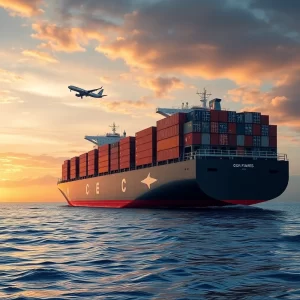
The Transformation of Spanish Ports: Innovations and Opportunities in Maritime Trade
In the dynamic world of maritime trade, Spanish ports play a crucial role as they not only reflect market trends but also drive the country’s economic growth. According to the monthly statistics from Ports of the State, between January and November 2025, Spanish general interest ports handled a total of 497.2 million tons of goods, experiencing a slight decrease of 0.3% compared to the same period in 2024. However, this data indicates a recovery from previous months, suggesting a strong adaptability in the sector.
Innovations in Cargo Handling
The maritime sector has always been a fertile ground for innovation, and Spanish ports are no exception. Technology has played a crucial role in improving operational efficiency, especially in the handling of liquid and solid bulk cargo. During the mentioned period, liquid bulk cargo recorded an increase of 0.3%, totaling 164.6 million tons, showcasing the implementation of advanced technologies for the storage and handling of these goods. On the other hand, solid bulk cargo saw a decrease of 3.5%, reflecting the challenges faced by this segment.
- Cargo handling efficiency improvements through technology
- Utilization of advanced storage and handling technologies
- Challenges faced in handling solid bulk cargo
General cargo, which includes manufactured goods and machinery, is another area where innovation has proven effective. With 81.9 million tons transported as conventional cargo and 175.5 million tons in containers, the use of automation and digitalization systems has allowed for greater optimization of logistical processes, significantly enhancing port traffic management.
The Growth of Roll-on/Roll-off Traffic
The roll-on/roll-off (ro-ro) cargo case deserves special mention. This type of cargo, facilitating the transfer of vehicles and machinery, experienced a healthy growth of 2.9%, reaching 69.1 million tons. This increase is directly linked to technological improvements in terminal design and integrated logistics strategies, enabling a more efficient flow of goods between ports and distribution centers.
Employment and Business Opportunities
The evolution and modernization of Spanish ports not only bring changes in cargo volumes but also significant employment opportunities. Technological innovations in port management require skilled personnel in areas such as logistics, engineering, and data management. For those in the merchant navy and maritime investors, this context provides an ideal platform for professional and business development.
- Technological innovations driving the need for skilled workers
- Growth in regular passenger traffic creating opportunities in tourism
- Expansion of foreign maritime trade markets
With the continuous growth of regular passenger traffic, reaching 26.6 million movements — a 1.5% increase from the previous year — ports become key hubs for tourism and recreation, opening doors to new investments in tourism and transportation infrastructure. This dynamism demands creative and entrepreneurial professionals willing to lead innovative projects that harness the economic potential of these areas.
Impact on Foreign Trade
Foreign trade is the driving force behind the economic growth of any nation, and ports are the epicenter of this activity. Despite a slight 1.0% decrease in cumulative foreign trade, Spanish ports remain strategic points for imports and exports. Imports reached 179.2 million tons, with a notable 3.8% growth in general cargo. However, exports experienced a decline of 2.8%, mainly due to the setback in liquid bulk traffic, which decreased by 14.4%.
- Significance of Spanish ports in imports and exports
- Need for export diversification and exploring new markets
- Opportunities for maritime investors in new routes and markets
For sailors and nautical enthusiasts, this context offers intriguing prospects for exploring innovative maritime routes. The fluctuation in exports suggests the possibility of discovering and establishing new maritime transport corridors, optimizing current routes to enhance efficiency and reduce costs.
Conclusions and Future Perspectives
In conclusion, Spanish ports are undergoing a phase of transformation that presents both challenges and opportunities. Technological innovations are redefining how goods are handled, improving efficiency, and opening new avenues for professional and business growth. To fully capitalize on these opportunities, it is essential for professionals and companies in the sector to continue adapting to changes and exploring new ways to optimize their operations.
This article not only highlights the relevance of these developments for each segment of WishToSail.com audience but also encourages readers to consider how they can actively participate in this transformation. Whether through investing in new technologies, seeking job opportunities, or exploring new markets, the future of maritime trade in Spain is promising and full of potential for those willing to navigate these changes.
For more information on how Spanish ports are leading this transformation and how to participate in these opportunities, readers are invited to explore further on WishToSail.com, where detailed analysis and updated news from the maritime sector are presented.