The Automation of Nautical Charts: Esri and SHOM Transform Maritime Cartography
In the realm of maritime navigation, precision and safety are critical components that determine the efficiency of global maritime transport. For centuries, nautical charts have been essential tools for seafarers, providing vital information about coastal geography, sea depths, and potential hazards at sea. The production of these charts has evolved significantly from hand-drawn maps to today’s complex digital representations. Technological advancements have revolutionized many aspects of the nautical sector, and cartography is no exception. The new digital tools have allowed for greater precision, speed, and update capabilities in creating nautical charts.
In this context, the recent adoption of the Custom Chart Builder (CCB) by SHOM, the French hydrographic and oceanographic office, represents a significant milestone in the automation of paper nautical chart production.
Detailed Analysis: Esri’s Custom Chart Builder (CCB)
The Custom Chart Builder (CCB), developed by Esri, is a software tool specifically designed to automate the generation of nautical charts. This technological innovation not only streamlines the production process but also ensures that the charts meet strict international standards of safety and precision. The CCB uses advanced algorithms to process geospatial data and convert it into detailed cartographic representations that are essential for safe navigation. This system allows SHOM to generate nautical charts more efficiently, reducing the time required for production and minimizing the risk of human errors.
- Facilitates the automation of nautical chart production
- Ensures compliance with international safety and precision standards
- Reduces the risk of errors in chart creation
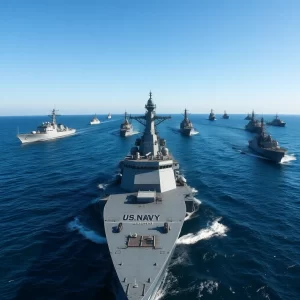
Through extensive testing and adjustments, SHOM has confirmed that the charts generated by the CCB meet the standards of the International Hydrographic Organization (IHO) and are suitable for use by the French Navy. This validation is crucial as it ensures that the charts provide the necessary information for the safe passage of vessels in French waters and beyond.
Impact on the Merchant Navy and the Nautical Sector
The adoption of automation technologies like the CCB has a significant impact on the daily work of maritime professionals. For the Merchant Navy and other stakeholders in the nautical sector, the availability of accurate and up-to-date nautical charts is essential for planning safe and efficient routes. With the CCB, charts can be updated more frequently, reflecting changes in maritime conditions and coastal infrastructure almost in real-time. Captains and navigators can rely on more precise data to make critical decisions, reducing the risk of incidents at sea. Additionally, the automation of the production process frees up resources that can be reallocated to other areas, improving the overall operational efficiency of the maritime sector.
- Improves route planning for the Merchant Navy
- Enhances decision-making with more accurate data
- Increases operational efficiency in the maritime sector
Challenges and Future of the Sector in the Coming Years
Despite significant advancements, the maritime industry faces several challenges in the coming years. The growing demand for international trade, the increase in maritime traffic, and climate change present ongoing challenges that require innovative technologies and strategies. The ability to adapt to these changes will be enhanced by tools like the CCB, which allow for a quicker and more accurate response to changing conditions. In the future, we are likely to see even greater integration of automation technologies and geographic information systems (GIS) in navigation and maritime cartography. Interoperability between different systems and the ability to integrate real-time data will be crucial to maintaining high standards of safety and efficiency in the sector.
- Integration of automation technologies in navigation and cartography
- Importance of interoperability and real-time data integration
- Addressing challenges in maritime industry through innovation
Key Concepts
To fully understand the impact of this innovation, it is helpful to define some key technical terms. The term “Hazmat” refers to hazardous materials that require careful management during maritime transport. “STCW” stands for the International Convention on Standards of Training, Certification, and Watchkeeping for Seafarers, which establishes competency and training requirements for mariners. “LMS” refers to Learning Management Systems, used for training and competency development in the maritime sector. These concepts underscore the complexity and technicality of the nautical sector, where automation and technological innovation play an increasingly crucial role in ensuring safe and efficient operations in international waters.