“`html
The Reopening of Oregon’s Only International Container Terminal Boosts Technology with Tideworks
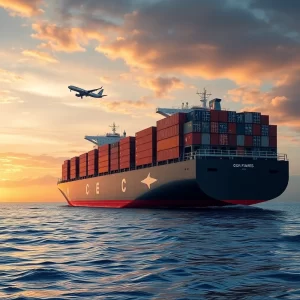
In today’s globalised world, maritime trade is a fundamental pillar of the global economy. Ports, as vital nodes in this extensive logistical network, play a crucial role in facilitating the international exchange of goods. In the United States, the state of Oregon has historically been prominent for its contributions to maritime trade, although it has faced significant challenges in recent years. However, the recent reopening of Oregon’s only international container terminal, supported by the advanced technology of Tideworks, promises to revitalise the state’s presence in global commerce.
The maritime industry, having endured drastic changes due to the pandemic and escalating international trade tensions, is at a pivotal point where technological innovation stands as a key differentiator. Consequently, the adoption of advanced technological solutions becomes indispensable to ensure the competitiveness and efficiency of ports in the 21st century. The decision to implement Tideworks Technology at the Oregon terminal is a clear example of how the industry is adapting its operational infrastructure to modern demands.
Detailed Analysis: Reopening the Terminal with Tideworks Technology
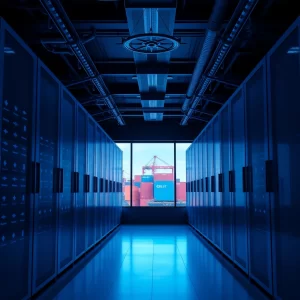
The reopening of the international container terminal in Oregon, now equipped with Tideworks technology, marks a significant transformation in the management and operation of its logistical processes. Tideworks Technology is renowned for providing integrated Terminal Operating Systems (TOS), which facilitate the optimisation of operations through real-time information systems. These platforms enable more agile management of container ingress and egress, thereby enhancing the efficiency of supply chains.
Tideworks’ system is designed to provide comprehensive visibility, allowing terminal operators to make informed decisions through accurate and up-to-date data. This translates into reduced waiting times, improved planning for loading and unloading, and increased container handling capacity. Additionally, its integration with other port and shipping management systems strengthens connectivity and collaboration among various actors within the maritime ecosystem.
Impact on the Merchant Navy and Nautical Sector
The modernisation of the terminal with advanced technology has a direct and positive impact on the merchant navy and the nautical sector in general. For professionals in the field, this translates into greater operational efficiency, which in turn can improve working conditions and reduce the stress associated with delays and inefficient communication. The use of advanced technology also paves the way for the implementation of more sustainable practices, reducing the environmental impact of port operations.
Shipowners and logistics operators will benefit from greater predictability in port operations. This facilitates long-term planning and efficient execution of routes, contributing to reduced operational costs and increased profitability. At the same time, seafarers and port workers face a safer working environment that is less prone to human error, thanks to automated systems that monitor and manage processes with high precision.
Challenges and the Future of the Sector in the Coming Years
Despite the tangible benefits brought by this modernisation, the maritime industry faces critical challenges that will influence its future evolution. The increasing digitalisation and automation require a workforce trained in new technologies, posing a challenge in terms of training and employment adaptation. Additionally, the sector must continue to grapple with growing international regulations aimed at mitigating the environmental impact of maritime transport.
Looking to the future, technological innovation is expected to remain a key driver for competitiveness in the maritime sector. The development of smart ports, which combine emerging technologies such as the Internet of Things (IoT) and Artificial Intelligence, promises to revolutionise how port operations are managed. Furthermore, the transition towards cleaner fuels and the implementation of sustainability policies will be determining factors in the future direction of the sector.
Key Concepts
To better understand the magnitude of this news, it is essential to familiarise oneself with some key concepts:
Terminal Operating System (TOS): A software system that manages the operations of a container terminal, including the planning and tracking of container loading and unloading, as well as inventory and resource management.
Internet of Things (IoT): A network of physical objects that utilise sensors to connect and share data with other devices and systems over the internet, enabling process automation and optimisation.
Artificial Intelligence (AI): The simulation of human intelligence processes by machines, particularly computer systems, including machine learning, pattern recognition, and decision-making.
With this reopening, Oregon’s terminal not only positions itself to be a leader in port operations on the west coast of the United States but also offers a model for other ports seeking to modernise and effectively address future challenges.
The entry The Reopening of Oregon’s Only International Container Terminal Boosts Technology with Tideworks was first published on WishToSail.com.
“`