
- Russian nuclear submarine Kazan launched an Oniks cruise missile on 13 March, striking a simulated target 300km away in the Barents Sea.
- The launch coincided with NATO’s Cold Response 26 exercise, involving 25,000 troops from 14 nations in Northern Europe.
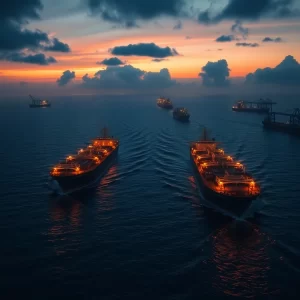
- Russia issued maritime warnings for a restricted zone from 11-13 March near the Norwegian border, disrupting commercial shipping routes.
On 13 March, the Russian Northern Fleet fired an Oniks cruise missile from the nuclear-powered submarine Kazan in the Barents Sea. The missile hit a simulated maritime target 300 kilometres away. This action occurred during NATO’s Cold Response 26 exercise, serving as a military signal amid escalating Arctic tensions.
Context and Background
The Barents Sea has long been a focal point for rivalry between Russia and Western powers. Since the Cold War, both sides have maintained significant naval presences in this resource-rich, strategically vital Arctic area. NATO exercises like Cold Response train allied defence in extreme winter conditions.
Russia has responded with increased military demonstrations. The Oniks missile launch is part of a series of activities aimed at asserting sovereignty and deterrent capabilities. Prior warnings were issued to aviation and maritime transport about restricted zones during these drills.
In-Depth Technical Analysis
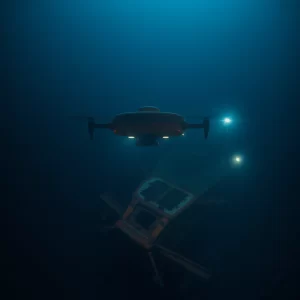
The submarine Kazan (K-561) is a Yasen-M class vessel, a fourth-generation nuclear-powered multifunction submarine. These are among the most advanced in the Russian Navy, capable of carrying various weapons, including cruise missiles that can be equipped with nuclear warheads. Their design allows for stealth operations and attacks from submerged positions.
The Oniks missile, also known as P-800 Oniks or SS-N-26, is a supersonic anti-ship cruise missile. It can reach speeds up to Mach 2.5 and has an estimated range of 300-600 kilometres. Launching from a submerged submarine demonstrates a surprise attack capability that complicates detection and response by enemy defences.
Military signalling is a common geopolitical tactic, where actions like this communicate strength without escalating to open conflict. By conducting it during NATO exercises, Russia sends a clear message about its power projection in the Arctic region.
Concrete Operational Implications
For commercial and civil navigation, these events create temporary restricted zones that must be avoided. The Russian warning from 11-13 March forced route recalculations in the Barents Sea, increasing operational costs and transit times for vessels in the region.
Maritime insurance companies may review premiums for routes through areas with frequent military exercises. Captains and bridge officers must pay closer attention to navigation warnings (NOTAMs and NAVAREA) to avoid incidents.
Operationally, this reinforces the need for advanced maritime surveillance systems. Countries like Norway might invest more in sonar, satellites, and aerial patrols to monitor Russian submarine activities, impacting regional defence budgets.
Impact on the Labour Market
For maritime professionals, this situation generates opportunities in security and logistics. Demand will rise for experts in navigation in restricted waters, maritime intelligence analysis, and naval traffic coordination. STCW (Standards of Training, Certification and Watchkeeping for Seafarers) courses could include specific modules on operations in conflict zones or military exercise areas.
Naval engineers and technicians specialised in defence and submarine detection systems will see increased demand, especially in Nordic and NATO countries. Port logistics consultants must adapt plans to manage disruptions from temporary maritime route closures.
Macro Context
Geopolitically, the Arctic is rapidly militarising. Russia has claimed vast expanses of continental shelf, while NATO expands its presence with new members like Finland and Sweden. International regulations, such as those from the IMO (International Maritime Organisation), aim to balance naval security with freedom of navigation but face challenges in tense regions.
Global trends include a rise in joint military exercises and the development of hypersonic technologies. Competition for Arctic resources, such as hydrocarbons and thawing shipping routes, fuels this dynamic, with long-term implications for worldwide maritime trade.
Outlook
In the short term, more exercises and force demonstrations are expected in the Arctic, particularly during periods of high geopolitical visibility. This could lead to normalised restricted zones, affecting key commercial routes between Europe and Asia via the Northern Sea Route.
Tensions might escalate if unintentional navigation incidents occur, such as collisions or interference with civilian vessels. However, both sides have an interest in avoiding open conflict, so military signalling will likely continue as a primary tool.
For investors and shipowners, this underscores the importance of diversifying routes and considering specialised insurance for risk areas. Surveillance and satellite communication technologies will gain relevance to mitigate dangers.
FAQ
What is the Oniks missile and why is it relevant for navigation?
The Oniks is a Russian supersonic anti-ship cruise missile, with a range of up to 600km. Its relevance for navigation lies in its ability to be launched from submerged submarines, creating unpredictable risks in military exercise zones and forcing diversions on commercial routes.
How do these exercises affect civil maritime security?
They establish temporary restricted zones that civilian vessels must avoid, increasing operational costs and collision risks if warnings are not heeded. Additionally, they raise regional tension, potentially leading to identification errors or unintended escalations.
What capabilities does the Kazan submarine of Yasen-M class have?
It is a fourth-generation nuclear-powered multifunction submarine, designed for stealth and precision attacks. It can carry cruise missiles, torpedoes, and mines, operating at depth for extended periods without resupply.
What should a commercial ship captain do during military exercises in the area?
They should consult navigation warnings (NOTAMs and NAVAREA), recalculate routes to avoid restricted zones, maintain constant communication with coastal authorities, and consider additional insurance. Training in emergency procedures for conflict waters is crucial.
Editorial Note: This article has been professionally adapted from Spanish to British English
for the WishToSail.com international maritime audience. Original article published at
QuieroNavegar.app.