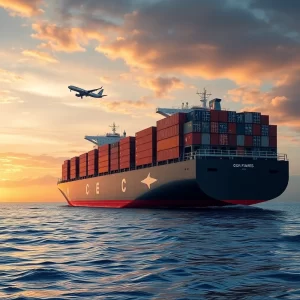
In a significant development for the maritime industry, Gaztransport & Technigaz (GTT) has announced a major contract with HD Korea Shipbuilding & Offshore Engineering (HD KSOE) to design the tanks for four new liquefied natural gas carriers (LNGCs). Each of these vessels will have a substantial capacity of 200,000 cubic metres and will be constructed by HD Hyundai Heavy Industries, with delivery anticipated in early 2026.
Global Context and Industry Background
This contract comes at a pivotal time when the global demand for liquefied natural gas (LNG) is on the rise, driven by the ongoing energy transition towards cleaner fuels. According to the International Energy Agency, the LNG trade is projected to grow by 3% annually until 2030, underscoring the need to expand the LNGC fleet.
GTT has long been a leader in LNG containment technology, capturing over 70% of the market for new LNGC constructions. This order not only solidifies its position in the industry but also demonstrates the continued confidence in its advanced technological solutions.
Technical Analysis: Cryogenic Tank Technology
The Importance of Cryogenic Tanks
Transporting LNG safely requires maintaining the gas at extremely low temperatures, around -162°C. GTT’s cryogenic tank designs use the Mark III membrane technology, known for its high thermal efficiency and ability to maximise cargo capacity.
Enhancing Energy Efficiency
GTT’s advanced designs not only enhance safety but also optimise the vessel’s energy consumption. By employing improved containment systems, LNG boil-off rates can be reduced to less than 0.1% per day, leading to significant operational cost savings.
Implications for Maritime Professionals
For naval engineers and ship officers, this advancement means becoming acquainted with new containment technologies and temperature monitoring systems. Technical staff must also be trained in maintaining these innovations to ensure operational safety and efficiency.
Impact on the Labour Market
The increase in LNGC construction will create job opportunities in naval design and engineering. There is expected to be a higher demand for engineers specialising in cryogenic systems and LNG maintenance technicians.
Wider Market Context
The expansion of the LNGC fleet aligns with global energy trends, where LNG plays a crucial role in reducing carbon emissions. Furthermore, geopolitical tensions around energy supplies highlight the importance of diversifying supply routes and sources.
Future Outlook
In the short term, the industry must prepare for an increase in LNGC demand as more countries incorporate LNG into their energy matrices. Critical factors include the evolution of LNG prices and shipyards’ ability to meet delivery schedules.
Frequently Asked Questions
- What is an LNGC? An LNGC is a vessel specifically designed for transporting liquefied natural gas at cryogenic temperatures.
- What technology does GTT use for its tanks? GTT employs membrane technologies like Mark III, which provide high thermal efficiency and safety.
- Why is this order important for GTT? This order reaffirms GTT’s position as a leader in LNG containment technology and reflects the industry’s trust in its solutions.
This news is based on “GTT receives an order from HD KSOE for the tank design of four new LNG Carriers” by Shipbuilding News – Hellenic Shipping News Worldwide.
Disclaimer: This article is an independent editorial analysis based on publicly available information and technical knowledge of the maritime sector. It does not replace consultation with qualified professionals nor constitutes specific technical, legal, regulatory, or professional advice.
The entry originally appeared on WishToSail.com.
Editorial Note: This article has been adapted from Spanish to British English
for the WishToSail.com audience. Original source: QuieroNavegar.app