- Only 17 vessels transited the Strait of Hormuz on 11 April, four days post-ceasefire, far below normal levels.
- US Central Command has deployed destroyers for mine-clearance operations, while 172 crude tankers reroute to US Gulf Coast.
- Iranian crude exports remain active with 6 million barrels loading at Kharg Island and 58.75 million exported since 1 March.
The Strait of Hormuz, a critical global oil chokepoint, remains under restricted transit despite a recent ceasefire. On 11 April, only 17 vessels managed to pass through, as Iranian authorities maintain selective control and US forces initiate mine-clearance operations. This situation highlights ongoing geopolitical tensions that continue to disrupt maritime trade and energy supply chains.
Context and Background
The Strait of Hormuz is a narrow waterway, just 21 nautical miles wide at its narrowest, connecting the Persian Gulf to the Gulf of Oman. It facilitates approximately 20% of the world’s oil transit, making it a strategic asset. Historically, tensions between Iran and Western nations have repeatedly impacted navigation freedom here.
Iran’s Islamic Revolutionary Guard Corps (IRGC) has a history of imposing transit conditions in the region. Any disruption, such as the current one, triggers immediate adjustments in crude and refined product supply chains, affecting shipowners, port operators, and energy-dependent economies.
In-Depth Technical Analysis
Selective Transit and AIS Dark Activity
The transit of only 17 vessels on 11 April is significantly lower than typical volumes. This selective passage prioritises certain flags and cargo types, such as Iraqi crude tankers bound for China. Concurrently, 179 instances of dark activity were recorded, where ships turned off their AIS (Automatic Identification System) transponders.
Dark activity, while sometimes used for security, complicates maritime surveillance and raises collision risks. The total vessel count in the Gulf dropped to 624, down by 201 from the previous day, confirming a sharp contraction in commercial activity.
US Mine-Clearance Operations and Enhanced Control
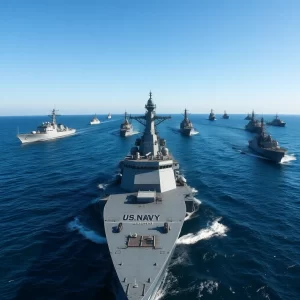
US Central Command (CENTCOM) has deployed assets like the destroyer USS Frank E. Peterson to conduct mine-clearance operations, targeting mines likely placed by the IRGC. Supported by underwater drones, these efforts aim to establish a safe passage corridor.
Simultaneously, US signals indicate potential enforcement measures, such as blockades or interdiction of vessels operating under Iranian rules. This adds a layer of operational uncertainty, forcing captains to navigate between Iranian restrictions and possible US military intervention.
Concrete Operational Implications
For shipping lines and owners, this translates into improvised routes, higher freight costs, and elevated war risk insurance premiums. A VLCC (Very Large Crude Carrier, typically carrying over 2 million barrels) making a U-turn near Larak Island illustrates the unpredictability, leading to delays and extra fuel consumption.
Alternative discharge ports, like those on the US Gulf Coast, may face congestion and scheduling pressure. The arrival of 172 crude tankers will require exceptional logistical coordination to manage berthing and unloading without infrastructure overload.
Impact on the Labour Market
This crisis boosts demand for officers and captains experienced in high-risk navigation and crisis management. Companies will need crew familiar with conflict zone protocols. Additionally, there is growing need for maritime intelligence analysts and operators of systems like AIS and remote sensors.
In the port sector, especially on the US Gulf Coast, temporary increases in demand for pilots, stevedores, and traffic coordinators are likely to handle the tanker surge. Specialisation in emergency response, such as for oil spills, gains relevance following incidents like the Antwerp-Bruges leak.
Macro Context
Geopolitically, this situation reflects a struggle for control over a global energy corridor. The lack of agreement after 21 hours of negotiation suggests parties are unwilling to concede easily. Normatively, it strains international maritime law frameworks, which guarantee innocent passage through straits.
The trend towards regionalisation of crude flows intensifies. Over 90% of Iranian crude from Kharg Island goes to China, and the massive redirection to the US indicates a search for stable trading partners and reduced dependency on pressured routes.
Outlook
In the short term, a return to open, predictable navigation is unlikely. The Strait will continue operating as a system of granted access, not guaranteed passage. Any escalation, such as direct US military intervention, could close the Strait entirely, with catastrophic impacts on global oil prices.
Shipping companies must prepare for prolonged crisis logistics, with alternative routes already activated, like the 132% increase in tankers reaching the US via the southern corridor from Asia. Investment in real-time monitoring technologies and training for high-tension scenarios becomes critical for operational resilience.
FAQ
What is dark activity in the maritime context?
Dark activity refers to vessels navigating with their AIS (Automatic Identification System) transponders turned off or manipulated. AIS automatically emits data on position, course, and speed for navigation safety. Switching it off can hide movements but significantly increases collision risks and hampers maritime surveillance.
How do mine-clearance operations affect commercial shipping?
Mine-clearance operations, such as those by the US, often establish temporary exclusion zones for safety. This can cause immediate diversions and delays for commercial transit. However, in the medium term, creating a mine-free corridor is essential to restore safe vessel flow.
Why are so many crude tankers redirecting to the US Gulf Coast?
Instability in the Strait of Hormuz leads market actors to seek stable alternative destinations to secure supply. The US, with its large refining and storage capacity, is perceived as a safe port and price anchor, explaining the flow of 172 tankers.
What was the impact of the Antwerp-Bruges incident on global operations?
The incident, caused by a hull crack during bunkering, led to temporary closures in key parts of Europe’s second-largest port. This resulted in hundreds of cargo rollovers (rescheduling) and delays, demonstrating how a local accident can have immediate repercussions on international logistics chains.
Editorial Note: This article has been professionally adapted from Spanish to British English
for the WishToSail.com international maritime audience. Original article published at
QuieroNavegar.app.