“`html
Leonardo DRS Unveils a Cutting-Edge Facility for Naval Power and Propulsion in South Carolina
In the competitive realm of the maritime and defence industry, the ability to adapt to rapid technological advancements is crucial for maintaining a strategic edge. With the recent escalation of global threats and the necessity to modernise naval fleets, the United States has stepped up its efforts to ensure its naval forces are equipped with the most advanced technology. A key player in this endeavour is Leonardo DRS, Inc., a globally recognised company renowned for its innovation in defence systems and advanced technological solutions. The company has made a significant stride with the opening of a new facility in the Charleston region of South Carolina.
This development not only marks a milestone for Leonardo DRS but also exemplifies a growing trend in the industry: investing in state-of-the-art manufacturing facilities to meet 21st-century demands. Covering more than 140,000 square feet, this facility focuses not just on production but also on the testing of naval propulsion systems, which is essential for the reliability and performance of fleets. This investment is particularly critical in the context of U.S. shipbuilding programmes, which are focused on expanding and modernising the operational capacity of the Navy, especially with projects like the Columbia-class ballistic missile submarine.
In-Depth Analysis: Leonardo DRS’ New Naval Propulsion Facility
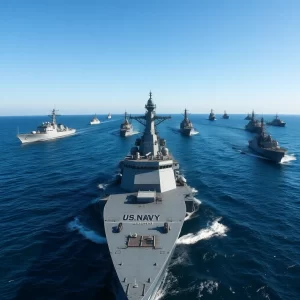
The newly inaugurated facility by Leonardo DRS is an example of how cutting-edge technology can be applied to significantly enhance the effectiveness and efficiency of naval propulsion systems. Specifically designed to boost domestic production, this plant is equipped with advanced technology that enables the manufacturing and testing of propulsion systems to be used in submarines and ships of the U.S. Navy. A primary objective of this facility is to support key programmes such as the Columbia-class ballistic missile submarine, which represents the future of strategic undersea deterrence.
The plant is equipped with state-of-the-art technologies that facilitate more precise and efficient manufacturing processes. This includes automated machinery that reduces the margin for human error and allows for more consistent mass production. Furthermore, advanced testing systems ensure that all components meet the stringent safety and performance standards set by the United States Department of Defense. These testing systems not only evaluate the durability and efficiency of propulsion systems but also simulate extreme operational conditions to guarantee the equipment’s resilience in any environment.
Impact on the Merchant Navy and the Nautical Sector
The opening of this facility benefits not only the U.S. Navy but also has a significant impact on the merchant navy and the nautical sector in general. By fostering domestic production and technological innovation, Leonardo DRS is creating an environment where American companies can compete more effectively in the global market. Improvements in propulsion technology and increased domestic production capacity could lead to reduced operational costs for commercial operators, which in turn may translate into more competitive pricing for the transport of goods and passengers.
Moreover, advancements in propulsion systems have a ripple effect across the industry, as technological improvements often trickle down to the commercial sector. This can include enhancements in fuel efficiency and advancements in environmental sustainability, factors that are increasingly important for commercial shipping lines striving to comply with ever-stricter environmental regulations.
Challenges and the Future of the Sector in Upcoming Years
Despite significant advancements, the naval defence industry faces several challenges. One of the most prominent is the ongoing need for innovation to stay ahead of emerging threats. Global competition in the military domain drives nations to invest substantially in research and development, meaning that Leonardo DRS and similar companies must continue to innovate to remain competitive.
Looking forward, we will see greater integration of digital technologies such as artificial intelligence and machine learning into propulsion and navigation systems, allowing for increased automation and improved real-time decision-making. Additionally, sustainability will remain a critical focus, with an increasing emphasis on developing propulsion systems that are more environmentally friendly, reducing carbon emissions, and improving overall energy efficiency.
Key Concepts
Naval Propulsion: Refers to the systems and mechanisms used to generate thrust in ships and submarines. This includes engines, turbines, and propellers specifically designed to operate both underwater and on the surface.
Columbia-class Ballistic Missile Submarine: A programme by the U.S. Navy to replace the previous class of ballistic missile submarines. These submarines are designed to provide strategic nuclear deterrence and feature the most advanced propulsion systems available.
Manufacturing Automation: The use of technology and control systems to operate machinery and processes in the production of goods, reducing the need for human intervention and improving the efficiency and precision of the manufacturing process.
The entry Leonardo DRS Unveils a Cutting-Edge Facility for Naval Power and Propulsion in South Carolina was first published on WishToSail.com.
“`