- Supply chain inefficiencies can reduce shareholder value by up to 15%, based on industry data.
- Annual ocean contracts, signed each January, often have fixed rates that don’t reflect market volatility, leading to cost overruns.
- Real-time data platforms like Xeneta are essential for monitoring freight rates, but adoption remains limited in many companies.
Shipping lines and cargo owners globally are losing millions in shareholder value due to hidden inefficiencies in maritime supply chains. Each January, annual ocean contracts set multi-million dollar freight budgets, but operational realities like port delays and rate fluctuations quickly undermine these plans. This chronic issue directly hits profitability and investor confidence, with data suggesting significant financial erosion.
CONTEXT AND BACKGROUND
Historically, maritime transport has relied on long-term contracts, such as time-charter agreements, to provide stability for shipowners and charterers. However, events like the container crisis during the pandemic revealed how overcapacity, port blockages, and demand spikes can cause spot market freight rates to soar, sometimes exceeding contracted rates by up to 300%. Sector estimates indicate that logistical inefficiencies, including unloading delays and container shortages, add between 10% and 20% to total costs, affecting not only shipping companies but also port operators and ultimately shareholders.
IN-DEPTH TECHNICAL ANALYSIS
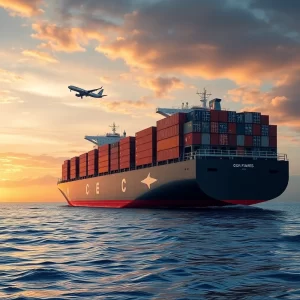
Freight leaks refer to economic losses caused by unforeseen factors like tariff variations, waiting times in congested ports, or inventory management inefficiencies. For instance, a Post-Panamax container ship (with a capacity of around 14,000 TEUs, where TEU stands for twenty-foot equivalent unit, the standard container measure) experiencing a 48-hour delay at a key port can incur additional fuel costs and penalties for missed deadlines. Platforms such as Xeneta offer real-time data on freight rates and market trends, enabling companies to adjust strategies. Integration with enterprise resource planning (ERP) systems helps reduce uncertainty, yet many firms still use traditional methods, limiting their responsiveness to sudden changes.
CONCRETE OPERATIONAL IMPLICATIONS
Shipowners must integrate digital tools to monitor fleet performance in real time. Vessels equipped with IoT sensors can transmit data on fuel consumption, position, and cargo status, facilitating operational decisions. In ports, terminal operating systems (TOS) optimise container handling, reducing turnaround times. Charterers, on the other hand, should diversify routes and negotiate flexible contract clauses, such as adjustments for market volatility. This benefits operators with modern, digitalised fleets, while those with older vessels face higher adaptation costs.
IMPACT ON THE LABOUR MARKET
Demand is rising for professionals specialised in maritime data analysis, digital logistics, and resilient supply chain management. Roles like Supply Chain Analyst or Maritime Data Scientist require expertise in tools like Xeneta, predictive modelling with Python, and knowledge of international regulations from bodies like the International Maritime Organization (IMO). For crew and officers, training in automation and remote monitoring systems becomes essential. E-learning courses in maritime platforms can offer competitive advantages in a market that values operational efficiency.
MACRO CONTEXT
Geopolitical tensions in key routes such as the Red Sea or the Taiwan Strait can exacerbate inefficiencies, forcing diversions that increase costs and transit times. Normatively, environmental regulations like the Energy Efficiency Existing Ship Index (EEXI) and the Carbon Intensity Indicator (CII) add pressure to optimise operations and reduce emissions. Trends like digitalisation and the use of blockchain for traceability are gaining ground, but large-scale implementation remains slow due to high initial investments and lack of standardisation.
OUTLOOK
In the short term, increased adoption of artificial intelligence is expected to predict freight fluctuations and manage risks. Investments in newbuild vessels with energy-efficient technologies, such as LNG propulsion or heat recovery systems, could mitigate some operational costs. However, volatility will persist, making it essential for companies to develop agile strategies. Those investing in training and digital tools are likely to see reduced value leaks, attracting more investor confidence in an increasingly competitive sector.
FAQ
What are annual ocean contracts and why are they signed in January? Annual ocean contracts are long-term agreements between shipping lines and charterers to fix freight rates and operational conditions. They are typically signed in January to align with the start of budget cycles and peak planning seasons, aiming for stability against the uncertainty of the spot market.
How are freight leaks measured in practice? Freight leaks are calculated by comparing budgeted costs in contracts with actual expenses, including overruns from delays, variations in spot rates, or penalties. Tools like Xeneta provide real-time benchmarks to identify deviations, helping companies track inefficiencies.
What role does Xeneta play in risk mitigation? Xeneta is a data platform that aggregates information on maritime freight rates, offering visibility into market trends. It allows firms to adjust contracting strategies and optimise routes, reducing exposure to volatility and aiding in cost control.
Do these inefficiencies affect all vessel types equally? No, they impact liner vessels, such as container ships, more severely due to tight schedules and port congestion. Bulk carriers or tankers may have greater flexibility but still suffer from demand fluctuations and fuel cost increases.
Editorial Note: This article has been professionally adapted from Spanish to British English
for the WishToSail.com international maritime audience. Original article published at
QuieroNavegar.app.