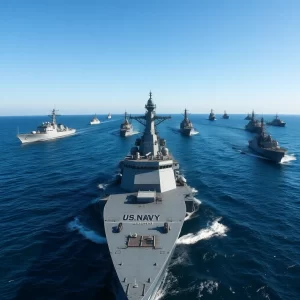
- Russian Submarine Fleet marks 120th anniversary with approximately 70 operational submarines.
- The fleet includes 16 SSBN (nuclear ballistic missile submarines) for strategic deterrence.
- Rubin Design Bureau is advancing towards fifth-generation designs and unmanned platforms.
On 19 March 2026, the Russian Submarine Fleet commemorated 120 years since its founding in 1906. This force, a key component of Russia’s naval strategy, operates around seventy submarines to sustain maritime deterrence in the 21st century. With the Rubin Design Bureau at the forefront, innovation drives its technological edge in both nuclear and conventional vessels.
Context and Background
The history of Russia’s submarine capability began in 1900 with the Submarine Design Commission. This evolved into the Rubin Design Bureau, established in 1901 and approaching its 125th anniversary in 2025.
Rubin has been pivotal in developing submarines from the first combat model, the Dolphin, to contemporary projects. During the Soviet era and beyond, it designed numerous vessels, including conventional types like Projects 613 and 877, and nuclear series such as 667 and 955.
This industrial heritage has allowed Russia to maintain an autonomous and globally competitive submarine fleet, setting the stage for current advancements.
In-Depth Technical Analysis
The current fleet consists of about 70 submarines, based on open-source data. This includes 16 SSBN (submarine ballistic nuclear or nuclear ballistic missile submarines), 14 SSN (nuclear attack submarines), 11 SSGN (nuclear cruise missile submarines), and 23 conventional non-nuclear vessels.
Rubin’s designs incorporate advanced technologies like hypersonic torpedoes and deep-diving capabilities. Igor Vilnit, Rubin’s director, has noted work on operating fourth-generation submarines while developing fifth-generation ones, plus exploring unmanned platforms.
Nuclear propulsion is crucial, enabling extended autonomy and power for strategic missions. SSBNs, for example, are vital for nuclear deterrence, capable of launching intercontinental ballistic missiles from hidden positions.
Concrete Operational Implications
This fleet ensures Russia’s covert maritime control in regions such as the Arctic and Pacific. Conventional submarines, being smaller and quieter, are ideal for coastal operations and surveillance tasks.
Modernisation towards fifth-generation designs will involve improvements in stealth, sensors, and armament. This may require updates to port infrastructure and logistical systems to maintain operational readiness.
For civilian maritime operators, submarine tech advances could spur innovations in offshore exploration or oceanographic research. However, applications are often limited by military secrecy.
Impact on the Labour Market
Rubin employs 65 experts with Navy experience, including former submarine commanders and technicians. This reflects demand for specialised profiles in naval engineering, nuclear propulsion, and submarine operations.
Job opportunities centre on design, maintenance, and operation of submarines. Professionals with STCW (International Convention on Standards of Training, Certification and Watchkeeping for Seafarers) training adapted for military roles, or naval engineers, may find niches here.
Continuous education is essential due to rapid innovation. Courses in hypersonic tech or unmanned systems could be highly valued in the market.
Macro Context
Geopolitically, this fleet strengthens Russia’s deterrence against powers like the US or NATO. Amid global tensions, submarines offer strategic advantage through covert operations.
Regulatory-wise, development aligns with international non-proliferation agreements, but the tech race might inspire new maritime safety rules.
Trends like autonomy and digitalisation influence designs, with Rubin researching unmanned platforms to reduce human risk in high-stakes missions.
Outlook
Short-term, Russia will likely maintain its fleet with incremental upgrades. The shift to fifth-generation submarines could take years, depending on investments and testing.
For investors, naval defence offers opportunities in submarine tech firms, though geopolitical risks are high. Due diligence is recommended before financial commitments.
In civil sectors, innovations in materials or propulsion might trickle into recreational boating or shipping, but secrecy limits this.
FAQ
What is an SSBN and why is it important?
An SSBN (submarine ballistic nuclear) is a nuclear ballistic missile submarine. It is critical for strategic deterrence, allowing stealthy sea-based nuclear launches for second-strike capability.
How does submarine innovation affect global maritime security?
Advancements like hypersonic weapons or deep-diving tech boost capabilities, potentially altering naval balances and prompting arms races that impact key sea lanes.
What training is needed for careers in submarine technology?
Education in naval engineering or nuclear systems is required, with STCW training often adapted. Continuous learning in areas like unmanned systems is valuable, and Navy experience is highly regarded.
Editorial Note: This article has been professionally adapted from Spanish to British English
for the WishToSail.com international maritime audience. Original article published at
QuieroNavegar.app.