


- Middle East tensions after U.S. and Israeli attacks on Iran may boost LNG carrier demand by shifting exports to the U.S.
- Qatar’s suspension of LNG operations, accounting for 20% of global supply, creates opportunities for alternative producers.
- South Korean shipyards, leaders in LNG ship construction with vessels over 170,000 cubic metres, are poised for new orders.
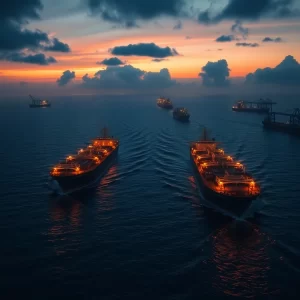
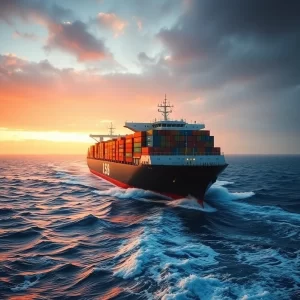
Recent military actions by the United States and Israel against Iran have escalated tensions in the Middle East, potentially driving up demand for liquefied natural gas (LNG) carriers. This geopolitical shift could benefit South Korean shipyards, which dominate the global market for these specialised vessels. With Qatar temporarily halting LNG exports, the focus turns to U.S. shale gas, requiring longer shipping routes and more ships.
CONTEXT AND BACKGROUND
South Korea is a dominant force in worldwide shipbuilding, with companies like Hyundai Heavy Industries and Samsung Heavy Industries at the forefront of LNG carrier production. LNG carriers are ships designed to transport liquefied natural gas, which is cooled to -162°C and stored in cryogenic tanks. Historically, LNG demand has grown due to energy transition efforts, but geopolitical crises, such as the war in Ukraine, have already disrupted trade patterns.
IN-DEPTH TECHNICAL ANALYSIS
South Korea’s Competitive Edge in LNG Carriers
South Korean shipyards hold a significant technical advantage in constructing LNG carriers, built on decades of investment in technology and efficiency. These vessels are typically large, with capacities exceeding 170,000 cubic metres, and require advanced materials like high-strength steels and cryogenic containment systems. South Korea has expertise in membrane-type designs, which optimise cargo capacity.
Impact of Qatar’s Operational Suspension
The suspension of LNG operations in Qatar is not an isolated event; it highlights volatility in energy-producing regions. Qatar accounts for approximately 20% of global LNG exports, and its temporary halt could create a supply gap that other countries, notably the United States with its increasing shale gas production, may fill. This would drive the need for LNG carriers on longer routes, such as transatlantic and transpacific voyages.
CONCRETE OPERATIONAL IMPLICATIONS
Operationally, a rise in LNG carrier orders would necessitate adjustments in South Korean shipyards. This includes accelerating production lines, managing supply chains for critical components like tanks, and potential delays if demand outstrips capacity. For shipping companies, it means planning new routes and securing long-term charter agreements, as LNG carriers often operate on 20 to 25-year contracts.
IMPACT ON THE LABOUR MARKET
In the labour market, a surge in shipbuilding could create opportunities in South Korea for naval engineers, welders specialised in cryogenics, and automation technicians. However, this depends on the scale of orders; if significant, it could lead to hirings and training in LNG-specific skills. Professionals in the sector should update their knowledge on regulations like the IMO’s IGF Code for gases.
MACRO CONTEXT
Geopolitically, this situation underscores how regional conflicts redistribute global maritime trade. From a regulatory perspective, the industry must align with environmental standards, such as reducing methane emissions during LNG transport. Trends like decarbonisation might be affected if gas is prioritised over renewables, but LNG remains a key bridge fuel.
OUTLOOK
In the short term, South Korean shipyards may see an increase in inquiries and order options, but realisation hinges on the evolution of tensions and gas price stabilisation. Long-term, this could solidify South Korea’s position in the LNG carrier market, though competition with China, which is expanding capacity, may intensify. For investors, it represents an opportunity in shipbuilding stocks, but with inherent geopolitical risks.
FAQ
- Q: What are LNG carriers and why are they important in this crisis?
A: LNG carriers are specialised ships that transport liquefied natural gas, cooled to -162°C in cryogenic tanks. They are crucial because they enable global gas trade, and in this crisis, the need for alternative routes from the U.S. increases demand for these vessels to cover longer distances. - Q: How does Qatar’s suspension of LNG operations affect the market?
A: Qatar is a major LNG exporter, and its temporary suspension reduces immediate supply, creating a deficit that other producers like the U.S. can supply. This shifts trade flows and requires more maritime transport capacity, benefiting shipyards with LNG expertise. - Q: What advantages does South Korea have in building LNG carriers?
A: South Korea has technological and scale advantages, with shipyards mastering efficient designs and advanced production processes. Historically, they have led orders for large LNG carriers due to investments in R&D and a highly skilled workforce. - Q: Will this generate job opportunities in the maritime sector?
A: Potentially, yes. If LNG carrier orders materialise, there could be demand for professionals in shipbuilding, cryogenic operations, and port logistics in South Korea. However, it depends on demand evolution and shipyards’ ability to scale production.
Editorial Note: This article has been professionally adapted from Spanish to British English
for the WishToSail.com international maritime audience. Original article published at
QuieroNavegar.app.