The First Journey of a Ro-Ro Vessel Powered by LNG from Khalifa Port
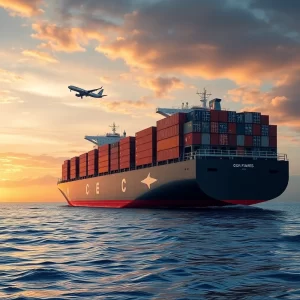
In a context where sustainability and energy efficiency are becoming increasingly crucial, United Global Ro-Ro has achieved a milestone with the first journey of a ship powered by Liquefied Natural Gas (LNG) from Khalifa Port in Abu Dhabi. This event not only represents a significant advance in the maritime industry but also highlights the importance of adopting greener practices that can greatly reduce the carbon footprint associated with maritime transport.
The use of LNG instead of traditional fossil fuels offers multiple benefits. Primarily, it reduces carbon dioxide emissions and other harmful pollutants. According to data from the International Transport Association, the adoption of LNG can decrease CO2 emissions by up to 25%, accompanied by a nearly total reduction in sulfur oxide and particulate emissions. This change is not only advantageous from an environmental standpoint but also complies with the strictest international regulations, such as those of the International Maritime Organization (IMO).
For professionals in the sector, these advancements open new doors to job and investment opportunities. Companies that adapt to these technologies will not only comply with current regulations but also gain competitiveness in a market that increasingly values sustainability. We encourage those interested to consider submitting their resumes to pioneers in this type of technology, such as United Global Ro-Ro, who lead by example.
Technological Innovations: The Heart of Progress
The transition to LNG-powered ships is not simply a fuel change; it is a technological evolution that requires advanced engineering and state-of-the-art energy management systems. The new ship designs incorporate LNG storage and distribution systems, ensuring that the fuel remains in liquid state at cryogenic temperatures. This technical challenge is a clear demonstration of innovation and the industry’s adaptability.
Additionally, the propulsion systems of these ships are considerably more efficient, resulting in lower energy consumption and increased autonomy. Improvements are not limited solely to the energy field; there is also progress in process automation, navigation, and safety systems. This not only makes journeys safer and more efficient but also reduces operational costs.
For sailors and innovation enthusiasts, these technologies promise a new era of maritime exploration, where efficiency and environmental care go hand in hand. The adoption of advanced systems invites professionals to update their knowledge, enhancing their opportunities in a job market that demands increasing technological competence.
Maritime Routes: Opening New Horizons
The inaugural journey of the LNG-powered Ro-Ro vessel from Khalifa Port not only represents a technological innovation but also opens up sustainable maritime routes. These ships are designed to connect markets efficiently, minimizing environmental impact and logistical costs associated with freight transportation.
These types of vessels promise to revitalize traditional commercial routes, offering a greener and more economical option for cargo transport. This is particularly relevant for maritime investors looking to expand their influence in emerging routes that demand a more sustainable approach.
Furthermore, for the merchant navy, these new pathways represent a challenge and an opportunity to redesign operational strategies tailored to contemporary demands. The expansion of LNG-powered maritime routes not only benefits the business environment but also promotes economic development in key regions, facilitating the flow of goods and optimizing the global supply chain.
With each new journey, the potential to reimagine international trade and logistics is amplified, making this advancement highly relevant news for all stakeholders in the maritime sector.
Opportunities for Professionals and Investors
The maritime sector offers a range of opportunities. The adoption of LNG is not just a trend; it is a transition to a cleaner and more efficient future. Maritime professionals and investors now have the opportunity to actively participate in a revolution that promises to not only improve environmental impact but also ensure long-term economic viability.
For maritime investors, LNG technology offers high potential for return on investment, as ships using these technologies are increasingly valued in the market. Similarly, for sailors, this transition represents an opportunity to acquire new skills and specializations that position them advantageously in the industry.
Ultimately, the first journey of an LNG-powered Ro-Ro ship from Khalifa Port is not only a milestone in maritime history but also a catalyst for change throughout the industry. I invite readers to stay informed and explore how these innovations can integrate into their daily operations, improving both their environmental impact and economic results.