The Future of Ocean Prediction: How AI is Revolutionizing Navigation
In the world of maritime navigation and marine research, precision and anticipation are key elements. Recently, Mercator Ocean has taken a significant step towards an enhanced future in predicting oceanic phenomena by validating its artificial intelligence system, GLONET, in collaboration with OceanBench at the NeurIPS 2025 conference. This technological advancement promises to revolutionize how maritime challenges are approached, providing professionals in the sector with more accurate tools tailored to their needs.
The event held in San Diego and Toulouse has marked a milestone in the application of artificial intelligence (AI) in the oceanic realm, highlighting GLONET’s ability to improve operational ocean predictions. This not only has implications for safe and efficient navigation but also opens up new opportunities for developing sustainable solutions in the marine environment, an increasingly crucial aspect in the fight against climate change.
Exploring how these advancements can impact both the professional maritime field and recreational sailing opens a range of possibilities for investors and sea enthusiasts. Join us on this journey through the future of ocean prediction, guided by the latest AI technology.
GLONET and OceanBench: A Strategic Alliance
The collaboration between Mercator Ocean and OceanBench has been essential in validating the effectiveness of the GLONET system. OceanBench, known for its ocean prediction model evaluation platform, has provided the perfect environment to test the capabilities of this innovative AI system. The validation carried out at the prestigious NeurIPS 2025 event highlights the strength of this alliance and the system’s potential to transform maritime management and planning.
- GLONET uses advanced machine learning algorithms to analyze real-time oceanic data, enhancing prediction accuracy.
- This data is vital for navigation, marine resource management, and natural disaster response.
- The system’s efficiency in collecting and analyzing large volumes of data is a significant game-changer for the sector.
The implementation of GLONET not only represents a technological advancement but also reinforces Mercator Ocean’s position as a leader in maritime innovation. This validation opens the door to new collaborations and future developments that benefit both companies and professionals who rely on accurate information to operate in the complex maritime environment.
Impact on Merchant Navy and Job Opportunities
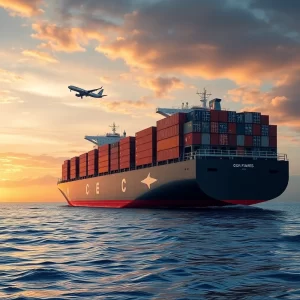
For professionals in the merchant navy, the implementation of GLONET represents an improvement in the safety and efficiency of maritime routes. The ability to predict ocean conditions more accurately allows vessels to adjust their routes to avoid storms and other potentially dangerous phenomena, reducing the risk of accidents and optimizing fuel consumption.
Furthermore, this technological advancement opens up new job opportunities in the sector. Companies are constantly seeking skilled personnel to operate these advanced prediction systems, leading to a growing demand for professionals with knowledge in AI and ocean data analysis. Interested individuals are encouraged to explore these opportunities and consider sending their resumes to companies at the forefront of GLONET implementation.
Additionally, the integration of automation and AI in ocean prediction is driving the development of new roles within crews and maritime logistics operations. These roles can range from ocean data analysts to AI-specialized engineers, providing the industry with a way to attract young and diverse talent.
Benefits for Maritime Investors
Maritime sector investors can also find in GLONET a valuable tool to maximize their returns. The improvement in ocean prediction accuracy not only facilitates informed decision-making about routes and operations but also enables the anticipation of events that could impact the value of maritime investments.
By providing real-time data and more reliable predictive models, GLONET helps reduce uncertainties, which are essential for planning long-term investments in infrastructure, vessels, and maritime insurance. Investors who embrace this technology will be in a privileged position to capitalize on an environment moving towards greater sustainability and operational efficiency.
Moreover, the integration of AI systems like GLONET also drives innovation in products and services related to the maritime industry, creating a favorable ecosystem for startups and technology companies looking to enter the maritime sector.
Future Outlook: A Horizon of Opportunities
The future of ocean prediction seems promising with the integration of artificial intelligence. The success of GLONET at the NeurIPS 2025 conference is just the beginning of what could be an era of unprecedented advances in how we interact with the oceans.
This success also encourages other organizations and researchers to continue developing technological solutions that address the challenges of climate change and maritime sustainability. Mercator Ocean has set a clear example of how collaboration and innovation can lead to tangible results in improving ocean systems.
With an eye on new validations and developments, the potential for GLONET to expand to other applications, such as marine life management and deep-sea exploration, is immense. This will benefit not only industry professionals but also the conservation of the marine environment.
In conclusion, the implementation of AI in ocean prediction represents a unique opportunity for professionals, investors, and sea enthusiasts to engage in the future of the sector. With Mercator Ocean leading the way, the horizon is full of possibilities for those willing to innovate and adapt.