The Historic Milestone in LNG Bunkering: FueLNG’s 500th Operation in Singapore Sets a New Course
On August 16, 2025, FueLNG achieved a significant milestone by completing its 500th ship-to-ship liquefied natural gas (LNG) bunkering operation in Singapore. This achievement not only reaffirms Singapore’s position as a global leader in the sector but also highlights the industry’s shift towards cleaner and more sustainable fuels.
The operation was carried out by the bunkering vessel FueLNG Bellina, supplying LNG to the AMPHITRITE HIGHWAY, an advanced LNG-powered car carrier owned by the Japanese company Kawasaki Kisen Kaisha, Ltd. FueLNG’s success in reaching this milestone is a testament to the company’s commitment to the global maritime energy transition.
This milestone is particularly relevant for industry professionals as it represents a significant advancement in the use of LNG as an alternative marine fuel, offering a more environmentally friendly option compared to traditional fuels. For sailors and maritime investors, this news is a promising sign of the economic and environmental viability of LNG in the maritime industry.
- The success of FueLNG in reaching this milestone demonstrates the growing acceptance of LNG as a marine fuel.
- Singapore’s position as a hub for LNG bunkering operations continues to strengthen.
- The collaboration between FueLNG and K-Line sets a new standard for sustainable maritime practices.
The AMPHITRITE HIGHWAY: A Model of Technological Innovation
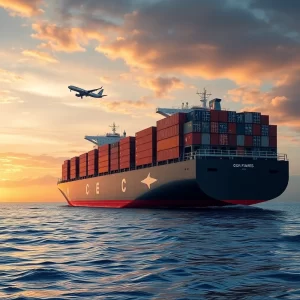
The AMPHITRITE HIGHWAY, with a capacity for 7,000 vehicles, is a prime example of the new generation of LNG-powered car carriers. This type of vessel not only significantly reduces emissions of sulfur oxides (SOx), nitrogen oxides (NOx), and carbon dioxide (CO₂) but also promotes the use of more advanced technologies in shipbuilding and maritime operations.
The partnership between FueLNG and K-Line reflects a growing alignment between innovative shipowners and bunkering providers working together to meet international climate goals. This synergy not only improves operational efficiency but also encourages other companies to adopt more sustainable models.
- The AMPHITRITE HIGHWAY showcases the potential for LNG-powered vessels to lead the way in sustainable maritime transport.
- The collaboration between FueLNG and K-Line sets a precedent for future partnerships in the industry.
- This technological advancement opens up new opportunities for investment and growth in the maritime sector.
The Growing Success of LNG Bunkering in Singapore
Singapore has witnessed exponential growth in LNG bunkering operations. In 2024, LNG sales in this sector increased by an impressive 318.92%, rising from 111,000 tonnes in 2023 to 464,000 tonnes. This growth underscores Singapore’s success in developing a robust ecosystem for LNG bunkering, setting a precedent for other nations.
The support of the Maritime and Port Authority of Singapore (MPA) has been crucial in this process, ensuring that infrastructure, regulatory clarity, and operational readiness are aligned with the growing needs of a maritime market seeking cleaner alternatives.
- Singapore’s strategic investments in LNG infrastructure have positioned it as a global leader in LNG bunkering.
- The MPA’s regulatory framework has facilitated the growth of LNG operations in the region.
- The expansion of LNG bunkering services in Singapore signals a shift towards more sustainable maritime practices.
Global Evolution of LNG Bunkering: A Look to the Future
Internationally, LNG bunkering is on the rise. According to the DNV Alternative Fuels Insight platform, as of mid-2025, there were 590 LNG-powered vessels in operation and 564 more on order. This demonstrates the industry’s increasing confidence in the viability of LNG as a sustainable marine fuel.
Infrastructure development is also keeping pace: there are currently 60 LNG bunkering vessels in service, compared to just one in 2010, and 185 ports worldwide offer LNG services. This infrastructure growth is crucial to support the rapid expansion of the global LNG-powered vessel fleet.
- The global expansion of LNG bunkering presents opportunities for technological innovation and operational strategies.
- The increasing number of LNG-powered vessels reflects a shift towards cleaner and more sustainable maritime transport.
- This growth in infrastructure sets the stage for further investments in green technology and long-term profitability.
Conclusion: Opportunities and Challenges for the Future
FueLNG’s milestone not only signifies a significant achievement in LNG bunkering but also heralds a new era of opportunities for the maritime sector. As the industry moves towards a global energy transition, LNG emerges as a critical component in achieving environmental sustainability goals.
For nautical enthusiasts and maritime professionals, this trend not only expands the horizon of technological and financial possibilities but also offers a platform for professional and personal growth in an ever-evolving industry. It is a pivotal moment to stay informed about these innovations and consider how they can be better integrated into business and operational practices, ensuring a more sustainable future for global maritime transport.