The Pioneering Operation of ULSFO Bunkering in China
The port of Yangshan in Shanghai has achieved a significant milestone in the maritime sector by leading the first operation of ultra-low sulfur marine fuel (ULSFO) bunkering produced domestically in China. This achievement positions Yangshan as a reference center for sustainable shipping solutions, offering a wide range of advanced marine fuels including liquefied natural gas (LNG), green methanol, and biofuels.
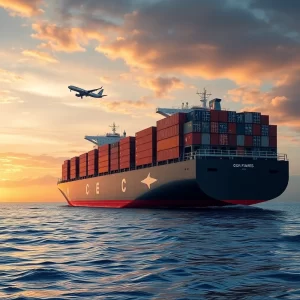
On July 24, 2025, the supply vessel Qi Hong 9 successfully transferred 875 metric tons of ULSFO to the container ship COSCO PRIDE, marking the first time this type of fuel produced in China has been supplied to an international vessel within its waters. This advancement not only establishes Yangshan as a national hub for eco-friendly bunkering but also solidifies its international position in the transition towards greener navigation.
In a context where environmental regulations are becoming increasingly stringent, having a port that can supply multiple types of fuels from a single point proves to be a valuable logistical ally. The implementation of ULSFO bunkering in Yangshan comes at a critical time as the International Maritime Organization (IMO) has recently tightened its environmental mandates, reducing the sulfur content limit for marine fuels in Emission Control Areas (ECA) to 0.1%.
- This has led to a growing global demand for fuels like ULSFO, with ports in Europe such as Rotterdam experiencing a significant increase in sales of ULSFO and other compatible fuels, reaching 250,000 metric tons during the second quarter of 2025.
The ULSFO used in the Yangshan operation was developed by PetroChina Huabei Petrochemical Company, a part of the China National Petroleum Corporation (CNPC). This fuel boasts an 80% lower sulfur content compared to similar products in the market, ensuring compliance with the strictest regulations without compromising the performance of marine engines.
For shipowners, the use of ULSFO offers multiple advantages beyond regulatory compliance. The ability to blend various fuels at a single port streamlines logistical planning, reduces risks associated with fuel switching for vessels traversing different sulfur emission zones, and aligns with the Environmental, Social, and Corporate Governance (ESG) goals of maritime transport companies.
- Moreover, the fact that ULSFO is refined, stored, and delivered entirely within Chinese infrastructure enhances the country’s ability to cater to both its national fleet and a growing international clientele.
The operation of ULSFO bunkering in Yangshan also underscores the importance of factors such as geopolitical location and cost efficiency in the global bunkering competition. While Shanghai has taken a significant step, cities like Rotterdam still retain strategic advantages due to their proximity to crucial trade routes.
However, PetroChina Fuel Oil’s scaling strategy through its subsidiary Shanghai Fuyuan Fuel Oil Co. Ltd. exemplifies ambitious foresight and the development of robust infrastructures. In just two years, this company has supplied millions of metric tons of oil linked to international vessels, a volume expected to increase substantially with broader integration of ULSFO and other green fuels.
As global regulatory pressures increase and shipowners readjust their strategies towards decarbonization, ports like Yangshan, offering a variety of fuels such as LNG, methanol, ULSFO, and emerging alternatives, are better positioned to capture maritime traffic in a global scenario.
- China’s leadership in national supply of ULSFO for international operations plays a critical role in this energy transition.
The port of Yangshan not only serves as a scale point but also showcases Shanghai’s leadership in setting the course for a carbon-neutral world.
About the Port of Yangshan
The port of Yangshan, an essential component of the Port of Shanghai, continues to demonstrate its leadership in global maritime trade and automation. In the first half of 2025, it handled over 14.02 million TEUs, representing a year-on-year increase of 7.3%. This strong performance contributes to maintaining the Port of Shanghai’s position as the world’s busiest container port.