The Return of the Canal of Suez to Container Traffic
The maritime container transport sector is on the brink of a significant change with the announcement from the shipping company CMA CGM to resume its routes through the Canal of Suez. This strategic move is part of their INDAMEX service, connecting India and the United States, promising to reduce the total rotation time of the service by two weeks. One of the flagship vessels, the CMA CGM Verdi, will be the first to complete this new full rotation. With a capacity of 6,000 TEU, the Verdi is scheduled to arrive in New York on January 15, 2026, after a 77-day journey. This change not only optimizes transportation efficiency but also redefines the logistical landscape of trade between continents. According to Peter Sand, chief analyst at Xeneta, this move by CMA CGM marks a milestone in the gradual return of navigation through the Suez Canal, a significant step towards normalizing container maritime traffic after recent disruptions.
The importance of this announcement lies in the reduction of transit times and the opportunity to revitalize strategic routes. The return of ferries to the Suez Canal offers multiple advantages, both for the maritime sector and for professionals within it. Firstly, the reduction in navigated distances decreases the tonnage requirements, essential in a market currently facing an excess of capacity. This, in turn, could have a positive impact on container transport rates, which have shown a downward trend in recent years. The normalization of the use of the Suez Canal comes at a critical time, where average spot rates on routes from the Far East to the east coast of the US and northern Europe have decreased by 57% and 53%, respectively, compared to the previous year.
- This situation opens up new opportunities for investors and professionals in the sector, who could benefit from a more competitive and dynamic market.
- The return of these routes could represent a wave of new job opportunities.
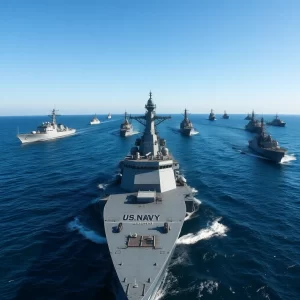
The renewed use of the Suez Canal by shipping companies like CMA CGM not only brings improvements in terms of time and cost but also in security and technology. The recovery of the route has been made possible through intense negotiations and strengthening of security measures in the region, especially in the approaches to the Bab al Mandeb strait and near Yemen. To ensure the protection of vessels, the Med5 service of Ocean Alliance has maintained a close surveillance with the help of French Navy ships. This not only protects the cargo but also ensures the continuity of trade between the countries involved, highlighting the strategic importance of these routes.
Furthermore, technological innovations play a crucial role in this context. The implementation of advanced navigation systems and the use of more efficient vessels reflect the sector’s commitment to sustainability and reducing environmental impact. These improvements are designed to optimize fuel consumption and minimize pollutant emissions during long maritime journeys.
The Value of the Suez Canal for the Maritime Sector
Historically, the Suez Canal has been a vital artery for global trade, significantly shortening travel distances between Europe and Asia. Its importance is further highlighted in the current context, where efficiency and cost reduction are paramount for shipping competitiveness. The announcement by CMA CGM not only reaffirms the strategic value of the Suez Canal but also underscores the maritime sector’s adaptability to global challenges.
As traffic through the Suez Canal returns to levels closer to normal, it is expected that other shipping companies will follow CMA CGM’s example. As more companies join this movement, the overall impact on the container transport market could be even more profound, with potential reductions in rates and improvements in operational efficiency.
In conclusion, CMA CGM’s return to the Suez Canal is a significant development that positively impacts the maritime sector. The opportunity to shorten travel times and reduce costs represents a welcome adjustment in a market seeking stability and growth. For professionals, this is an opportunity to get involved in an evolving sector, full of possibilities and exciting challenges. The resumption of the use of the Suez Canal reinforces global interconnectedness and underscores the importance of agile and secure logistics. Undoubtedly, this is a momentous time for the maritime sector, one that deserves to be closely followed and maximized. The future of maritime transport is promising, and this is an opportunity to be part of the change!