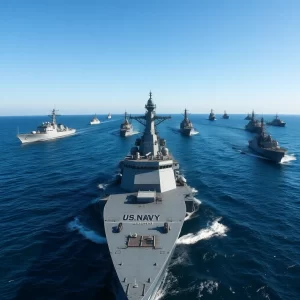
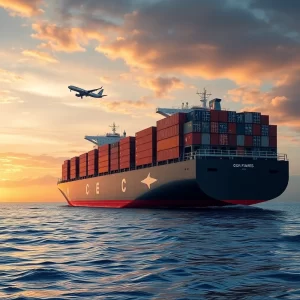
- Thousands of commercial and private vessels daily broadcast unencrypted AIS (Automatic Identification System) and satellite communication data.
- This creates a global network of unintentional sensors, vulnerable to interception by malicious actors for intelligence gathering.
- Exploitation risks include mapping fleet movements, identifying logistical patterns, and potential data manipulation causing collisions or diversions.
The global maritime industry faces a critical security threat as thousands of ships transmit vital navigation and communication data without encryption. According to a Center for International Maritime Security analysis, this exposes operations to risks from adversaries who can intercept and exploit this information. The issue stems from outdated standards prioritising interoperability over data protection.
Context and Background
Real-time data transmission is essential for navigation and logistics in the maritime sector. Systems such as AIS (which broadcasts ship position, speed, and course) and satellite communications have been standardised to enhance safety and efficiency. Historically, however, these systems have not incorporated robust encryption, favouring interoperability.
Precedents like cybersecurity incidents in ports or interference on trade routes have highlighted vulnerabilities, but encryption adoption has been slow. The International Maritime Organization (IMO) has issued guidelines, such as resolution MSC.428(98), urging the integration of cyber risk management, but implementation remains voluntary and uneven among shipowners.
In-Depth Technical Analysis
The problem lies in maritime communication architectures. Many systems, especially L-band or C-band satellite transmissions, send data in plain text. This means signals like GPS coordinates or crew messages can be easily intercepted with basic equipment, compromising privacy and enabling adversaries to map fleet movements or manipulate data.
Additionally, connectivity to coastal networks, often through ports with obsolete infrastructure, creates entry points for cyberattacks. Unlike sectors such as aviation where encryption is more common, maritime operates with fragmented standards, leaving gaps exploited by state actors or criminal groups for intelligence or sabotage.
Concrete Operational Implications
For shipping companies, this leads to immediate increases in insurance costs and regulatory compliance. Insurers may require cybersecurity certifications similar to ISO 27001 standards to cover risks. Operationally, owners with older fleets face higher retrofit investments to update systems, while newbuilds can integrate secure technologies from design, gaining competitive advantage.
In ports, operators must strengthen networks and access protocols, as an infected vessel could spread malware to critical systems like cranes or customs. This could slow operations by 10-20% during transitions, affecting global supply chains.
Impact on the Labour Market
This situation creates emerging demand for professionals specialised in maritime cybersecurity. Captains and officers will need STCW (International Convention on Standards of Training, Certification and Watchkeeping for Seafarers) training expanded with data protection modules, while naval engineers and communication technicians will see opportunities in installing and maintaining encrypted systems.
Market trends suggest a 15-25% growth in jobs related to cyber auditing in the sector over the next five years. Shipping companies investing in internal training will reduce risks and attract talent, improving operational resilience.
Macro Context
Geopolitically, tensions in routes like the Strait of Hormuz or the South China Sea make data exposure critical, as adversaries could use intercepted information for strategic operations. Normatively, regulations like the GDPR in Europe or cybersecurity laws in the US push for higher standards, but the lack of a global mandatory framework hinders progress.
Trends such as digitalisation and the Internet of Things on ships increase the attack surface, making the adoption of end-to-end encryption protocols urgent. Initiatives like the Maritime Cybersecurity Center promote best practices, but impact depends on international collaboration.
Outlook
Short-term, security incidents are expected to drive more shipowners to adopt encryption solutions, though initial costs estimated at €50,000-100,000 per ship for major upgrades could be a barrier. Medium-term, the IMO might tighten regulations, making encryption mandatory for critical communications, levelling the playing field.
Investors should consider companies leading in secure technologies, such as encrypted satcom providers, though any investment decision carries risks and requires own research. Innovation in AI for intrusion detection will offer opportunities, but efficacy depends on integration with existing infrastructures.
FAQ
- What is AIS and why is it vulnerable? AIS (Automatic Identification System) emits navigation data like position and speed to prevent collisions. It is vulnerable because many implementations do not use encryption, allowing anyone with a basic receiver to intercept information in real time.
- How can shipping companies improve the security of their communications? They can adopt satcom solutions with integrated encryption, update system firmware to secure versions, and train crews in cybersecurity protocols, following IMO guidelines and industry standards.
- What impact does this have on the privacy of crew members? Unencrypted communications expose personal conversations and operational data, violating privacy. This could lead to stricter regulations and legal claims if not mitigated, affecting morale and staff retention.
- Are there more secure alternative technologies available? Yes, systems like VSAT with AES-256 encryption or virtual private networks (VPNs) for coastal connections offer greater security, though cost and implementation complexity vary by ship type and operation.
Editorial Note: This article has been professionally adapted from Spanish to British English
for the WishToSail.com international maritime audience. Original article published at
QuieroNavegar.app.