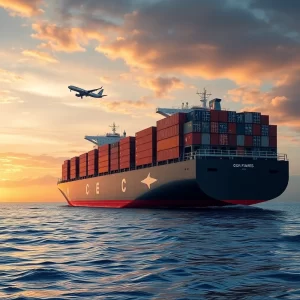
Yang Ming has successfully integrated its first dual-fuel vessel, the YM WILLPOWER, with a capacity of 15,600 TEU, constructed by Hyundai Heavy Industries in Ulsan. This vessel marks the first of five dual-fuel ships scheduled for delivery to Yang Ming between this year and early 2027, representing a significant transition in its previously conventional fleet.
Context and Background
The maritime industry is undergoing a transition towards more sustainable fuels, driven by international regulations from the International Maritime Organization (IMO) aimed at reducing greenhouse gas emissions. Until now, Yang Ming lacked vessels equipped to operate on Liquefied Natural Gas (LNG) or methanol, making this move particularly relevant against the backdrop of increasing regulatory pressures.
There has been a notable increase in the adoption of dual-fuel vessels, with companies such as MSC leading this transformation. Currently, MSC operates an active fleet of nearly 90 LNG-powered vessels, surpassing CMA CGM, which has 76 units. This trend reflects a shift towards cleaner and more fuel-efficient technologies.
In-Depth Technical Analysis
Technical Viability of LNG as Marine Fuel
Liquefied Natural Gas offers significant advantages in terms of reducing CO2, NOx, and SOx emissions compared to conventional fuels. However, its implementation necessitates modifications to propulsion and storage systems due to its lower energy density, which requires larger storage volumes on board.
Port infrastructure for LNG supply is expanding, yet logistical challenges remain in certain regions. Currently, major ports are investing in LNG bunkering capacity, although availability is not uniform globally.
Economic Implications for Shipowners
The cost of retrofitting existing vessels to operate on LNG is significant compared to building new units. Nevertheless, shipowners view this expenditure as a long-term investment to comply with environmental regulations and reduce operational costs by using a cleaner and more economical fuel.
What Changes for Industry Professionals
This transition towards LNG means that industry professionals, such as naval engineers and maintenance technicians, will need to acquire new competencies related to the operation and maintenance of dual-fuel systems. Additionally, port operators will have to adapt to new LNG bunkering operations.
Impact on the Job Market
The growing adoption of LNG-powered vessels will increase the demand for Electro-Technical Officers (ETO) specialised in dual-fuel systems. It is advisable for professionals in the sector to seek specialised training to prepare for these emerging job opportunities.
Geopolitical and Macro-Environmental Context
The shift towards LNG is also influenced by fluctuations in oil prices and global environmental policies. As more countries adopt stringent emissions regulations, LNG positions itself as a viable option to meet these standards while reducing dependence on oil.
Outlook
In the short term, it is anticipated that more shipping companies will follow the lead of Yang Ming and MSC, increasing the demand for dual-fuel vessels. Critical factors include the availability of LNG infrastructure and the development of even cleaner technologies. However, the progress of this transition will depend on regulatory policies and economic incentives for adopting alternative fuels.
FAQ
- What is a dual-fuel vessel? A dual-fuel vessel is designed to operate on two types of fuel, such as LNG and conventional fuel oil.
- Why is the transition to LNG important? The transition to LNG significantly reduces pollutant gas emissions, helping to comply with international regulations.
- What challenges does LNG adoption face? Key challenges include bunkering infrastructure and the costs associated with retrofitting or building new vessels.
This news is based on “Container shipping accelerates shift to LNG-fuelled vessels” from Global Maritime Hub, accessible via original link.
Legal Notice: This article is an independent editorial analysis based on public information and technical knowledge of the maritime sector. It does not substitute for consultation with qualified professionals nor constitutes specific technical, legal, regulatory, or professional advice.
Editorial Note: This article has been professionally adapted from Spanish to British English
for the WishToSail.com international maritime audience. Original article published at
QuieroNavegar.app.