“`html
Brave Pioneer: A New Era for Decarbonisation in Commercial Shipping with Eco-Friendly Methanol
In recent years, the maritime industry has witnessed a significant shift in its approach towards sustainability and reducing its carbon footprint. With over 90% of global trade being transported by sea, the pressure to find eco-friendly solutions is more significant than ever. The greenhouse gas emissions and air pollutants derived from traditional marine fuels have led to an urgent search for cleaner alternatives. In this context, the transition towards sustainable fuels has become a strategic priority for companies within the sector.
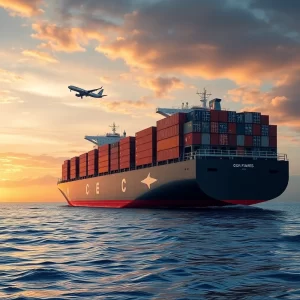
Cargill, one of the giants in bulk cargo maritime transport, has taken a significant step towards decarbonisation with the launch of its new vessel, the Brave Pioneer. This vessel represents one of the first ventures in the sector using methanol as an alternative to traditional fuels. This move is part of a broader strategy by Cargill to address climate change through innovation and collaboration with strategic partners to develop innovative solutions.
Detailed Analysis: The Brave Pioneer and Its Dual-Propulsion with Eco-Friendly Methanol
The Brave Pioneer stands out for its dual-propulsion system that uses eco-friendly methanol, a fuel that has garnered attention as one of the most promising alternatives for reducing carbon emissions in maritime transport. Methanol is a simple alcohol that can be sustainably produced from renewable sources such as biomass or agricultural waste, minimising its environmental impact. This vessel, the first of five planned by Cargill, symbolises a shift towards cleaner and more efficient maritime transport.
The use of methanol as a marine fuel presents several technical advantages. Firstly, methanol burns cleaner than conventional fossil fuels, significantly reducing emissions of sulphur oxides (SOx) and particulates. Furthermore, methanol does not contribute to the formation of nitrogen oxides (NOx) to the same extent as marine diesel. With Dual-Propulsion Technology, the Brave Pioneer can switch between methanol and other fuels depending on availability, providing operational flexibility and ensuring uninterrupted voyages.
Impact on the Merchant Navy and the Nautical Sector
The introduction of the Brave Pioneer into Cargill’s fleet not only marks a milestone in terms of innovation but also paves the way for a significant shift in the daily operations of the merchant navy. Transitioning to cleaner fuels like methanol requires adjustments in onboard operational practices, crew training, and the adaptation of port infrastructures to handle and supply new types of fuels.
For professionals in the sector, this means a transformation in the required skills, with an increasing focus on the safe and efficient handling of alternative fuels. Additionally, implementing dual-propulsion technologies requires a deep understanding of combustion systems and the interaction between different types of fuels. This proactive approach towards sustainability can also open new business opportunities, aligning with the growing regulatory and consumer expectations regarding carbon footprint reduction.
Challenges and Future of the Sector for the Coming Years
Despite the advancements, the path towards total decarbonisation is not without challenges. The infrastructure to support the widespread adoption of methanol and other alternative fuels is still in development. The availability and cost of sustainably produced methanol are also critical factors that will influence the speed of adoption within the sector.
Looking to the future, the maritime industry must continue investing in research and development to improve the efficiency and sustainability of current solutions. Moreover, collaboration between public and private sectors will be essential to accelerate the development of infrastructure and policies supporting this ecological transition. International regulations, such as those from the International Maritime Organization (IMO), will play a crucial role in defining standards and steering the industry towards a more sustainable future.
Key Concepts
Eco-Friendly Methanol: A type of simple alcohol that can be produced from renewable sources such as biomass or agricultural waste. It is used as an alternative to fossil fuels due to its lower environmental impact.
Dual-Propulsion: Technology that allows engines to operate with two different types of fuel, providing operational flexibility and efficiency.
Decarbonisation: The process of reducing carbon emissions, primarily through the adoption of renewable energies and cleaner technologies.
These innovations and adaptations are just the beginning of a broader transformation in the maritime sector, where sustainability and technological innovation will be the fundamental pillars in the years to come.
The article Brave Pioneer: A New Era for Decarbonisation in Commercial Shipping with Eco-Friendly Methanol was first published on WishToSail.com.
“`