Shell Marine and HMM Sky: Innovation in LNG Bunkering in Singapore
In an increasingly sustainability-focused world, the maritime sector is not lagging behind. Shell Marine has taken a significant step in this direction by successfully completing its first liquefied natural gas (LNG) bunkering operation for the HMM Sky in Singapore. This milestone represents a crucial advancement towards the decarbonization of maritime transport, highlighting Shell’s commitment to reducing emissions in an industry responsible for a considerable percentage of global carbon emissions.
Shell Marine’s Role in Decarbonization
Shell Marine has positioned itself as a leader in providing sustainable solutions for the maritime sector. With a solid strategy that encompasses infrastructure expansion to innovation in low-carbon fuels, the company is paving the way towards a cleaner future. This first LNG bunkering in Singapore for the HMM Sky is not just a technical achievement but also a symbol of Shell’s ongoing commitment to energy transition in maritime transport.
The vice president of Global Downstream LNG at Shell Marine, Dexter Belmar, emphasized the importance of this operation, highlighting the close collaboration with shipping partners like HMM. “We are proud to complete our first LNG bunkering for HMM Sky in Singapore—a safe and successful operation that reflects the deep collaboration between Shell and our shipping partners,” Belmar expressed. Such partnerships are essential for advancing towards cleaner fuels, such as bio-LNG and synthetic fuels.
HMM and their Net Zero Commitment
Hyundai Merchant Marine (HMM), South Korea’s largest shipping company, is leading with one of the most ambitious decarbonization strategies in the industry. The choice of LNG as a transitional fuel reflects their commitment to immediate emissions reduction, as well as their willingness to integrate future eco-friendly fuels without significant infrastructure redesigns. This approach not only improves the sustainability of current operations but also paves the way for achieving their net-zero emissions goal by 2045.
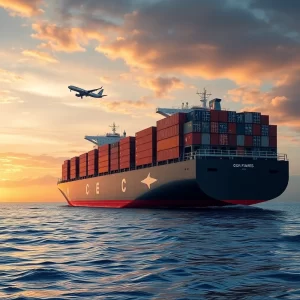
The HMM Sky, a modern container ship with dual-fuel technology, is a manifestation of this vision. Its recent bunkering in Singapore is a clear example of how HMM is implementing advanced technology to improve its environmental footprint, demonstrating the transformative potential of LNG in the maritime industry.
Shell’s Global LNG Bunkering Infrastructure
Shell Marine’s progress in expanding its LNG bunkering infrastructure is remarkable. With operations spanning 12 countries worldwide, Shell’s network is one of the most extensive in the sector, with 26 strategic ports and a fleet of 12 specialized LNG bunkering vessels. To date, Shell has completed over 2,500 such operations, positioning itself at the forefront of dual-fuel vessel deployment.
The operation in Singapore serves as a crucial pillar in Shell’s network, utilizing strategic partnerships like the FueLNG joint venture to further strengthen its capacity and coverage. These initiatives underscore Shell’s commitment to not only leading in technological innovation but also in implementing practical solutions that enable an effective transition to cleaner energy.
Benefits of LNG as a Transitional Fuel
- Significant reductions in sulfur oxide and particulate emissions
- Reduction of nitrogen oxide emissions by up to 80%
- 20-30% lower carbon dioxide emissions compared to conventional marine fuels
One crucial aspect of LNG is its compatibility with future fuels like bio-LNG and synthetic methane, enabling a transition to net-zero without extensive modifications to vessel systems. This makes it a crucial resource for shipping companies looking to meet growing regulatory pressures and customer sustainability expectations.
Opportunities in the LNG Bunkering Sector
The growing interest and development around LNG bunkering offer substantial job opportunities for maritime sector professionals. Leading companies like Shell and HMM are constantly seeking talent to support their operations and expansion strategies. For those interested in entering or advancing in this field, it is an unparalleled opportunity to be part of the green revolution in maritime transport.
With initiatives underway in various parts of the world, the LNG sector is not only contributing to local economic development but also shaping the future of maritime transport in a more sustainable and efficient manner. Those with skills in engineering, maritime operations, and project management will find this sector a fertile ground to advance their careers.
Conclusions
The success of the LNG bunkering operation in Singapore is a testament to Shell Marine and HMM’s continued commitment to a cleaner and more sustainable future for maritime transport. This milestone not only reinforces the importance of LNG in emissions reduction but also highlights the potential for industry collaboration to effectively address environmental challenges.
For maritime investors, sailors, and nautical enthusiasts, the advancement of LNG represents an opportunity to actively participate in a paradigm shift towards sustainability. The transition to cleaner fuels is inevitable, and being part of this transformation is undoubtedly an exciting and meaningful prospect.
At a time when the world is increasingly seeking sustainable solutions, the bunkering of LNG for the HMM Sky in Singapore reminds us that the future of sailing is green, and the opportunities are within reach for those willing to navigate in this direction.