

- 16 vessels transited the Strait of Hormuz on 1 April 2026, marking a third consecutive daily increase.
- 62% of these ships were subject to Western sanctions and linked to Iran’s shadow fleet.
- Three Omani-controlled vessels avoided the Iranian Revolutionary Guard Corps (IRGC)-controlled corridor, using the traditional international route.
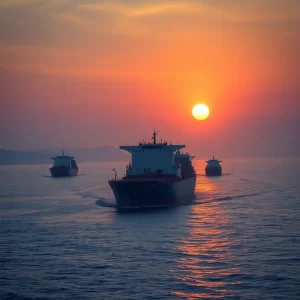
Early April 2026 witnessed heightened maritime activity in the Strait of Hormuz, a critical global shipping chokepoint. On 1 April, 16 ships made the passage, with most connected to sanctioned Iranian operations. Notably, three vessels under Omani control opted for the standard international route, bypassing a military-controlled corridor, highlighting ongoing diplomatic efforts amid regional tensions.
Context and Background
Since approximately 14 March 2026, Iran has enforced a selective blockade in the Strait of Hormuz. This vital artery handles around 20% of global oil and a significant portion of liquefied natural gas (LNG) trade. Traffic has been redirected to a corridor near Larak Island, controlled by the Iranian Revolutionary Guard Corps (IRGC), forcing vessels into Iranian territorial waters.
The main channel’s closure has created a permission-based system, where transit depends on direct negotiation with Iranian authorities. This has split maritime flow between Iran’s shadow tanker fleet and ships from other nations seeking safe passage.
In-Depth Technical Analysis
The incident underscores widespread use of false flags of convenience. Six tankers employed fraudulent registries from Madagascar, Botswana, and Aruba. Three even incorrectly broadcast the Comoros flag. This practice, common in shadow fleets, masks true ownership and cargo destinations to evade sanctions, complicating liability and maritime insurance.
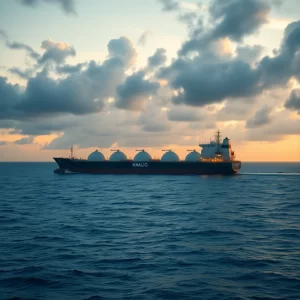
Conversely, the manoeuvre by three Omani ships—two Very Large Crude Carriers (VLCCs, large oil tankers) and one LNG carrier (Liquefied Natural Gas carrier)—is technically significant. By switching off their Automatic Identification Systems (AIS, tracking systems for ships) during transit and using the old channel, they applied operational discretion protocols. This suggests a high-level bilateral agreement for safe passage outside IRGC control, possibly the first draft of an Iran-Oman protocol.
Concrete Operational Implications
For shipowners and operators, the environment is high-risk and costly. Using the Larak Island corridor means accepting Iranian jurisdiction, with risks of inspections or detentions. Freight rates for routes avoiding the Strait, such as via the Cape of Good Hope, have surged, increasing global logistics expenses.
Data from Vortexa shows immediate impacts on crude flows. While Saudi Arabia boosted exports via the pipeline to Yanbu (3.3 million barrels per day in March), Iraq saw shipments fall via the Turkish port of Ceyhan. This forces traders to reoptimise entire supply chains, benefiting alternative infrastructures.
Impact on the Labour Market
This crisis boosts demand for specialised roles. Bridge officers and captains with experience in conflict zone navigation and security protocols are crucial. Opportunities also rise for maritime intelligence analysts and crisis managers in shipping and insurance firms.
For seafarers, operating here requires additional training in emergency procedures, non-standard communication, and international sanctions knowledge. STCW (Standards of Training, Certification and Watchkeeping for Seafarers) training centres might incorporate such modules.
Macro Context
The United Arab Emirates’ request to the UN to authorise “the use of force” reflects the situation’s gravity. The power balance in the Gulf is at stake. Oman’s ability to negotiate safe passage underscores its historical mediator role but also shows fragmentation in the Gulf Cooperation Council’s response.
Strategically, each ship transiting a different corridor sets a precedent. If the Iran-Oman protocol consolidates, it could create a two-speed transit system, challenging total blockade narratives and offering limited avenues for “legitimate” trade.
Outlook
The immediate trend points to gradual transit increases as more countries negotiate bilateral deals like Oman’s. However, sanctioned vessel dominance indicates Iranian energy trade will continue under the military corridor.
Medium-term, the international channel’s viability depends on other states, such as Qatar or India, securing similar agreements. Without a unified international response, the Strait could normalise dual operations, with long-term implications for navigation freedom.
FAQ
What is a ‘shadow tanker’? A shadow tanker refers to vessels, often older, that operate outside regulated systems to transport crude oil from sanctioned countries like Iran or Venezuela. They typically use false flags, switch off AIS, and conduct ship-to-ship transfers at sea to conceal cargo origins.
Why is the transit of an LNG carrier significant? LNG (Liquefied Natural Gas) requires highly controlled transport conditions. The Omani carrier, apparently in ballast (empty), might be positioning to load in Qatar, a major exporter. Reopening this route for LNG is crucial for stability in European and Asian gas markets.
How does this affect crude freight rates? Uncertainty and risk add a war risk premium to freight costs for routes through the Strait of Hormuz. Moreover, diverting ships to longer routes, such as around Africa, reduces tonnage availability, pushing up global freight rates, especially for crude and products.
Editorial Note: This article has been professionally adapted from Spanish to British English
for the WishToSail.com international maritime audience. Original article published at
QuieroNavegar.app.