The Evolution of Naval Maintenance: Fairbanks Morse Defense’s “Pit Stop” Strategy
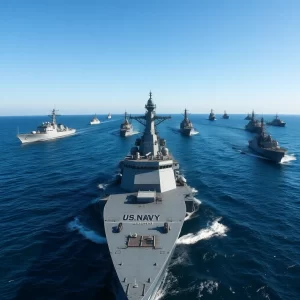
In the world of maritime navigation, where time is an invaluable resource, engine maintenance efficiency is crucial. Fairbanks Morse Defense (FMD), backed by Arcline Investment Management, has introduced an innovative maintenance strategy called the “Pit Stop.” This approach is transforming how the US Navy manages its operations, reducing deferred maintenance and increasing the operational availability of its vessels.
The “Pit Stop” concept, inspired by quick pit stops in racing cars, aims to minimize the time ships spend out of service. This method has been successfully implemented on vessels such as the USS GUNSTON HALL (LSD 44) and the USS ASHLAND (LSD 48), among others. The strategy focuses on using advanced technologies, such as 3D printing, to streamline engine maintenance and repair processes.
Implementation of the “Pit Stop” Strategy
The implementation of this strategy in the US Navy has not only proven effective in reducing downtime but has also set a new standard in naval maintenance. This process involves meticulous preparation and coordination of specialized teams that can quickly intervene and perform essential repairs and maintenance in record time. The results have been impressive: a significant reduction in deferred maintenance, which has historically been a challenge for naval operations.
- Significant reduction in deferred maintenance.
- Establishment of a new standard in naval maintenance.
The ability to reuse and repair parts on-site using 3D printing has eliminated the excessive reliance on spare parts shipments, speeding up the maintenance process and optimizing service time.
Benefits for the Maritime Industry
The adoption of the “Pit Stop” strategy by the US Navy has significant implications for the entire maritime industry. Firstly, it provides a practical and viable example of how technological innovations can be effectively integrated to enhance operational efficiency in the nautical sector. Furthermore, it promotes a culture of proactive maintenance that can be adapted by commercial enterprises and other naval forces worldwide.
In terms of job opportunities, companies adopting similar approaches are likely to seek personnel trained in these new technologies, offering a fertile ground for those looking to advance their careers in the naval industry.
Implications of 3D Printing in Naval Maintenance
3D printing has emerged as a transformative technology in numerous industries, and the maritime sector is no exception. Fairbanks Morse Defense has incorporated this technology to facilitate engine maintenance, allowing for the rapid production of necessary parts and components directly at the worksite. This advancement not only reduces the need for an extensive inventory of spare parts but also minimizes reliance on traditional supply chains.
With 3D printing, engineers can create highly customized parts designed to meet specific needs, resulting in increased operational efficiency and ultimately reduced costs for naval operations.
Success Stories and Lessons Learned
The success of this strategy on vessels such as the USS OAK HILL (LSD 51) and the USS PEARL HARBOR (LSD 52) serves as a powerful testament to the potential of 3D printing in naval maintenance. These vessels have seen a significant improvement in the effectiveness of their maintenance and have been able to return to service more quickly, reinforcing the operational availability of the fleet.
These success stories not only validate the viability of the technology but also provide valuable insights that can be applied in other maritime contexts, promoting a shift in mindset towards a more technological and proactive approach.
Adaptation and Future in the Industry
When considering the impact of 3D printing and other innovations, it is important for maritime industry professionals to stay updated on these technological trends. The ability to adapt to new maintenance methods will not only improve efficiency but also enable maritime organizations to remain competitive in an increasingly technological market.
For maritime investors, these innovations represent opportunities to invest in companies leading the charge in naval maintenance, empowering long-term value creation through technology.
Conclusion: A Promising Future for Naval Maintenance
Fairbanks Morse Defense’s “Pit Stop” strategy is a clear indicator that the future of naval maintenance is evolving towards more efficient and technologically advanced models. This approach not only optimizes vessel operability but also paves the way for a more sustainable and resilient maritime industry.
The value of this innovation extends beyond cost and time savings, opening up new job opportunities for professionals willing to embrace and adapt to these changes. In a world where time and efficiency are essential, the success of the “Pit Stop” strategy offers a valuable lesson on the importance of adaptation and continuous innovation in the maritime sector.
Ultimately, the ability to integrate advanced technologies such as 3D printing in naval maintenance will not only strengthen fleet operability but also set a new standard for efficiency and sustainability in the global maritime industry.