The Evolution of Robotic Welding in Naval Maintenance
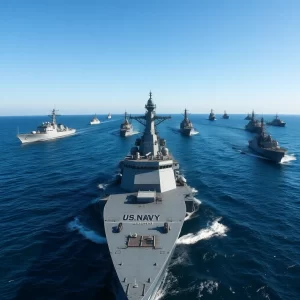
In the competitive and challenging world of the maritime industry, efficiency in ship maintenance and repair is crucial to ensure the operability and safety of fleets. Technological innovations have played a pivotal role in the evolution of these processes, allowing for a significant reduction in downtime and enhancing safety levels. Fairbanks Morse Defense (FMD), a company with a long history in maritime defense, has announced the expansion of its robotic welding program designed to optimize the repair and maintenance of US Navy ships and allied fleets.
The demand for advanced technologies in the naval sector is steadily increasing, driven by the need to improve the accuracy and efficiency of maintenance operations. The introduction of robotics and automation has enabled companies to better address the inherent challenges of the industry, such as constant wear and tear on vessels, extreme sea conditions, and the need to comply with strict safety regulations.
An In-depth Analysis of Fairbanks Morse Defense’s Robotic Welding Program Expansion
- FMD’s robotic welding program utilizes advanced automation technology that combines robotic precision with data-driven analysis.
- Through the integration of machine learning, FMD’s technology enables automated welding that adapts and improves with each operation.
- This not only reduces the time and costs associated with manual maintenance but also decreases risks for workers by minimizing exposure to hazardous environments.
The implementation of this technology represents a significant advancement in operational efficiency. Robots are capable of performing millimeter-precise welds, which are challenging to achieve manually, especially in complex and hard-to-reach ship environments. With machine learning, these robots can adapt to different scenarios and carry out repetitive tasks with consistent quality, crucial for the structural integrity of vessels.
Furthermore, this technology collects and analyzes real-time data, enabling the prediction of failures and proactive maintenance scheduling, thereby increasing the lifespan of naval assets.
Impact on Merchant Navy and the Nautical Sector
The introduction of robotic welding will have a significant impact on the daily work of maritime professionals. On one hand, it will reduce ship downtime, essential for maintaining maritime operations without prolonged interruptions. This translates to increased vessel availability to fulfill their missions, a critical factor for the US Navy and allied fleets.
On the other hand, automating processes as critical as welding allows operators to focus on more strategic and less repetitive tasks, enhancing their professional development and improving workplace safety. We are likely to see a shift in the skills required within the industry, with a greater demand for professionals trained in handling and maintaining advanced robotics and automation technologies.
Challenges and the Future of the Sector in the Coming Years
The advancement of robotics in the naval sector is not without challenges. The integration of new technologies requires significant initial investments and adaptation of existing infrastructures and labor force. Additionally, cybersecurity becomes a critical aspect, as connectivity and data are fundamental for the operation of these automated systems.
In the future, the use of technologies such as machine learning and artificial intelligence is expected to expand further, not only in welding but in other naval maintenance and operation processes. This will drive efficiency and fleet responsiveness, facilitating better asset management and more rigorous compliance with environmental and safety regulations.
Key Concepts
- Robotic Welding: A process of joining materials using automated robots that ensure high precision and repeatability in operations.
- Machine Learning: A subfield of artificial intelligence that allows systems to learn and improve automatically from experience without being explicitly programmed.
- Fleet Operability: The ability of ships to be available and ready to fulfill their missions at any time, minimizing downtime.
- Cybersecurity: Practices and technologies used to protect systems, networks, and programs from digital attacks and unauthorized access.