The Future of Maritime Transportation: Metanol-Powered Ships Enter the Game
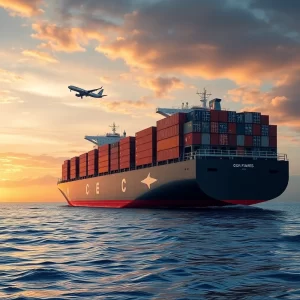
In a groundbreaking move that sets a new standard in the low-emission maritime transport sector, Qingdao Beihai Shipbuilding Heavy Industry Co. has embarked on the construction of ten Very Large Ore Carriers (VLOCs) weighing 325,000 deadweight tons. These vessels will be equipped with dual-fuel ME-LGIM engines powered by methanol, an alternative fuel that is gaining traction in the transition towards more sustainable maritime transport.
The Revolutionary ME-LGIM Engine Technology
At the core of these new VLOCs lies the Everllence B&W 7G80ME-LGIM Mk10.5 engine, an advanced two-stroke technology that enables the use of methanol as fuel. This engine not only provides a cleaner and renewable solution but also opens the door to potentially carbon-neutral operations, a pressing need in the context of international emissions regulations. The engine is equipped with Everllence’s patented EGRTC system, ensuring compliance with the International Maritime Organization’s (IMO) Tier III emission standards, especially in emission control areas. This not only improves environmental performance but also enhances the operational flexibility of the vessels. The adaptability and advanced technology of this engine represent a significant step towards sustainability and technological innovation in the maritime sector.
Methanol: The Fuel of the Future
- Methanol is compatible with existing bunkering infrastructure.
- Methanol engines are less complex and more cost-effective to install than other zero-carbon fuel alternatives like liquefied natural gas (LNG) or ammonia.
- Large-scale production of methanol, including green methanol, is rapidly increasing worldwide, facilitating its universal adoption and enabling the maritime industry to meet the ambitious decarbonization goals set by the IMO for 2030 and 2050.
Economic Impact and Employment Opportunities
The construction of these new methanol-powered VLOCs not only represents a technological advancement but also opens up new economic and job opportunities. The partnership between Qingdao Beihai Shipbuilding, Shandong Shipping, Bohai Ocean Shipping, and Vale S.A. signals a joint commitment to leading the way towards cleaner and more sustainable maritime trade. The high-capacity trade routes between Brazil and China, where these ships will operate, underscore the importance of adopting cleaner and more efficient vessels to handle some of the world’s largest dry bulk cargo flows.
Everllence: Leading the Change
Everllence, formerly known as MAN Energy Solutions, has established itself as a leader in sustainable propulsion solutions. From advanced engine technology to climate-neutral fuels and carbon capture systems, the company is well-positioned to lead the transition towards a more sustainable future in maritime transport.
Conclusion: A New Era for Maritime Transportation
The order for these ten methanol-powered VLOCs represents a tangible step towards decarbonizing maritime transport, demonstrating that a cleaner and more efficient future is already a reality. The commitment of companies like Qingdao Beihai, Shandong Shipping, Bohai Ocean Shipping, and Vale to lead this change sends a powerful message that the shift towards cleaner technologies is no longer just an ambition but a reality in the present.
Professionals in the industry are encouraged to continue exploring these innovations and consider the long-term impact of these technologies on their careers and the sector as a whole. With these considerations, it is clear that the transition to sustainable maritime transport has begun, and companies and professionals actively participating in this change will be better positioned to face the challenges of the future.