The Strategic Navigation of CMA CGM and the Return of Container Traffic via the Suez Canal
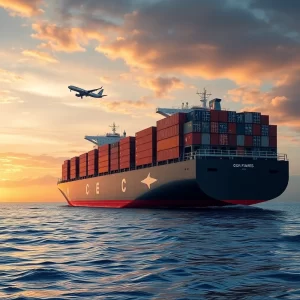
The French maritime transport giant, CMA CGM, has made the decision to resume its operations through the Suez Canal, reopening crucial strategic routes for global trade. This move comes amidst geopolitical instability, especially with the recent cessation of attacks by Houthi militias, who had maintained a naval blockade on Israeli ports. The significance of this reopening is particularly important following the announcement by the Houthis to temporarily halt their attacks in response to the evolving situation in Gaza. This could provide relief for carriers who have seen their routes disrupted and costs increased due to the diversion around the Cape of Good Hope. The Suez route not only represents a significant reduction in transit time but also in operational costs. The return of large container ships like the CMA CGM Benjamin Franklin, with a capacity of almost 18,000 TEU, through the Suez Canal marks a turning point in the recovery of this passage. The reactivation of traffic through the canal could also revitalize local economies and improve connectivity between Asia and Europe, playing a key role in stabilizing global maritime trade.
Challenges and Opportunities for the Maritime Sector
Despite the resurgence in traffic through the Suez Canal, normalcy in the Red Sea still seems distant. According to data from Lloyd’s List Intelligence, container passage through Bab el-Mandeb remains below pre-crisis levels, especially for high-capacity vessels. This situation poses significant challenges for shipping companies seeking to optimize their routes. However, for industry professionals, the resumption of maritime traffic through Suez presents potential job opportunities. Sector companies, such as CMA CGM, may require specialized personnel to manage the increase in operations. This represents an opportunity for captains, deck officers, and technical personnel seeking new job opportunities in a challenging yet promising environment. Maritime investors should also pay attention to this development. The gradual reactivation of the canal may impact freight rates and insurance costs, providing fertile ground for strategic investment. Furthermore, this movement could stimulate renewed interest in technological innovation in fleet management and energy efficiency, crucial aspects in the current maritime industry.
Innovation and Sustainability: Keys to the Future
In the context of the return to the Suez Canal, CMA CGM and other major shipping companies have the opportunity to lead technological innovation in maritime transport. The integration of sustainable and efficient technologies is not only a response to current environmental demands but also a fundamental competitive advantage. The implementation of cleaner propulsion systems, fuel consumption optimization, and the use of artificial intelligence for route management are just some of the areas where the industry can progress. These innovations will not only benefit companies in terms of costs but also help reduce the environmental impact of maritime transport, an increasingly important factor for consumers and regulators.
Finally, for nautical enthusiasts and the general public, the return of large ships to the Suez Canal can spark interest and admiration for maritime engineering, highlighting the importance of technological advances in overcoming geopolitical and economic challenges.
Conclusion: The Rebirth of the Suez Canal
In conclusion, the return of container ships to the Suez Canal, led by CMA CGM, is a symbol of resilience and adaptation in the maritime world. This reactivation not only boosts trade between Asia and Europe but also offers new job and investment opportunities while promoting the technological innovation necessary for a more sustainable future. In times of uncertainty, the maritime sector continues to demonstrate its ability to adapt and overcome complex challenges. For those interested in closely following this evolution, the Suez Canal now presents itself as a dynamic stage of change, progress, and potential growth. We invite maritime professionals, investors, and enthusiasts to stay tuned to these transformations and consider the various opportunities emerging in a constantly evolving global scenario.