The Sustainable Future of Sallaum Lines with the Ocean Explorer
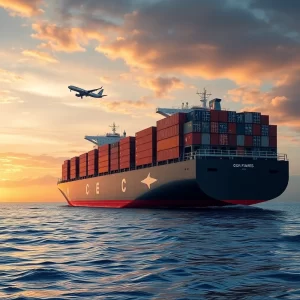
The maritime industry is constantly evolving, with a strong emphasis on sustainability and innovation. One notable milestone in this journey is the delivery of the MV Ocean Explorer by Sallaum Lines in January 2026. This state-of-the-art Pure Car and Truck Carrier (PCTC) with a capacity of 7,500 car equivalent units (CEU) is powered by liquefied natural gas (LNG) and dual-fuel technology, showcasing the company’s commitment to sustainability and its target of achieving net-zero emissions by 2050.
Setting the Standard for Maritime Sustainability
With the introduction of the Ocean Explorer, Sallaum Lines not only enhances its capability to serve automotive trade routes between Asia, Europe, and North America but also demonstrates its leadership in driving the industry towards a greener future. This innovative vessel highlights how technology can play a crucial role in combating climate change. As the maritime sector faces stringent environmental regulations, the use of LNG and dual-fuel systems emerges as a viable option to reduce emissions while ensuring operational efficiency.
Technical Specifications of the Ocean Explorer
The Ocean Explorer is designed to maximize volume efficiency and comply with the most stringent environmental standards. With 13 decks allowing for the transportation of a wide range of cargo, from electric passenger vehicles to heavy trucks, this vessel measures 199.90 meters in length and 38 meters in breadth, offering a formidable carrying capacity of 7,500 CEU. Equipped with a dual-fuel propulsion system and a 3,536.21 cubic meter LNG tank, the Ocean Explorer is well-equipped to address the challenges of the current maritime industry.
Built at the Fujian Mawei Shipbuilding yards in China, this innovative vessel is a testament to modern engineering’s potential to meet sustainable transport needs. It exemplifies how design and technology innovation can transform the industry.
Bunkering and Environmental Impact
The successful LNG bunkering operation of the Ocean Explorer in December 2025 ensures compliance with rigorous environmental standards. The use of LNG as fuel allows for nearly 100% reduction in sulphur oxides (SOx), up to 96% reduction in nitrogen oxides (NOx), and over 95% reduction in particulate matter. Additionally, LNG offers a significant reduction in CO2 emissions compared to traditional heavy oil. This transition to cleaner fuels is a key component of Sallaum Lines’ strategy to lower its carbon footprint and progress towards its long-term sustainability goals.
The Ocean Explorer’s ability to operate on LNG reinforces the reliability of the global LNG supply chain, ensuring efficient and sustainable operations along international routes. This successful bunkering operation is a clear example of how the industry is evolving to meet the environmental demands of our times.
LNG: The Maritime Fuel of the Future
Liquefied natural gas (LNG) is emerging as the preferred option for new PCTC constructions, offering a scalable pathway to the use of Bio-LNG and synthetic LNG. The viability of LNG as a marine fuel lies not only in its emission reduction capabilities but also in its global availability and reliability. The success of the Ocean Explorer with its bunkering operation at the Mawei shipyards underscores the robustness of the global LNG supply, well-positioned to support the demands of international maritime routes. The transition to this fuel is a critical step for the industry to move towards a cleaner and more sustainable future.
As a green alternative, LNG provides not only environmental benefits but also economic and operational advantages by reducing the impact of emission regulations. For maritime investors, investing in clean fuel technologies like LNG represents an opportunity to lead in a transforming market.
Strategic Growth: From Construction to Operation
The Ocean Explorer exemplifies strategic execution in shipbuilding. From the laying of its keel as the second in the series, its launch in October 2025, to its delivery in January 2026, the vessel showcases an efficient transition from manufacturing to commercial operation. This rapid process, executed ahead of the original contractual schedule, highlights the successful collaboration between Sallaum Lines and Fujian Mawei Shipbuilding. The efficiency in the construction and delivery of this vessel demonstrates the industry’s capacity to adapt to the demands of a dynamic and evolving market.
For maritime professionals, this initiative represents not only a technical advancement but also a job opportunity. As Sallaum Lines expands its fleet, new positions open up for qualified seafarers and technical personnel willing to embark on this new era of sustainable navigation.
Heading Towards Net-Zero Emissions by 2050
Sallaum Lines’ commitment to sustainability is reflected in its ambitious goal of achieving net-zero emissions by 2050. With the Ocean Explorer in operation and the rest of the “Ocean Class” series set to operate in 2027, the company is on track to add a total of 45,000 CEU of “green” capacity to the global maritime market. Over the past year, the company has made strides in multiple strategic areas, including initiating biofuel trials in its existing fleet to progress towards total decarbonization. Additionally, they have enhanced satellite communication services with NexusWave, in partnership with Inmarsat, to optimize fleet connectivity.
For sailing enthusiasts and investors, Sallaum Lines’ strategy offers a blueprint for transitioning towards sustainability in the industry.