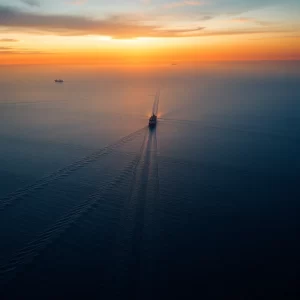



Sustainable Innovation in Coastal Protection in the Netherlands: Van Oord Leads with Dredger Using Bio-LNG
In September 2025, the maritime construction company Van Oord, commissioned by Rijkswaterstaat, has embarked on an ambitious coastal maintenance operation on the Banjaard beach in Noord-Beveland, Netherlands. This project represents a significant milestone in sustainable coastal management by using one million cubic meters of sand to reinforce the coastline, for the first time employing Bio-LNG as the main fuel for a hopper suction dredger. The use of Bio-LNG, a sustainable marine fuel, is a clear statement of Van Oord’s commitment to reducing the environmental impact of its operations. This step is part of a series of contracts awarded to Van Oord to complement the Dutch government’s Coast Care program, aimed at protecting the country’s coasts from erosion and sea-level rise. This action will put Van Oord at the forefront of sustainability in the maritime industry.
For industry professionals and maritime investors, this project not only sets an example of best practices but also provides an opportunity to evaluate and potentially adopt these innovations in future similar developments. The transition to more sustainable fuels is a growing trend that can provide competitive and regulatory compliance advantages.
Advantages of Bio-LNG: A Sustainable Fuel for the Future
- Bio-LNG is derived from biodegradable organic materials such as household and agricultural waste.
- It has been certified under the ISCC EU system, ensuring compliance with strict sustainability criteria in Europe.
- The implementation of Bio-LNG in the Noord-Beveland project illustrates its potential to immediately reduce the carbon intensity of dredging operations.
In addition to its compatibility with vessels already using LNG, Bio-LNG offers additional benefits. When used with updated engine technology, it reduces methane slip and improves regulatory compliance, especially in projects linked to the European Union. This represents a strategic step towards decarbonizing large-scale maritime operations.
For sailors and vessel operators, the transition to alternative fuels like Bio-LNG provides improvements in operational and environmental efficiency. This technology not only contributes to emission reduction but can also result in long-term economic savings due to increasing regulatory pressure and sustainability demands.
Van Oord’s Shield Against Climate Change
The project in Noord-Beveland is part of Van Oord’s decarbonization roadmap, based on goals approved by the SBTi, aligned with the Paris Agreement to limit global warming to less than 1.5°C. Key pillars of this strategy include fleet modernization, introduction of zero-emission equipment, and promotion of sustainable supply chains. Fleet modernization involves incorporating more energy-efficient vessels and transitioning to alternative fuels. Investments in electric and hybrid construction technologies reflect a commitment not only to the environment but also to the future of sustainable maritime construction.
For maritime investors, these initiatives not only present business opportunities but also a competitive advantage in a global market that increasingly values sustainability. By collaborating with clients, subcontractors, and suppliers through their Sustainable Supply Chain Program, Van Oord is redefining how to approach maritime infrastructure projects with an ecological focus.
Boost for Industry Professionals
The involvement of Bio-LNG in marine infrastructure projects offers multiple benefits for merchant navy professionals and sailors. Firstly, it shows a viable path towards cleaner and more efficient operations. Secondly, it encourages organizations to consider adopting similar technologies to comply with increasingly stringent environmental regulations. Furthermore, the collaboration between Van Oord and Rijkswaterstaat highlights the importance of working closely with government authorities and other stakeholders to develop sustainable solutions. Such collaborations are essential for implementing structural changes in the maritime sector, and professionals must be prepared to adapt and actively contribute to these efforts.
Lastly, and not least importantly, this project emerges as a job opportunity for those interested in participating in sustainable and technologically advanced maritime operations. Van Oord, at the forefront of these practices, can be an attractive destination for talents who want to be part of an organization leading the way towards a more sustainable future in the maritime industry.
Conclusion and Call to Action
Van Oord’s project in Noord-Beveland is not just a coastal maintenance initiative but a tangible example of how innovative technologies and sustainable fuels can be integrated into large infrastructure projects. As the maritime sector continues to face environmental and regulatory challenges, the adoption of sustainable practices will be essential to ensure its long-term viability. We invite all industry professionals to consider how these innovations can be applied in their own fields of work and encourage those interested to submit their resumes to Van Oord or other companies involved in similar projects. The future of the maritime sector belongs to those willing to lead with innovation and sustainability.