The Maersk Innovation: Towards Sustainable Maritime Transport with E-Methanol and Ethanol Blends
In the growing effort to decarbonize maritime transport, Maersk is taking a step forward by converting the Laura Mærsk ship into a floating laboratory to test next-generation sustainable fuels. Born from a historic commitment to operate with methanol in 2023, Maersk is now leading the way in innovation by testing a cutting-edge blend of e-methanol with 10% ethanol, known as E10. The use of E10 aims to diversify fuel options, allowing Maersk to assess crucial performance parameters such as ignition quality, combustion behavior, lubrication, and emissions, including nitrogen oxides (NOx). E-methanol, produced from renewable electricity and biogenic CO₂, along with ethanol, offers a low-carbon alternative that aligns with long-term sustainability goals. From a logistical standpoint, the addition of ethanol improves fuel availability and supply chain resilience, key factors as Maersk increases the adoption of green fuels in its fleet.
The interest of Maersk in ethanol coincides with the global consideration of this fuel as a low-carbon solution. According to 2022 data, over 200 biorefineries in the US have the capacity to produce more than 17 billion gallons of ethanol annually, reducing greenhouse gas emissions by almost 50% compared to gasoline. In addition to its application in road transport, ethanol is being explored for use in aviation, heavy equipment, and even power generation. This trial reflects the maritime sector’s interest in harnessing this abundant, proven, and scalable fuel source, unlocking synergies with global producers.
At the heart of this test is methanol, Maersk’s fundamental green marine fuel. Known for its clean combustion, methanol reduces sulfur oxides (SOx) by 99%, nitrogen oxides (NOx) by up to 60%, and particulate matter by 95%. These characteristics make it ideal for meeting IMO emission standards and an effective option for the transition. Methanol is currently mainly produced from natural gas but can also be synthesized from renewable sources such as biomass, waste, and captured CO₂. This versatility allows Maersk to adopt e-methanol today while preparing its fleet for a truly net-zero future. With a well-established safety record, methanol is one of the most transported chemicals in the world, contributing to its availability and ease of handling in port operations.
The E10 mixture used in the Laura Mærsk consists of 90% e-methanol and 10% ethanol. This precise combination is being consumed for several weeks, during which the ship’s dual-fuel engines are closely monitored to detect any differences compared to using pure methanol. Key aspects include assessing ignition and combustion efficiency influenced by ethanol, understanding potential impacts on engine wear and fuel system integrity, and measuring the environmental footprint, especially in NOx emissions. This test provides Maersk with valuable data on E10 performance in real operating conditions, allowing adjustments and improvements in the large-scale implementation of alternative fuels in its fleet.
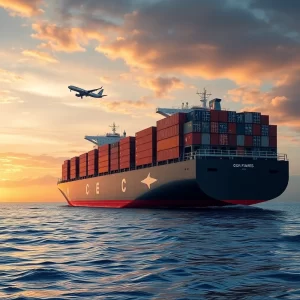
Beyond being a cargo ship, the Laura Mærsk acts as a dynamic platform where theoretical concepts meet practical application. This approach ensures that any new fuel solution is both innovative and reliable and scalable. In addition to large-scale tests, Maersk uses its smaller research vessel, the Lower MK, to conduct preliminary experiments with alternative fuels. This multi-level testing strategy accelerates the adoption of sustainable fuels across Maersk’s extensive fleet. With a capacity of 2,100 TEU, the Laura Mærsk is an effective testing platform for technologies that could one day power the industry’s larger vessels.
This E10 trial is not just a scientific study but a strategic maneuver integrated into Maersk’s decarbonization roadmap, with the bold aim of achieving net-zero emissions by 2040. If successful, ethanol could become a permanent component of Maersk’s green fuel portfolio, unlocking a broader spectrum of supply options and reducing dependence on any single raw material. As trials on the Laura Mærsk progress, the maritime world eagerly awaits advances that could shape the future fuel landscape. This experiment epitomizes Maersk’s commitment to pioneering solutions that balance operational efficiency with environmental responsibility. The initiative not only represents an opportunity for technical development and technological innovation but also a potential opening of job opportunities for professionals interested in being part of a global effort towards sustainable maritime transport.